










Wonderla says Chennai needs two to three years for profitability
Key highlights
- Chennai Park generated about Rs 28 crore in Q2 FY27 revenue from 1.90 lakh visitors.
- Chennai contributed Rs 10.37 crore, or 73%, of Wonderla’s Rs 14.26 crore Q2 EBITDA increase.
- Wonderla said Chennai needs two to three years to reach optimal utilisation and sustainable profitability.
- Q2 FY27 EBITDA including other income rose 90% to Rs 30.11 crore, while profit after tax was Rs 5 lakh.
powered by IRIS
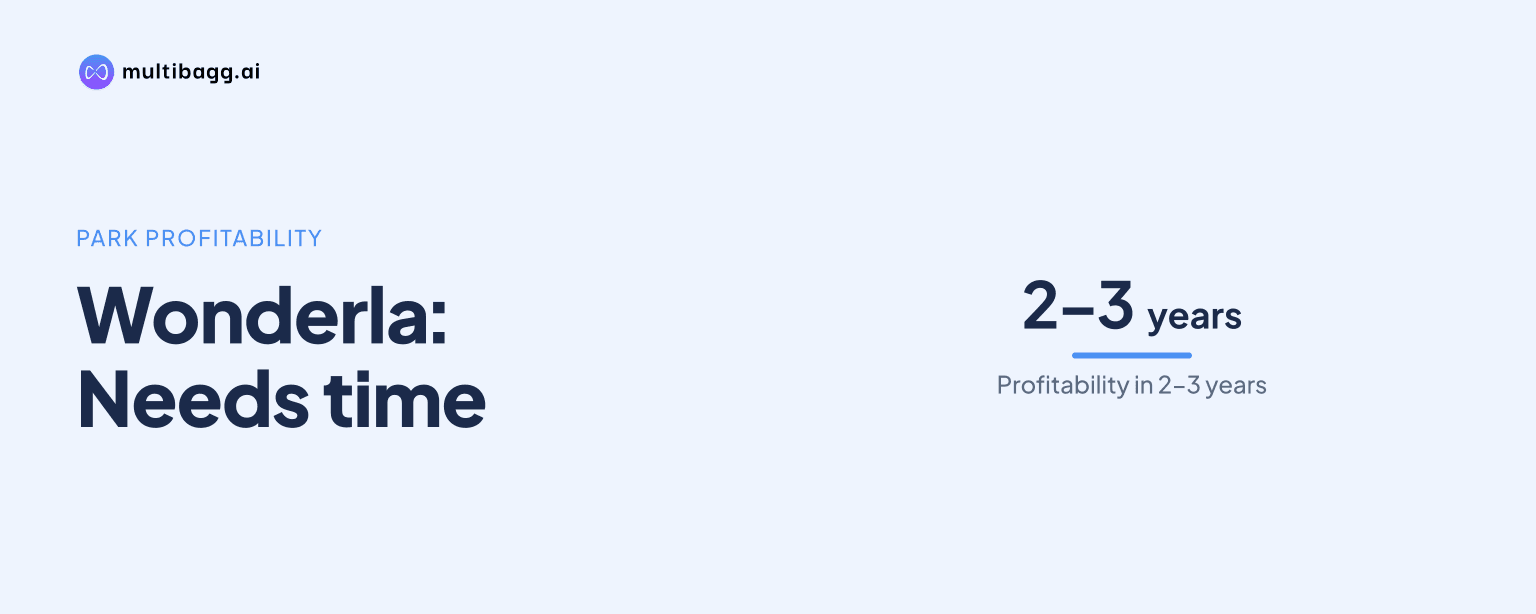
In Q2 FY27, Wonderla Holidays Limited said Chennai Park would need two to three years to reach optimal utilisation and sustainable profitability, after contributing Rs 10.37 crore, or 73%, of the quarter’s Rs 14.26 crore increase in earnings before interest, tax, depreciation and amortisation (EBITDA).
Know Wonderla Holidays inside out
Results, valuation, peers and who's buying, in one view.
When will Wonderla Chennai Park reach sustainable profitability?
Wonderla management said Chennai Park will take two to three years to reach optimal utilisation and sustainable profitability. The estimate was given in response to an analyst’s request for a timeline after Q2 FY27, when Chennai received 1.90 lakh visitors and generated about Rs 28 crore in revenue.
Wonderla did not disclose a year-by-year profit target, utilisation target or break-even date for Chennai. Management’s two-to-three-year assessment is therefore a ramp-up timeline rather than a quantified earnings target, with the park still establishing its operating pattern after opening.
Chennai’s H1 FY27 performance shows the scale from which that ramp is starting. The park recorded more than 4.32 lakh visitors and about Rs 73 crore in revenue during the six months, while Wonderla’s revenue from operations increased 45% year on year to Rs 359.2 crore.
Management said it was observing Chennai’s monsoon-related consumer trends for the first time. It said monsoon conditions affect footfall but that a better understanding would emerge after a full year, leaving the effect of Chennai’s mid-October-to-end-November monsoon period unresolved at the November 3, 2026 call.
How much did Chennai Park add to Wonderla Q2 FY27 EBITDA growth?
Chennai Park contributed about Rs 10.37 crore of Wonderla’s Rs 14.26 crore year-on-year increase in Q2 FY27 EBITDA, including other income. That represented about 73% of the increase, compared with Rs 1.83 crore from existing parks and Rs 2.06 crore from the resorts business.
Wonderla reported Q2 FY27 EBITDA, including other income, of Rs 30.11 crore, up 90% year on year, while EBITDA margin rose to 24% from 18%. Other income was Rs 9.1 crore, primarily gains from investments, meaning the disclosed EBITDA measure includes investment gains.
Chennai’s share of EBITDA growth was lower in H1 FY27 but remained the largest component. The park contributed about Rs 28.62 crore, or 58%, of the Rs 48.57 crore six-month increase in EBITDA including other income, while existing parks added Rs 15.42 crore and resorts added Rs 4.71 crore.
Got a follow-up? Ask IRIS
Why was Wonderla Q2 FY27 profit only Rs 5 lakh despite higher EBITDA?
Wonderla reported Q2 FY27 profit after tax of Rs 5 lakh, compared with a loss in the corresponding quarter, because higher depreciation and tax costs partly offset EBITDA growth. Depreciation increased by Rs 10 crore after Chennai began operations, while tax expense rose about Rs 2.23 crore, including Rs 1.12 crore of prior-period taxes.
The difference between EBITDA growth and profit reflects the accounting charges associated with opening a new large park. Wonderla’s chief financial officer said a large park can require investment of about Rs 500 crore and depreciation expenses of around 7% to 8% of that investment are initially charged to the profit and loss account.
For H1 FY27, earnings conversion was higher despite the same cost factors. Profit after tax rose 43% year on year to Rs 72.8 crore, supported by higher EBITDA, though this was partly offset by a Rs 21.5 crore depreciation increase mainly attributable to Chennai and about Rs 5 crore of incremental tax expense.
The comparison shows that Chennai supported operating earnings in both periods while also adding material depreciation. Q2 FY27 revenue from operations rose 45% to Rs 116.57 crore, whereas profit after tax was Rs 5 lakh, which explains why management’s profitability timeframe extends beyond the park’s initial visitor growth.
What is driving Chennai Park’s visitor and spending ramp-up?
Chennai Park’s Q2 FY27 ticket price was about 10% below Bengaluru’s because Bengaluru has a higher base price as Wonderla’s largest park, management said. Chennai’s visitor mix also contained a larger proportion of group bookings, which are more discounted than retail visits.
Management said the difference from Chennai’s prior quarters reflected channel mix rather than a disclosed long-term change in pricing policy. Chennai has retail and group channels, and Wonderla said it expects the park’s overall average revenue per user, or ARPU, to remain stable and grow over time in a pattern similar to Kochi and Hyderabad.
Across Wonderla, Q2 FY27 average ticket price declined 3% year on year to Rs 983, while non-ticket revenue per guest increased 11% to Rs 510. Average revenue per user consequently rose 1% to Rs 1,491, showing that food, beverage, retail and other in-park spending offset the lower average ticket price at the group level.
The existing parks provide a comparison with Chennai’s early ramp. Bengaluru, Kochi, Hyderabad and Bhubaneswar together increased Q2 revenue 8% and footfall 6% year on year, while their H1 revenue grew 13% and footfall increased 7%; Chennai’s 1.90 lakh Q2 visitors were incremental to those mature-park trends.
Conclusion
Chennai has become the largest contributor to Wonderla’s Q2 FY27 EBITDA increase, adding Rs 10.37 crore of the Rs 14.26 crore gain. Management’s two-to-three-year timeline indicates that visitor volumes, utilisation, operating contribution and sustainable profitability are expected to develop at different speeds, while depreciation from the new park affects reported profit after tax.
The next issue to watch is Chennai’s performance through its first full annual seasonal cycle, especially the mid-October-to-end-November monsoon period that management said it is still assessing. Investors can also monitor whether visitor mix shifts from discounted group traffic towards retail demand and whether management’s stated aim to keep ARPU stable and grow it over time is reflected in future results.