
Actions
Action Type





IRIS
Multibagg AI is an AI powered stock research and analysis platform. We provide data, information, content, and analytics for publicly traded Indian companies listed on NSE and BSE. AI can make mistakes, check important information.
Prices might be delayed by a few minutes.
Join our Exclusive Community


Join our Exclusive Community
Made with 💙 in India. © Finsky Technologies Pvt Ltd. 2026


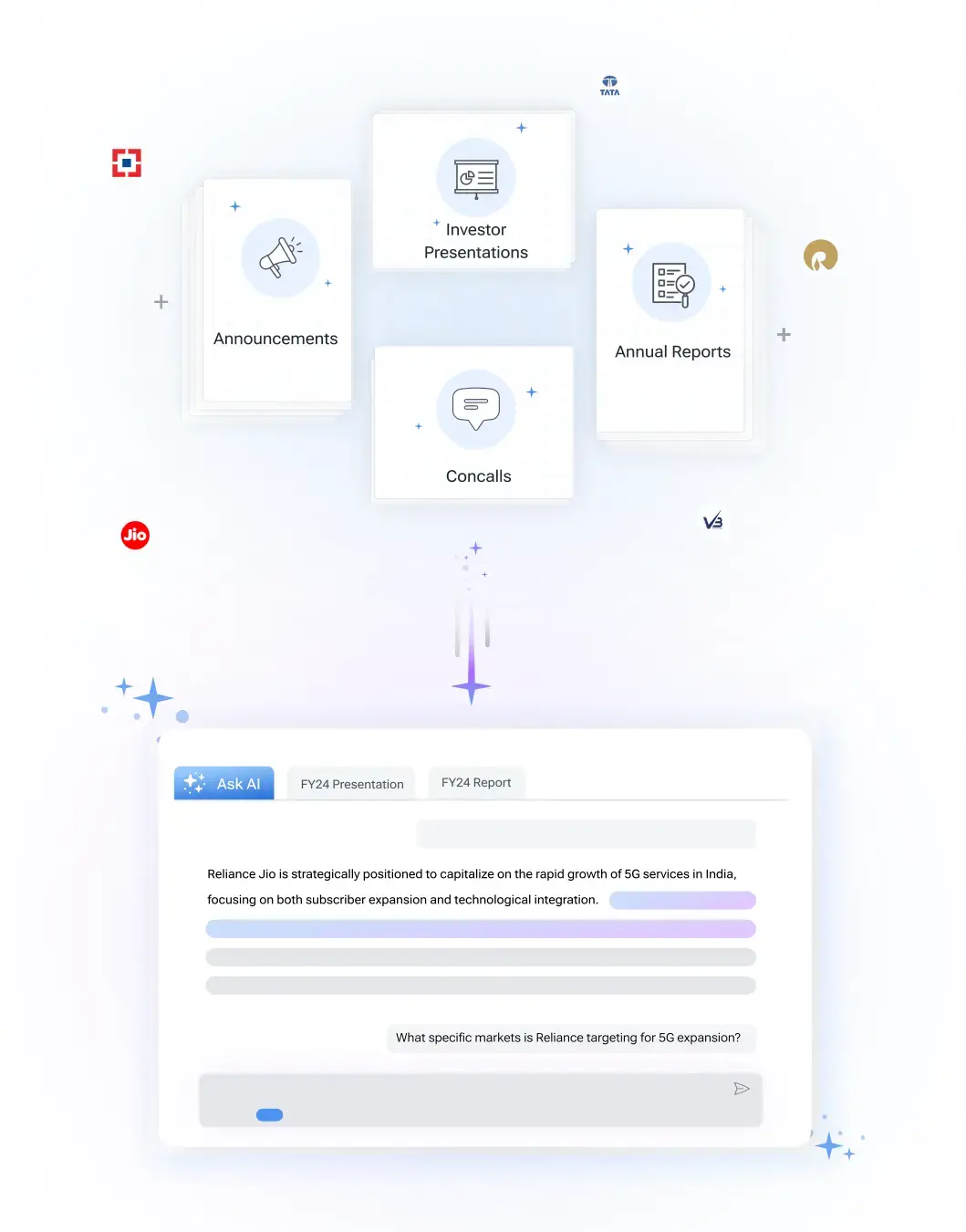
Get instant AI-powered insights about company performance, financials, and strategy. Ask questions about trends, competition, and developments while receiving responses backed by official documents and market data, with clear attribution to source documents.



 Discovery themes featuring this stock
Bearish
5
Neutral
9
Bullish
0
Bearish
7
Neutral
25
Bullish
14
Bearish
2
Neutral
16
Bullish
14
Bearish
2
Neutral
16
Bullish
14
Bearish
2
Neutral
16
Bullish
14
Bearish
2
Neutral
16
Bullish
14


Sustainable Energy Infra Trust (SEIT) is an InvIT that acquires, owns and operates utility‑scale solar power assets in India, currently managing eight fully operational solar projects totalling 1,553 MWp (1,127 MW AC) with long‑term PPAs and institutional sponsors Mahindra Susten and Ontario Teachers’ Pension Plan.
SEIT’s portfolio generates stable cash flows evidenced by Q1 FY27 operational generation of 690 MUs, an AC PLF of 28.0% and plant availability of 98.4%, enabling a Q1 distribution (declared) of INR 1,040 million, or INR 3.209 per unit, which demonstrates the InvIT’s yield focus and distribution discipline.
The Trust exhibits strong financial and credit metrics: consolidated Q1FY27 revenue from operations of INR 2,036 million, EBITDA margin of 84.3%, net distributable cash flow of INR 1,040 million, AAA/Stable ratings on debt, and a leverage (net debt/value) of 43.73% with a DSCR of 2.14x, indicating conservative servicing capacity.
High quality offtake underpins visibility: ~95% of AC capacity tied to tier‑1 counterparties, ~76% central PPAs, weighted average tariff of INR 3.06/kWh and a weighted average residual PPA tenor of c.19.4 years, reducing market volume risk and supporting long‑run yield stability for unitholders.
SEIT has clear growth optionality through a 9‑year ROFO with sponsor Mahindra Susten, access to the sponsor’s 3.1 GWp+ development pipeline, and demonstrable access to capital markets via listed NCD issuance and institutional lenders, positioning it to scale AUM and distributions over the medium term.
Consumable Fuels
Coal
3,963 Cr
Low Risk
36.9
8.1
0.6
1.4
130.00
110.00
Sales CAGR
Profit CAGR
ROE
ROCE
View Standalone
View Standalone
View Standalone
View Standalone
View Standalone
View Standalone
View Standalone
View Standalone



Investor Presentation
Q1 FY27
Investor Presentation
Q4 FY25

 Discovery themes featuring this stock


Sustainable Energy Infra Trust (SEITINVIT) is currently trading at 122.30 per share. Stock prices fluctuate during market hours on NSE and BSE based on demand, company updates, and overall market conditions. Refer to the live price chart above for the most recent price movement.
Sustainable Energy Infra Trust (SEIT) is an InvIT that acquires, owns and operates utility‑scale solar power assets in India, currently managing eight fully operational solar projects totalling 1,553 MWp (1,127 MW AC) with long‑term PPAs and institutional sponsors Mahindra Susten and Ontario Teachers’ Pension Plan. SEIT’s portfolio generates stable cash flows evidenced by Q1 FY27 operational generation of 690 MUs, an AC PLF of 28.0% and plant availability of 98.4%, enabling a Q1 distribution (declared) of INR 1,040 million, or INR 3.209 per unit, which demonstrates the InvIT’s yield focus and distribution discipline. The Trust exhibits strong financial and credit metrics: consolidated Q1FY27 revenue from operations of INR 2,036 million, EBITDA margin of 84.3%, net distributable cash flow of INR 1,040 million, AAA/Stable ratings on debt, and a leverage (net debt/value) of 43.73% with a DSCR of 2.14x, indicating conservative servicing capacity. High quality offtake underpins visibility: ~95% of AC capacity tied to tier‑1 counterparties, ~76% central PPAs, weighted average tariff of INR 3.06/kWh and a weighted average residual PPA tenor of c.19.4 years, reducing market volume risk and supporting long‑run yield stability for unitholders. SEIT has clear growth optionality through a 9‑year ROFO with sponsor Mahindra Susten, access to the sponsor’s 3.1 GWp+ development pipeline, and demonstrable access to capital markets via listed NCD issuance and institutional lenders, positioning it to scale AUM and distributions over the medium term.
Over the past 52 weeks, Sustainable Energy Infra Trust has traded between a low of ₹110.00 and a high of ₹130.00. The 52-week high and low indicate the stock’s price range over the last year and help investors understand its volatility and recent trading levels.
Sustainable Energy Infra Trust has a market capitalization of approximately 3,962.52. Market capitalization represents the total value of a company’s outstanding shares and helps investors understand its size, stability, and relative risk compared to other listed companies.
Sustainable Energy Infra Trust’s investment profile depends on its business fundamentals, valuation, and long-term outlook. The stock currently trades at a PE ratio of 36.89 and operates in the its sector sector. Investors typically assess financial performance, growth prospects, and individual risk tolerance before making investment decisions.
Based on its market capitalization of 3,962.52 Cr, Sustainable Energy Infra Trust is classified as a Small Cap stock. Large-cap stocks are generally more stable, while mid-cap and small-cap stocks tend to offer higher growth potential along with higher price volatility.
Sustainable Energy Infra Trust operates in the its sector sector. Sector classification matters because companies in the same sector are often affected by similar economic conditions, regulatory changes, and competitive dynamics, which can influence overall stock performance.
The Price-to-Earnings (PE) ratio of Sustainable Energy Infra Trust is 36.89. The PE ratio compares a company’s share price to its earnings and is commonly used to assess valuation. Comparing the PE ratio with sector peers and historical levels provides better context.

| Symbol | Watchlist | Price | Market Cap | P/E | P/B | Div Yield (%) | ROE (%) | ROCE (%) | ROA (%) |
122.30 | 3,963 Cr | 36.89 | 1.44 | 8.75 | 3.91 | 6.41 | 1.56 | ||
247.25 | 2,512 Cr | 9.96 | 3.29 | 0.00 | 33.05 | 32.16 | 9.83 | ||
749.55 | 1,915 Cr | 11.42 | 3.62 | 0.00 | 35.87 | 27.50 | 12.11 | ||
67.36 | 1,521 Cr | 35.10 | 5.13 | 0.03 | 14.85 | 13.13 | 6.48 | ||
604.45 | 652 Cr | 8.16 | 2.47 | 0.09 | 37.95 | 27.38 | 6.92 | ||
213.00 | 429 Cr | 8.90 | 2.62 | 0.00 | 31.62 | 37.65 | 13.73 | ||
37.76 | 426 Cr | 18.33 | 2.31 | 1.21 | 11.95 | 15.16 | 7.75 | ||
| Median: 7 Co. | — | 213.00 | 1,521 Cr | 11.42 | 2.62 | 0.03 | 31.62 | 27.38 | 7.75 |


