










Aarti Pharmalabs targets 8,800 tonnes, pauses xanthine expansion
Key highlights
- Aarti targets xanthine output of about 8,800 tonnes within two years, versus near 7,000 tonnes currently.
- Aarti expects 7,500 to 8,000 tonnes of xanthine output next year against a 9,600-tonne nameplate capacity.
- Management said xanthine capacity increased from 5,000 tonnes to more than 9,000 tonnes, with no further expansion planned for the next few years.
- Aarti expects this year’s xanthine volume to be about 15% above close to 6,000 tonnes last year.
powered by IRIS
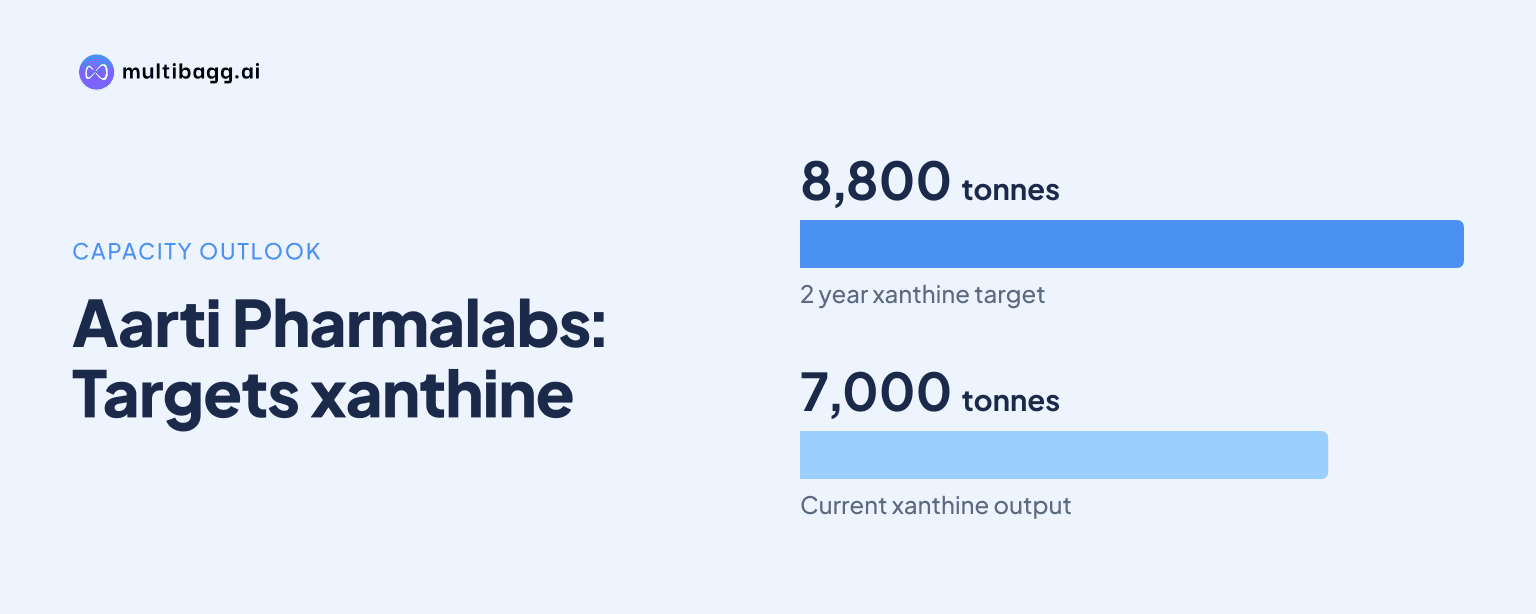
Aarti Pharmalabs expects xanthine output to reach about 8,800 tonnes within two years from near 7,000 tonnes currently, and management says it will not add xanthine capacity for the next few years. The planned peak is below the 9,600-tonne nameplate and follows capacity’s increase from 5,000 tonnes to more than 9,000 tonnes.
Know Aarti Pharmalabs inside out
Results, valuation, peers and who's buying, in one view.
What is Aarti’s xanthine capacity target?
Aarti’s stated operating target is about 8,800 tonnes at the highest level within the next two years. Management said the xanthine nameplate capacity will be 9,600 tonnes and that it has not planned to operate the asset at full utilisation. It instead described the intended level as around 90% utilisation.
The interim target is 7,500 to 8,000 tonnes next year, compared with output of near 7,000 tonnes currently. Management did not disclose a current utilisation percentage, but the stated sequence is a ramp from near 7,000 tonnes to 7,500-8,000 tonnes next year and then to about 8,800 tonnes over two years.
Why is Aarti pausing further xanthine expansion?
Aarti is pausing further xanthine expansion because management said the company has already increased capacity from 5,000 tonnes to more than 9,000 tonnes. Management said the business would have the world’s second-largest xanthine capacity and that it would be content to maintain that position for the next few years.
The pause is not a permanent commitment against new investment. Management said it would maintain the position for the next few years and then assess how the market develops. Its reference to capacity of more than 9,000 tonnes was a rounded description, while the more specific stated nameplate is 9,600 tonnes.
How are Aarti’s xanthine volumes and prices changing?
Aarti expects xanthine volume to rise about 15% this year from close to 6,000 tonnes last year. Management said average realisation was 10% to 15% higher than last year and later described the annual average price increase as 15%. The outlook therefore combines higher volume with a higher average realisation versus last year.
The quarterly movement was different from the annual comparison. Management said pure xanthine sales had fallen a little, while turnover from allied chemistry classified with xanthine had increased. About 5% of the quarter’s xanthine material was stuck because of shipment issues, and management also cited some decline in average realisation during the quarter.
Got a follow-up? Ask IRIS
Which xanthine markets does Aarti expect to have steadier pricing?
Aarti expects spot-market xanthine prices to face pressure, while management expects pharmaceutical and beverage applications to have more stable pricing. Management said xanthine has three segments, but did not disclose the revenue, volume or capacity split between spot, pharmaceutical and beverage sales.
Management said existing absolute margin could sustain at least through the next financial year. This was management’s outlook rather than a quantified margin forecast, as no margin percentage was provided. Management also said the year after next financial year would need to be assessed separately.
How does the xanthine plan differ from Aarti’s other capacity spending?
Aarti’s xanthine approach is to utilise its existing 9,600-tonne nameplate rather than make another addition, while it continues to evaluate capacity for contract development and manufacturing organisation, or CDMO, projects. In the same call, management said it would need more debt after an analyst referred to Rs 250 crore of FY27 capital expenditure still to come.
The company said a new dedicated CDMO block should provide enough capacity to reach Rs 1,000 crore of CDMO revenue. However, management said it may add manufacturing assets if it gets visibility on more new projects or greater demand from current projects. That conditional CDMO investment differs from the disclosed xanthine pause for the next few years.
Conclusion
Aarti’s xanthine plan is to increase output from near 7,000 tonnes currently to 7,500-8,000 tonnes next year and about 8,800 tonnes within two years. The company is targeting utilisation of the existing 9,600-tonne nameplate rather than pursuing another near-term expansion, after increasing capacity from 5,000 tonnes to more than 9,000 tonnes.
The next milestones are the move into the 7,500-8,000-tonne range next year, the resolution of the shipment issue affecting about 5% of quarterly xanthine material, and pricing in spot, pharmaceutical and beverage markets. Management’s disclosed margin view extends through the next financial year, while any later xanthine expansion remains subject to a future reassessment.