










Alufluoride says smelters may need up to 30,900 tonnes yearly
Key highlights
- Alufluoride estimates planned Indian smelters could require 21,600–30,900 tonnes of AlF₃ annually.
- Alufluoride has 24,000 TPA of AlF₃ capacity, up from 18,000 TPA.
- Vedanta’s additions are cited by FY28, while NALCO’s Angul smelter is identified for 2030-31.
- Alufluoride’s largest customer accounted for 54% of FY26 AlF₃ revenue, down from 69% in FY25.
powered by IRIS
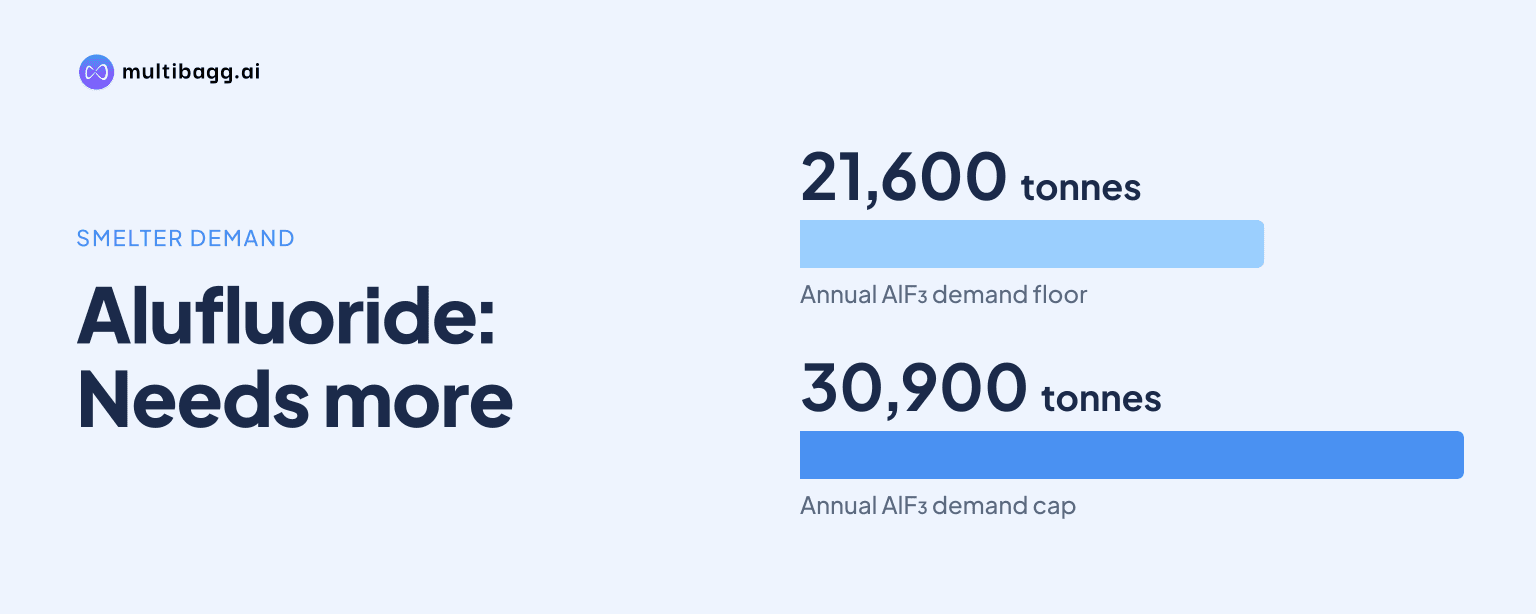
Alufluoride Limited says planned Indian smelter additions could require 21,600–30,900 tonnes of aluminium fluoride a year, compared with its 24,000-tonne annual AlF₃ capacity. The estimate covers about 1.5 MTPA of additions cited for NALCO, Hindalco and Vedanta, with Vedanta’s additions expected by FY28.
Know Alufluoride inside out
Results, valuation, peers and who's buying, in one view.
How much aluminium fluoride could planned Indian smelters need?
Planned Indian smelter additions could consume 21,600–30,900 tonnes of AlF₃ annually, according to Alufluoride. The company bases the range on about 1.5 million tonnes per annum, or MTPA, of new aluminium-smelting capacity proposed by NALCO, Hindalco and Vedanta, which it describes as 36% of India’s existing base.
The presentation uses AlF₃ consumption of 14–20 kilograms for every tonne of aluminium produced. AlF₃ serves as a flux in the electrolytic reduction of alumina, the process used in primary aluminium smelting. The 14–20 kilogram range is the source of the 21,600–30,900-tonne annual demand estimate rather than a disclosed order book or supply agreement.
Alufluoride’s 24,000-tonne annual capacity falls within the estimated demand range. The low case is 2,400 tonnes below its capacity, while the high case is 6,900 tonnes above it. The comparison indicates the scale of the potential market identified by management, not the volume Alufluoride expects to supply.
When are the new smelter additions expected to arrive?
The disclosed additions are expected to arrive in stages, with Vedanta’s additions cited by FY28 and NALCO’s Angul smelter identified for 2030-31. Alufluoride does not provide individual capacity figures or commissioning dates for each company within the approximately 1.5 MTPA aggregate on page 11 of its presentation.
The cited timeline means the potential AlF₃ requirement is not presented as one immediate increase. Vedanta’s FY28 additions are the earliest specific event disclosed, while NALCO’s Angul project is scheduled later, in 2030-31. Hindalco is included in the group of companies planning new capacity, but the supplied presentation does not state its project timing.
Alufluoride says it is qualified with Hindalco, Vedanta and NALCO, which are also the three companies named in the 1.5 MTPA additions estimate. The company describes smelter qualification as slow and exacting because an off-spec consignment can damage potlines, and says quality, consistency and reliability determine business alongside price.
What is Alufluoride’s current aluminium fluoride capacity?
Alufluoride has 24,000 tonnes per annum, or TPA, of AlF₃ capacity, equivalent to 80 tonnes per day, up from 18,000 TPA. The 6,000-TPA increase means current capacity is one-third higher than the earlier 18,000-TPA level shown in the presentation.
The company makes high-purity AlF₃ at Visakhapatnam by converting hydrofluosilicic acid, or FSA, a fluorine byproduct from phosphatic fertiliser complexes. Alufluoride says FSA is difficult to dispose of if not recovered, while its conversion into AlF₃ supports pollution abatement, import substitution, resource conservation and a lower carbon footprint for primary aluminium.
AlF₃ operations accounted for all Rs 63.9 crore of Alufluoride’s Q2FY27 revenue, which was 17% higher year on year. Its 4.1-megawatt captive solar units recorded no revenue in Q2FY27 or Q2FY26 because they are largely used internally to lower conversion costs rather than as a separate sales line.
Got a follow-up? Ask IRIS
How is Alufluoride positioned to supply Indian smelters?
Alufluoride says its Visakhapatnam plant is within manageable freight range of every major Indian smelter and is the only AlF₃ manufacturer in Andhra Pradesh. The company also says its coastal location supports outbound logistics and places it on the same coast as both of its principal FSA suppliers.
Alufluoride has long-term FSA supply contracts with IFFCO Paradeep and Coromandel International, which it says together cover the bulk of feedstock needs. The company widened its supplier base with an additional plant from April 2026 and says further quantities have been indicated after a supplier completes a fluorine-recovery upgrade.
The company says it maintains strict incoming-quality specifications across all feedstock sources. This is relevant to the high-purity, low-bulk-density AlF₃ requirements cited for smelters, where Alufluoride says only a few of fewer than five domestic manufacturers qualify for such supply.
Materials cost Rs 23.3 crore in Q2FY27, or 36.4% of Rs 63.9 crore revenue, compared with Rs 26.7 crore, or 48.8% of revenue, in Q2FY26. Alufluoride attributes the lower Q2FY27 materials ratio partly to alumina hydrate bought ahead and prices agreed in May 2026, while stating that this initial effect will fade.
How concentrated is Alufluoride’s smelter customer base?
Alufluoride’s largest customer represented 54% of AlF₃ revenue in FY26, down from 69% in FY25, while its top two customers accounted for 72%. Odisha accounted for 70% of AlF₃ revenue, showing that the largest-customer share declined by 15 percentage points but customer and geographic concentration remained.
The company identifies Hindalco, Vedanta and NALCO as qualified customers and says it has received Hindalco’s Resilient Supply Chain recognition and NALCO’s Best Customer award. Alufluoride is pursuing qualification of additional buyers and overseas markets through Alufluoride International Pte. Ltd., Singapore, rather than disclosing a new domestic supply contract.
Alufluoride describes the domestic field as fewer than five AlF₃ manufacturers, with only a few able to qualify for high-purity, low-bulk-density supply. The presentation does not quantify competitors’ capacity, their available output or the share of the 21,600–30,900-tonne potential requirement that Alufluoride could supply.
Conclusion
Alufluoride has identified a potential demand pool comparable with, and at the upper end larger than, its 24,000-TPA capacity. The estimate depends on about 1.5 MTPA of proposed domestic smelter additions, consumption of 14–20 kilograms of AlF₃ per tonne of aluminium, and the company’s existing qualification with the three named producers.
The next disclosed milestones are Vedanta’s additions by FY28 and NALCO’s Angul smelter in 2030-31, alongside progress in additional customer qualifications and feedstock volumes. Management is evaluating a second AlF₃ site in domestic and overseas locations, but says a formal commitment will follow only after specifications, capital cost, financing and revenue economics meet the board’s requirements.