










Ambani Orgochem targets 2.25x emulsion and 5x salicylic capacity
Key highlights
- Ambani Orgochem plans to raise acrylic-waterborne emulsion capacity from about 2,000 to about 4,500 tonnes per month.
- Ambani Orgochem plans to increase salicylic-acid capacity fivefold, from about 40 to about 200 tonnes per month.
- Ambani Orgochem has identified more than 12 salicylate molecules, with selected products progressing towards plant trials.
- Ambani Orgochem reported H1 FY27 net revenue from operations of Rs 171.2212 crore, up 54.87% year on year.
powered by IRIS
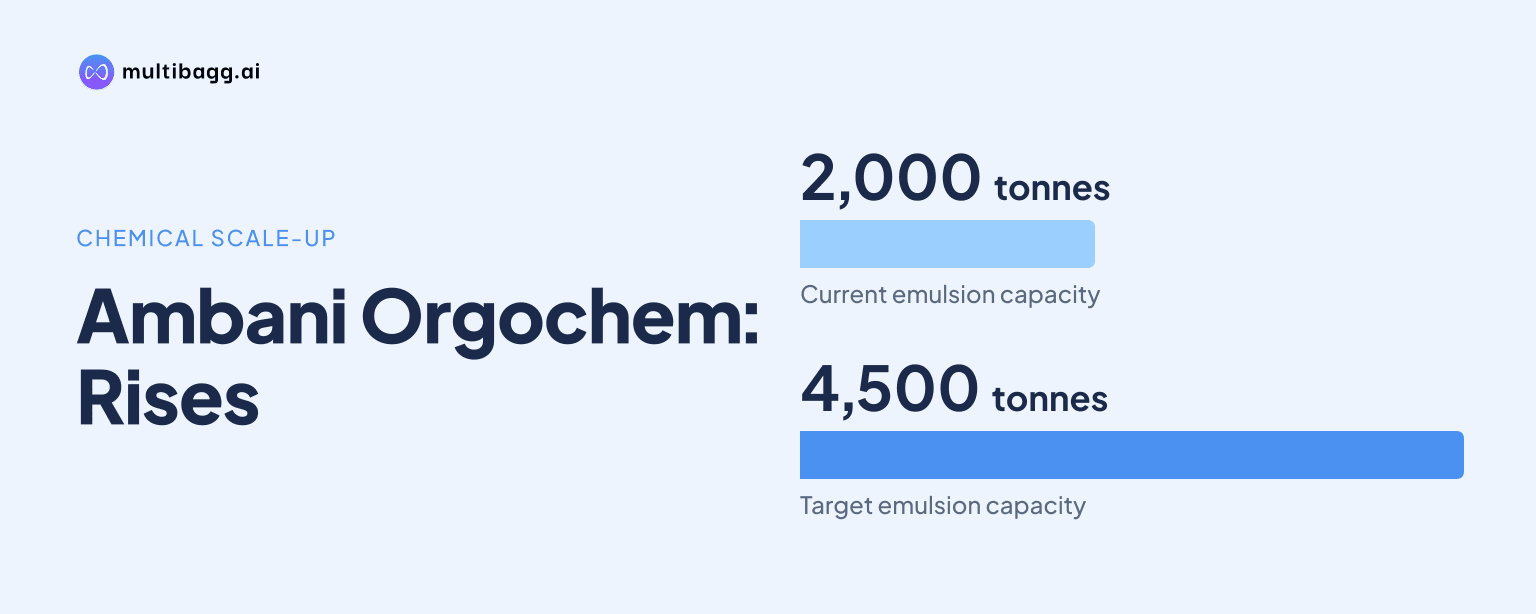
Ambani Orgochem Limited plans to raise acrylic-waterborne emulsion capacity from about 2,000 tonnes per month to about 4,500 tonnes per month and salicylic-acid capacity from about 40 tonnes to about 200 tonnes per month in its H1 FY27 strategic outlook. The emulsion plan represents 2.25x capacity, while salicylic acid is targeted for a fivefold increase.
Know Ambani Orgochem inside out
Results, valuation, peers and who's buying, in one view.
How much is Ambani Orgochem expanding acrylic-emulsion capacity?
Ambani Orgochem is targeting about 4,500 tonnes per month of acrylic-waterborne emulsion capacity, compared with about 2,000 tonnes per month currently. The stated plan is a 2.25x expansion and is linked to an ongoing expansion at Tarapur Maharashtra Industrial Development Corporation, or MIDC.
The Tarapur MIDC project is intended to increase manufacturing scale for waterborne chemistry across paints, coatings, adhesives, carpets, construction, textiles and paper. Ambani Orgochem specifically identifies waterproofing, pressure-sensitive adhesives, carpet binders and road infrastructure among the applications the expansion is intended to support.
The 4,500-tonnes-per-month target is a capacity plan rather than a disclosed production or sales forecast. Ambani Orgochem describes its strategic focus for this platform as scaling capacity, advancing formulations and pursuing application-led opportunities, but does not provide a commissioning date, project cost, customer commitment or revenue target.
Which markets will Ambani Orgochem's emulsion expansion serve?
Ambani Orgochem says its acrylic-waterborne emulsions address paints, coatings, adhesives, carpets, construction, textiles and paper. The company is expanding a business that already forms part of its portfolio of eco-friendly acrylic coatings and adhesives, rather than describing a new entry into waterborne chemistry.
The applications show the range of uses being targeted by the Tarapur project. Waterproofing and road infrastructure relate to construction applications, while pressure-sensitive adhesives and carpet binders relate to adhesive and flooring uses; paints, coatings, textiles and paper add separate end-use markets for the same waterborne-emulsion platform.
The company has not disclosed segment revenue for acrylic-waterborne emulsions or a split between its 2,000-tonnes-per-month current capacity and other chemical platforms. Its broader portfolio also includes peroxide derivatives, salicylic acid and salicylates, and metal octoates, placing the planned emulsion increase within a four-platform specialty-chemicals strategy.
How is Ambani Orgochem moving into salicylate derivatives?
Ambani Orgochem plans to increase in-house salicylic-acid capacity from about 40 tonnes per month to about 200 tonnes per month. The fivefold roadmap accompanies development of more than 12 salicylate molecules for potential use in cosmetics, fragrance, personal care, pharmaceuticals and specialty chemicals.
The identified pipeline includes octyl, 2-ethylhexyl, cyclohexyl, amyl, benzyl, isopropyl, hexyl, heptyl, homo-methyl, sakura, iso-amyl and iso-butyl salicylates. Selected molecules are progressing towards plant trials, which indicates development activity rather than confirmed commercial production across the full pipeline.
This initiative changes the disclosed emphasis from the core salicylic-acid molecule to downstream derivatives. Ambani Orgochem characterises the plan as broadening its molecule portfolio and pursuing higher-value opportunities, while commercial outcomes for selected products remain dependent on plant trials and subsequent validation.
Got a follow-up? Ask IRIS
What does Ambani Orgochem's peroxide programme include?
Ambani Orgochem has more than 20 existing peroxide products and is developing five additional peroxide molecules. Its peroxide platform serves polymer processing, composites, rubber, elastomers and other industrial applications through specialised manufacturing infrastructure and in-house research and development.
The company has developed di-tert-amyl peroxide, or DTA, through in-house research and development. Separately, pilot trials for two critical raw materials being developed in-house are nearing completion, making the input programme distinct from the five peroxide molecules under development.
Ambani Orgochem says the two raw materials could potentially support about six additional peroxide molecules, subject to validation and commercial assessment. The qualification means these potential products are not disclosed as commercial launches, installed capacity or confirmed revenue contributors.
How does the expansion plan compare with H1 FY27 performance?
Ambani Orgochem reported consolidated net revenue from operations of Rs 171.2212 crore in H1 FY27, up 54.87% from Rs 110.5594 crore in H1 FY26. Earnings before interest, tax, depreciation and amortisation, or EBITDA, rose 43.00% to Rs 11.3192 crore from Rs 7.9157 crore over the same periods.
Net profit reached Rs 3.4504 crore in H1 FY27, compared with Rs 19.07 lakh in H1 FY26, a reported increase of 1,709.33%. Earnings per share rose 1,514.46% to Rs 4.02 from Rs 0.249, according to the consolidated results for the six months ended September 30, 2026.
The capacity and product programmes are forward-looking initiatives, while the H1 FY27 figures are reported results. Managing Director Rakesh H. Shah said management is working to deepen product capabilities, expand downstream opportunities and strengthen technical and manufacturing foundations across the emulsion, salicylate and peroxide businesses.
Conclusion
Ambani Orgochem's disclosed plan combines a 2.25x increase in acrylic-waterborne emulsion capacity with a fivefold expansion in salicylic-acid capacity. The company is pairing those volume targets with more than 12 identified salicylate derivatives, five peroxide molecules under development and two in-house raw-material projects that could potentially support about six more peroxide molecules.
The next disclosed milestones are selected salicylate products progressing towards plant trials and the nearing completion of pilot trials for two peroxide raw materials, followed by validation and commercial assessment. The Tarapur MIDC emulsion project remains ongoing, but Ambani Orgochem has not stated a completion date, capital-expenditure amount or sales target for the planned 4,500-tonnes-per-month capacity.