










Antara expanded to 485 beds as occupancy reached 29% in Q2FY27
Key highlights
- Antara operated 485 care-home beds in Q2FY27, compared with reported capacity of 262 beds in Q2FY26.
- Total care-home occupancy was 29% in Q2FY27, while overall exit occupancy reached 33% in September 2026.
- Existing beds reached 40% exit occupancy in September 2026, compared with 22% for new beds.
- Care Homes and Services net revenue rose to Rs 12.79 crore in Q2FY27 from Rs 9.15 crore in Q2FY26.
powered by IRIS
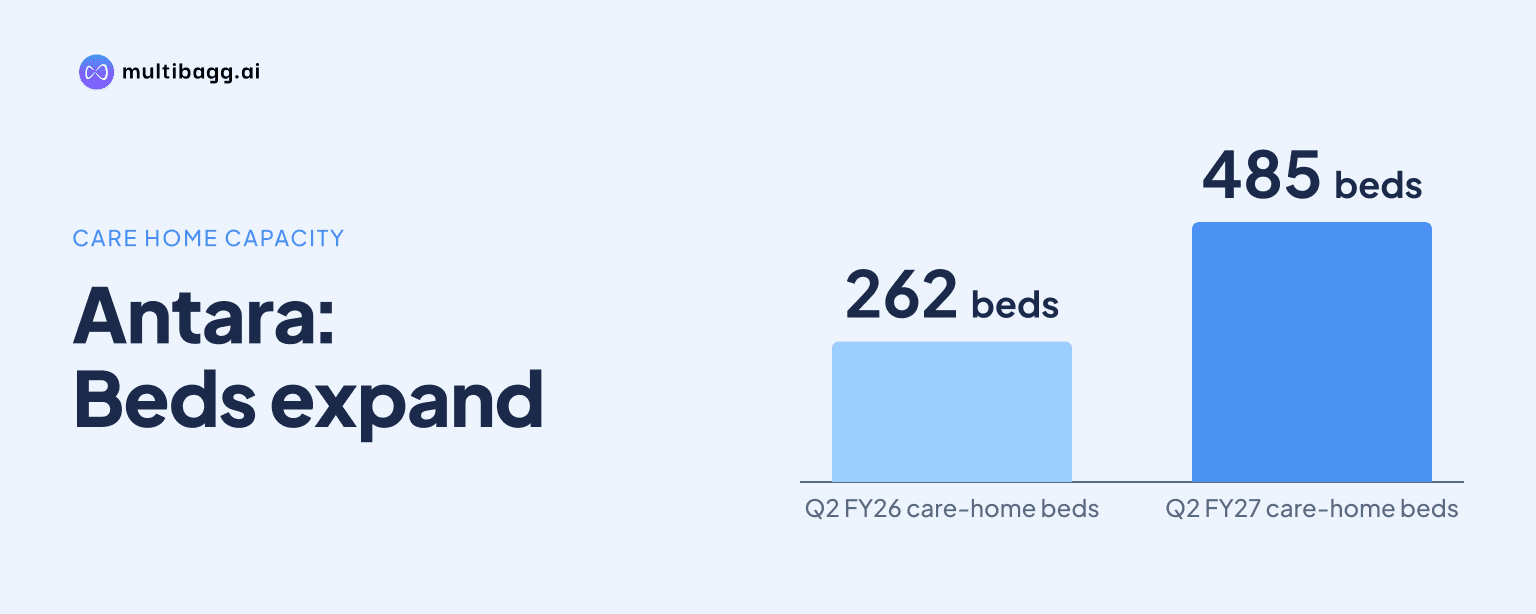
Antara operated 485 care-home beds in Q2FY27, up from reported capacity of 262 beds in Q2FY26, while overall occupancy was 29% as 195 new beds averaged 19% occupancy. The established 290-bed cohort averaged 36% occupancy and reached 40% exit occupancy in September 2026.
Know Max India inside out
Results, valuation, peers and who's buying, in one view.
How did Antara expand its care-home capacity?
Antara operated 485 beds across Delhi-NCR, Bengaluru and Chennai in Q2FY27, comprising 207 beds in Delhi-NCR, 163 in Bengaluru and 115 in Chennai. The portfolio included eight homes: DLF Gurgaon with 27 beds, Gurgaon Sector-41 with 29, Noida with 53, Sector-24 Gurugram with 98, Bannerghatta Road with 83, Whitefield with 80, ECR Laguna with 43 and OMR with 72.
Reported care-home capacity rose from 262 beds in Q2FY26 to 305 in Q3FY26 and 485 in Q1FY27, where it remained in Q2FY27. This was an increase of 223 beds, or about 85%, from Q2FY26 to Q2FY27. Antara’s occupancy presentation separately classified the Q2FY27 portfolio into 290 existing beds and 195 new beds.
Three homes totalled the 195-bed new cohort: ECR Chennai, with 43 beds, went live in October 2025; Whitefield Bengaluru, with 80 beds, went live in February 2026; and OMR Chennai, with 72 beds, went live in March 2026. Gurgaon Sector-41, a 29-bed home, went live in May 2026, while the 27-bed DLF Gurgaon home was relaunched in July 2026.
Why was Antara's overall occupancy only 29%?
Antara’s total care-home occupancy was 29% in Q2FY27 because its 195 new beds averaged 19% occupancy, compared with 36% for the 290 existing beds. The combined rate improved from 26% in Q1FY27 and 28% in Q2FY26, but the newer capacity had not reached the utilisation level of the established cohort.
The difference narrowed at quarter-end. Existing beds recorded 40% exit occupancy in September 2026, compared with 27% in September 2025, while new beds exited September at 22% occupancy after rising every month. Overall exit occupancy reached 33% in September 2026, up from 25% in July 2026.
Occupied bed days rose from 6,765 in Q2FY26 to 13,042 in Q2FY27, a 1.9-times year-on-year increase. They also rose from 11,456 in Q1FY27, when the same reported 485-bed capacity produced total occupancy of 26%, to 13,042 in Q2FY27 and 29% occupancy.
Got a follow-up? Ask IRIS
Which Antara care homes are ramping fastest?
Antara reported higher Q2FY27 move-ins than Q1FY27 at six of eight homes, led by Gurgaon Sector-41, where move-ins rose from nine to 27, and OMR Chennai, where they rose from 31 to 48. Whitefield increased from 44 to 49, ECR from 10 to 12, Noida from 49 to 57 and Sector-24 Gurugram from 70 to 73.
DLF Gurgaon recorded 10 move-ins in Q2FY27 following its July 2026 relaunch, compared with zero in Q1FY27, and reached 45% occupancy within three months. Bannerghatta Bengaluru was the exception in the move-in comparison, declining from 78 in Q1FY27 to 72 in Q2FY27. The presentation does not equate quarterly move-ins with occupancy.
Digital channels generated 176 move-ins in Q2FY27, up from 86 in Q1FY27, and represented about 50% of Q2 move-ins. Antara said its occupancy-ramp plan relies on digital and hospital referrals, alongside a higher share of transition care, pricing discipline and ancillary services. Its listed clinical capabilities include robotic gait rehabilitation, robotic hand-function rehabilitation, and swallowing and neuromuscular therapy.
Management said four of eight care homes were tracking to plan in Q2FY27 and two were trending towards plan. The disclosure indicates progress across six homes but does not identify the remaining two homes or give site-level occupancy targets, leaving the pace of ramp-up for the expanded portfolio unresolved.
How did Antara's care-home revenue change in Q2FY27?
Antara’s Care Homes and Services net revenue rose to Rs 12.79 crore in Q2FY27 from Rs 9.15 crore in Q2FY26, a 1.4-times year-on-year increase. Care Home revenue increased to Rs 8.99 crore from Rs 3.91 crore, while Care at Home revenue declined to Rs 3.80 crore from Rs 5.24 crore; the presentation states that revenue is reported net of discounts.
Sequentially, total Care Homes and Services revenue increased from Rs 12.03 crore in Q1FY27 to Rs 12.79 crore in Q2FY27. Care Home revenue rose by Rs 0.80 crore, from Rs 8.19 crore to Rs 8.99 crore, while Care at Home revenue declined by Rs 0.04 crore, from Rs 3.84 crore to Rs 3.80 crore.
Antara served about 2,700 patients during Q2FY27 and more than 55,000 patients since inception. Care Home revenue accounted for about 70% of the Rs 12.79 crore total in Q2FY27, compared with about 43% of the Rs 9.15 crore total in Q2FY26, reflecting higher Care Home revenue and lower Care at Home revenue over the year.
Conclusion
Antara’s Q2FY27 figures show that reported care-home capacity increased faster than average occupancy, while utilisation improved across both bed cohorts. The existing cohort averaged 36% occupancy and reached 40% exit occupancy in September 2026, while new beds averaged 19% and exited at 22%; together, the portfolio delivered 13,042 occupied bed days and Rs 8.99 crore of Care Home revenue.
The next indicator is whether September 2026 exit occupancy converts into higher quarterly average occupancy as Antara pursues digital and hospital referrals, transition care, pricing discipline and ancillary services. Management’s disclosed markers are 33% overall exit occupancy in September 2026, four homes tracking to plan, two trending towards plan and 176 digital move-ins in Q2FY27.