










Avience targets automated analyzers through Chinese tie-ups
Key highlights
- Avience is validating HPLC, biochemistry and hematology analyzers from two to three Chinese manufacturers.
- Management said adding at least 25% local inputs would qualify products under its Make in India approach.
- Fully automated analyzers could start two to three months after the new manufacturing facility receives its licence.
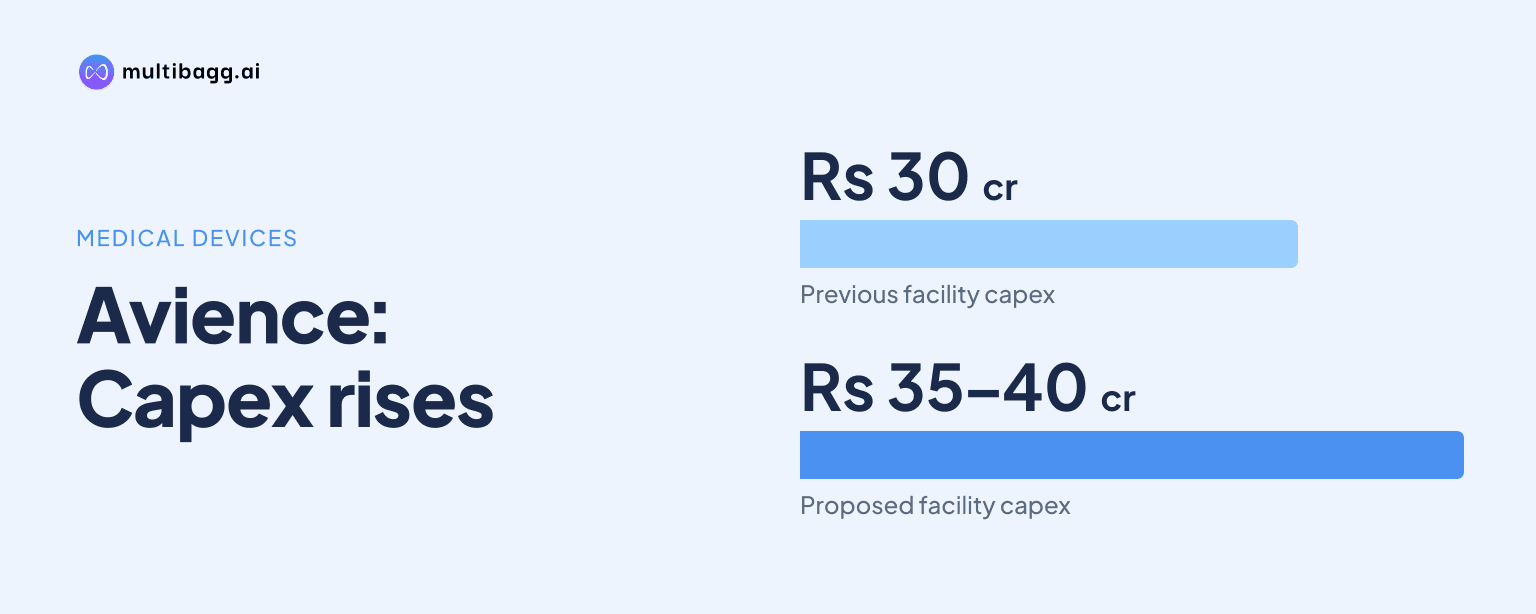
- Proposed capex for the new facility has increased from Rs 30 crore to approximately Rs 35-40 crore.
powered by IRIS
Avience is validating analyzer products from two to three Chinese manufacturers and plans to add at least 25% local inputs under its Make in India approach. Management said the programme covers HPLC, biochemistry and hematology analyzers and could introduce fully automated systems two to three months after licensing of its new manufacturing facility.
Know Avience Biomedicals inside out
Results, valuation, peers and who's buying, in one view.
What do Avience's Chinese analyzer tie-ups cover?
Avience's Chinese tie-ups cover high-performance liquid chromatography, or HPLC, biochemistry and hematology analyzers. Management said products from two to three manufacturers had arrived at its facility and were under validation after discussions with those suppliers, but it did not disclose the manufacturers' names, the number of models involved or commercial terms.
Management described China as its preferred current source for technology or manufactured products, saying European sourcing would make it difficult to compete in the market. The disclosed process is to validate the incoming analyzers, add Avience inputs and bring the products into its Make in India programme. Management did not describe the arrangements as a joint venture.
Avience already uses components from more than one geography in its equipment operations. Management said it sources some parts from China, some from Europe and some indigenous suppliers, then assembles equipment at its facility. It said the company does not import 100% of its equipment from China and manufactures all reagents at its own facility.
How will Avience use local inputs under Make in India?
Avience plans to add 25% or more of its own inputs to the validated products, which management said would qualify them under its stated Make in India approach. This indicates local value addition to Chinese-sourced analyzer products rather than a claim that every component will initially be made in India.
Management did not identify the components that will comprise the 25% local input level or provide a rupee value for local content. It also did not say whether the threshold will be applied uniformly across HPLC, biochemistry and hematology analyzers. The degree of localisation beyond that level therefore remains undisclosed.
The broader objective goes beyond the initial value-addition plan. Management said its vision is to manufacture at its facilities equipment and inputs that it currently obtains from China. It framed that objective as a vision, not as a dated production target, and did not give a timetable for replacing imported parts.
Why does Avience want fully automated analyzers?
Avience wants fully automated analyzers because management said large brands, hospitals and laboratories require them to handle high sample volumes. The company currently manufactures semi-automatic analyzers, so management said its present range is not intended for large hospitals and laboratories that need fully automated systems.
The current analyzer customer base is mainly in tier-2 and tier-3 cities and among smaller customers, according to management. It said the products do not mainly go to the unorganised sector, while identifying Uttar Pradesh and Delhi-NCR as its larger business contributors among several states from which it receives orders.
Management said Avience is validating fully automated analyzers and that they could start two to three months after it obtains a licence for the new manufacturing facility. The timetable is conditional on licensing, rather than a launch commitment from the date of the call, and management did not disclose an application or approval date.
Avience outlined a potential progression from semi-automatic biochemistry analyzers to fully automated instruments with throughput of 200, 300, 500, 600, 700, 800 and 1,000 samples per hour. That describes the technical range management wants to develop, but the call did not provide individual product launch dates or expected sales for those throughput levels.
Got a follow-up? Ask IRIS
What investment and approvals support Avience's plan?
Avience's proposed capital expenditure for the new facility has risen to approximately Rs 35-40 crore from Rs 30 crore. Management estimated about Rs 2 crore for land, Rs 15 crore for the building and approximately Rs 15 crore for plant and machinery; the stated components do not fully account for the upper end of the revised capex range.
Management said the facility should be ready in the first or second week of December and be inaugurated in January 2027, while allowing that opening could occur in December. The manufacturing-facility licence is the stated prerequisite for starting fully automated analyzers, making that approval more consequential to the programme than the inauguration date alone.
The facility expansion is also linked to a planned change in revenue mix. Management said manufacturing should account for approximately 40% of revenue in FY27, with trading making up the rest, before reaching a 50-50 manufacturing-trading mix in the following year. It said EBITDA, or earnings before interest, tax, depreciation and amortisation, could increase by 2-3% during expansion and reach approximately 35-36% a year later once operations are stable.
Management contrasted average manufacturing margins of approximately 40-50% with trading margins of about 10-15%, while noting that margins vary by product. It also identified reagent rental as a third model, where Avience invests in an instrument and earns margins from reagents. The company did not quantify the revenue or margin contribution expected specifically from locally assembled Chinese analyzer products.
Avience currently has 117 Central Drugs Standard Control Organization, or CDSCO, licences. Management said 200 products were in the pipeline and expressed hope of receiving 200 additional CDSCO licences within one year, but it did not specify how many of those products relate to the Chinese-analyzer validation programme.
Conclusion
Avience's disclosed Chinese arrangements provide a route to validate HPLC, biochemistry and hematology analyzers, add at least 25% local inputs and widen its range beyond semi-automatic products. The plan is tied to a shift toward fully automated systems for high-volume laboratories, while its present analyzers mainly serve smaller customers in tier-2 and tier-3 cities.
The next milestones are the manufacturing-facility licence, the stated two-to-three-month period for fully automated analyzers to start after that approval, and the planned January 2027 inauguration. Management's target of approximately 40% manufacturing revenue in FY27, rising to a 50-50 mix in the following year, and its hope for 200 additional CDSCO licences within one year will indicate progress on the wider localisation plan.