










Bikaji sees Q4 FY'27 EBITDA margin at 13.5% after pricing
Key highlights
- Bikaji management expects Q4 FY'27 EBITDA margin of 13.5%, compared with about 12.6% in H1 FY'27.
- Bikaji's 3%-3.5% price action begins around 15 November, with full-quarter realisation expected in Q4 FY'27.
- Management said edible-oil and packaging-material prices had softened by 3%-4% in the two weeks before the call.
- Bikaji reported Q2 FY'27 growth of 19.7% in Ethnic Snacks and 44% in Western Snacks.
powered by IRIS
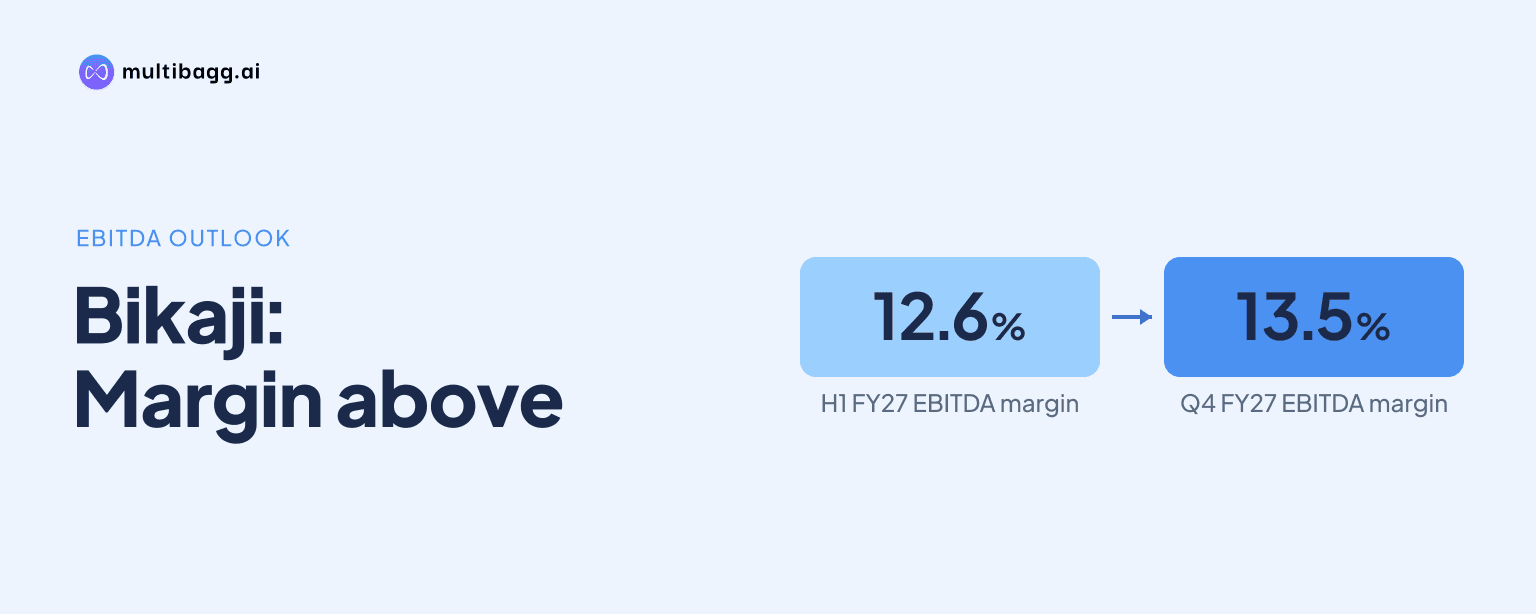
Bikaji Foods International Limited expects Q4 FY'27 EBITDA margin of 13.5%, versus 12.6% at the company level in H1 FY'27, as its 3%-3.5% post-Diwali price action, softer edible-oil and packaging costs, and fresh crop arrivals offset the cost pressure that management expects to persist in Q3.
Know Bikaji Foods International inside out
Results, valuation, peers and who's buying, in one view.
What EBITDA margin does Bikaji expect in Q4 FY'27?
Bikaji expects Q4 FY'27 EBITDA margin of 13.5%, according to management, with a normalised gross-margin and EBITDA exit run rate above 13%. This compares with EBITDA margin of about 12.6% for H1 FY'27, when higher raw-material and operating costs affected profitability.
Management did not give a full-year EBITDA-margin target. It instead described a sequence in which Q3 remains under pressure and Q4 benefits from a full quarter of revised pricing, easing input costs and new crop availability. The company said Q4 margin would be higher than the H1 level.
The Q2 FY'27 standalone gross-margin decline was about 1.7%, management said, largely reflecting raw-material inflation in the snacks business. Management also described the consolidated gross-margin impact as about 0.6%, while saying the standalone impact was close to 2% versus the preceding quarter, illustrating that reported comparisons differed by reporting basis.
Why will Bikaji's Q3 FY'27 margin remain under pressure?
Bikaji expects Q3 FY'27 margin to remain under pressure because it did not take a major price rise in September and October despite cost inflation. Management said only about 45 days of the revised price would contribute to Q3, whereas Q4 will capture the full benefit.
Management said the first 60% of Q3 had muted margins, with about 40% of the quarter expected to benefit from the price action and later festive sales. The company had completed modern-trade, gifting and maximum retail price, or MRP, arrangements by July and August, making an increase during the festive selling period difficult.
Packaged sweets will have their largest contribution in Q3, especially in October, after Diwali shifted from Q2 in the prior year to Q3 in FY'27. However, management said higher packaging-material and sugar prices in sweets would limit the immediate margin benefit, despite the stronger festive mix.
The sales mix also explains why overall Q2 volume growth was 5%, while the snacks categories expanded faster. Ethnic Snacks grew 19.7% and Western Snacks grew 44% in Q2 FY'27, but packaged-sweets and gifting sales shifted into Q3. Management therefore said the seasonal categories should be assessed across Q2 and Q3 together.
How will Bikaji's 3%-3.5% price action improve margins?
Bikaji's 3%-3.5% price action from around 15 November is intended to manage inflation in pulses and other inputs. Management said factory dispatches would carry revised MRPs from that date, although stocks already in the trade could delay shelf-level implementation by five to seven days.
The action includes MRP revisions and a grammage reduction in small packs. For Rs 5 and Rs 10 packs, management said the reduction would be about one gram, or roughly 3%-4% on a weighted-average basis. These impulse packs recorded 20% growth in Q2 FY'27, supported by a Paytm campaign.
Management said it did not currently expect a further major price increase until March-end, unless conditions change. That outlook rests on the current 3%-3.5% action and the anticipated easing in input costs, rather than on pricing alone.
The company said costs had risen from March and April after a poor crop lifted pulse prices. The absence of a major September-October price increase meant Bikaji absorbed more of that pressure during Q2 and the early part of Q3. Full-quarter price realisation is consequently a central element of management's Q4 margin plan.
Got a follow-up? Ask IRIS
Which costs could support Bikaji's Q4 FY'27 margin?
Bikaji expects softer edible-oil, packaging-material and crop costs to supplement the price action in Q4 FY'27. Management said edible-oil and packaging-material prices had softened by 3%-4% in the two weeks before the earnings call, alongside a decline in crude prices.
Fresh crop arrivals are the second part of the outlook. Management said potato costs were at their seasonal peak in October and expected fresh potatoes and some pulses to arrive by December and mid-December. It expects these arrivals to reduce input pressure in Q4.
Other operating costs had also increased during the year. Management cited manufacturing, fuel and logistics expenses, including diesel-related pressure, and said standalone advertising cost in Q2 FY'27 was 0.7% higher year on year as it invested behind snacks momentum in focus markets.
Bikaji budgeted advertising and promotion spending at about 2% of full-year profit and loss. Its Paytm cashback programme runs from September to March, but management said Paytm bears the customer redemption cost while Bikaji funds communication and point-of-purchase material.
How do sales trends support Bikaji's pricing plan?
Bikaji is pursuing the margin recovery alongside a high-teens full-year growth outlook. Management said it expected overall company growth of more than 20% in the second half and full-year growth of about 17%, while focus markets were expected to grow in the 20%-23% range.
Sweets account for about 12.5% of Bikaji's overall full-year business, but management said their contribution is 25% in focus states and even higher in other states. This geographic mix explains why the Diwali shift had a larger reported effect on focus and other markets than on core markets.
Snacking demand was stronger than the overall volume figure indicates. Management reported snacks value growth of 22% and volume growth of more than 15% in Q2 FY'27, with core-market snacks growing more than 20% and focus-market snacks more than 35%.
Bikaji added about 20,000 outlets in Q2 and said it was poised to exceed its annual outlet-addition objective. While management did not quantify a margin contribution from those outlets, expanded coverage can support the rollout of revised-price products across general trade, modern trade and other channels.
Conclusion
Bikaji's stated outlook is for Q3 FY'27 to reflect the lag between elevated costs and the November price action, followed by Q4 EBITDA margin of 13.5%. The projected recovery combines full-quarter realisation of the 3%-3.5% increase with softer edible-oil and packaging costs and expected availability of fresh potatoes and pulses.
The next milestones are the flow of revised MRPs after around 15 November, crop arrivals from December and the durability of the reported 3%-4% easing in edible-oil and packaging prices. Management currently sees no major additional price increase until March-end, unless underlying conditions change.