










Chaman Lal Setia flags Q2 profit risk from paddy costs
Key highlights
- Chaman Lal Setia said Q2 FY27 PBT was about Rs 75 crore, its highest quarterly result.
- Management said lower-cost inventory bought in 2025 contributed to Q2 FY27 profitability.
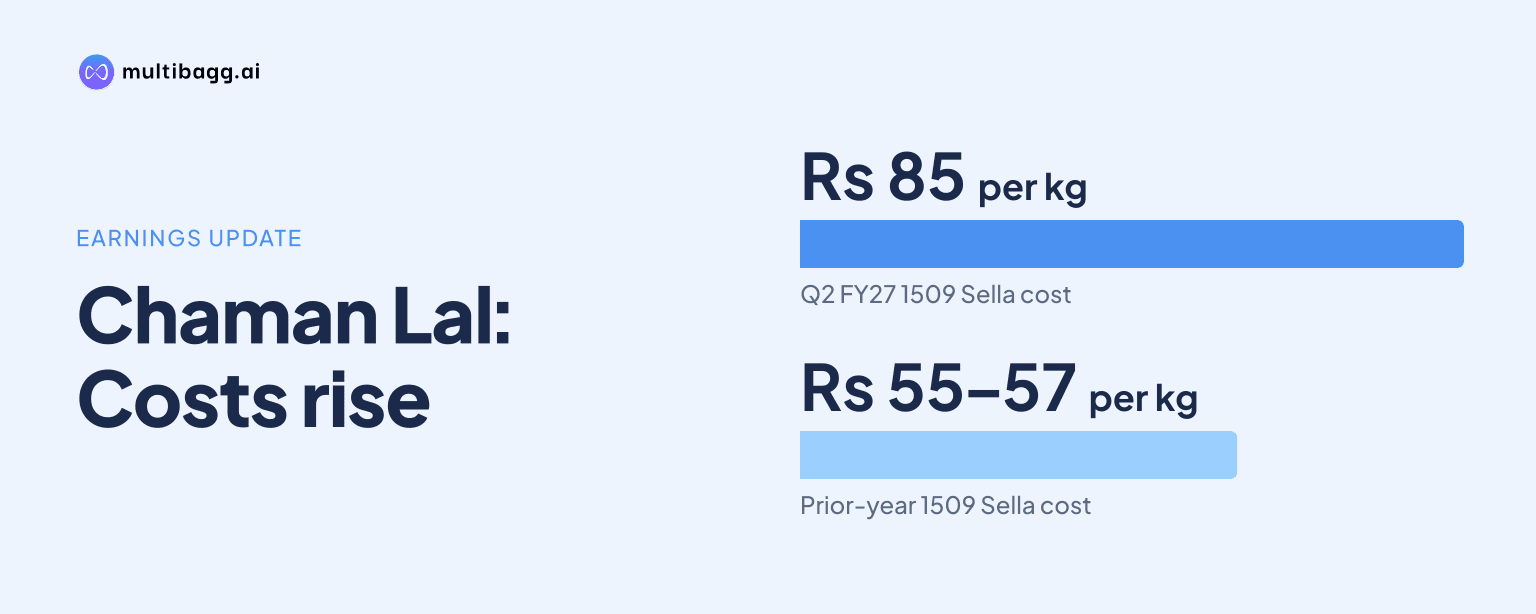
- Chaman Lal Setia cited 1509 Sella rice at about Rs 85 per kg versus Rs 55 to Rs 57 per kg around Diwali in the prior year.
- Dubai freight rose to US$5,500 to US$6,000 per container from US$200 to US$250, according to management.
powered by IRIS
Chaman Lal Setia Exports Limited reported profit before tax, or PBT, of about Rs 75 crore for Q2 FY27 ended September 2026, its highest quarterly result, but management said low-cost inventory procured in 2025 contributed to the outcome and comparable profit ratios may not recur while paddy and rice prices remain elevated.
Know Chamanlal Setia Exports inside out
Results, valuation, peers and who's buying, in one view.
What lifted Chaman Lal Setia’s Q2 FY27 profit?
Chaman Lal Setia said its roughly Rs 75 crore Q2 FY27 PBT was partly lifted by rice inventory bought during lower-price conditions in 2025 and sold after market prices rose. Management described the earlier procurement as both “very good” and “very high,” and identified the lower-cost stock as one reason for the quarter’s profitability. It did not disclose a separate rupee value for the inventory gain.
The gain came from the difference between historical purchase costs and later selling prices. Management said that buying cheaply and selling at peak-level prices would “definitely” create profitability, meaning the September 2026 quarter reflected both current selling prices and costs locked into inventory during the prior procurement cycle. That cost base differs from the cost of replenishing stock in the current season.
Why does Chaman Lal Setia expect Q2 profit ratios to be difficult to repeat?
Chaman Lal Setia said it does not consider earnings at the same ratios likely in the next period because current paddy and rice prices are high. In response to a question about the stock sold in Q2 FY27, management said the company had benefited from lower-cost 2025 inventory but would not say it could earn in the same way or at the same ratios after the price increase.
Management said reasonable profitability on sales is 8% to 10%, while distinguishing that level from the windfall gains it said were not currently available. An analyst cited Q2 realisation of Rs 105 per kg and asked whether the ongoing quarter could reach Rs 110 to Rs 112 per kg, but management did not endorse that range. Instead, it said buyers can postpone purchases for 15 to 20 days, a month or longer when prices rise sharply.
How much have Chaman Lal Setia’s rice market prices increased?
Chaman Lal Setia cited a large increase between Diwali in the prior year and the time of the Q2 FY27 call. Management said 1509 Sella rice had been priced at Rs 55 to Rs 57 per kg around Diwali in the prior year and was about Rs 85 per kg at the time of the call. That change raises the cost of replacing inventory that supported the September-quarter result.
Management said new-crop paddy prices were low for only about one week before rising, unlike the normal seasonal pattern in which crop arrivals reduce prices. It attributed the present pressure to substantial Iran-related buying of finished quality rice by exporters serving that market. Chaman Lal Setia said it has not exported to Iran for 25 years, including through Dubai.
Management also said cultivation area was down by about 1% to 2%, with a maximum 4% decline in Haryana, but yields were better. It gave an example of a field producing 24 to 25 quintals rather than 20 quintals. Management therefore described the crop size and quality as good, even as high finished-rice prices have constrained procurement economics.
Got a follow-up? Ask IRIS
What could change Chaman Lal Setia’s margins in coming quarters?
Chaman Lal Setia said prices could decline if buyers defer orders while supply remains available. Management questioned whether the Basmati industry could sell its entire 7 million-tonne production at elevated prices and said market participants had told it that would not be possible. A lower market price could help procurement margins, but management did not give a forecast for when prices might fall.
The company has slowed procurement and said it is buying regularly only when it can establish a reasonable purchase price, production cost and market selling price that provide a margin. Management said its production practices focus on reducing grain breakage, retaining heat and recycling water. Those measures are intended to reduce operating costs when paddy prices are higher than the 2025 procurement levels.
Freight and transit conditions could also affect sales timing and working capital. Management said Dubai ocean freight had increased from US$200 to US$250 per container to US$5,500 to US$6,000 per container amid the Middle East conflict. Chaman Lal Setia said it revises contracts so actual freight is added to the free-on-board value when it ships on cost, insurance and freight terms, but transit that ordinarily takes 30 days can extend to 40, 50 or 60 days.
Management said customers are absorbing freight because rice is an essential food product, while the company has asked customers to order more containers to cover longer transit. It also said it pays ocean freight in US dollars where possible rather than rupees, seeking to avoid a higher exchange rate embedded in rupee invoices. Management presented a weaker rupee as a possible profit factor, not as guidance.
Conclusion
Chaman Lal Setia’s about Rs 75 crore Q2 FY27 PBT was supported by an identifiable inventory benefit: rice bought at lower 2025 prices was sold into a more expensive market. The increase in 1509 Sella prices to about Rs 85 per kg from Rs 55 to Rs 57 per kg in the cited prior-year period shows why the cost base behind the reported quarter is not the same as the current procurement environment.
The next issue is whether buyers’ delayed purchases bring down rice and paddy prices, as management said could happen when market supply remains available. Chaman Lal Setia’s disclosed plan is to procure selectively where sales provide a margin while continuing cost-saving production measures; freight levels of US$5,500 to US$6,000 per Dubai container and transit times of up to 60 days remain additional variables to watch.