










Classic Electrodes H1 FY27 Income Rises 18% to ₹145.23 Crore
Key highlights
- Classic Electrodes reported H1 FY27 total income of ₹145.23 crore, up 18% year on year.
- Revenue from operations rose 17.8% to ₹143.97 crore in H1 FY27.
- H1 FY27 EBITDA increased 17% to ₹13.94 crore, while EBITDA margin was about 9.7%.
- Profit after tax rose 12% year on year to ₹7.28 crore in H1 FY27.
powered by IRIS
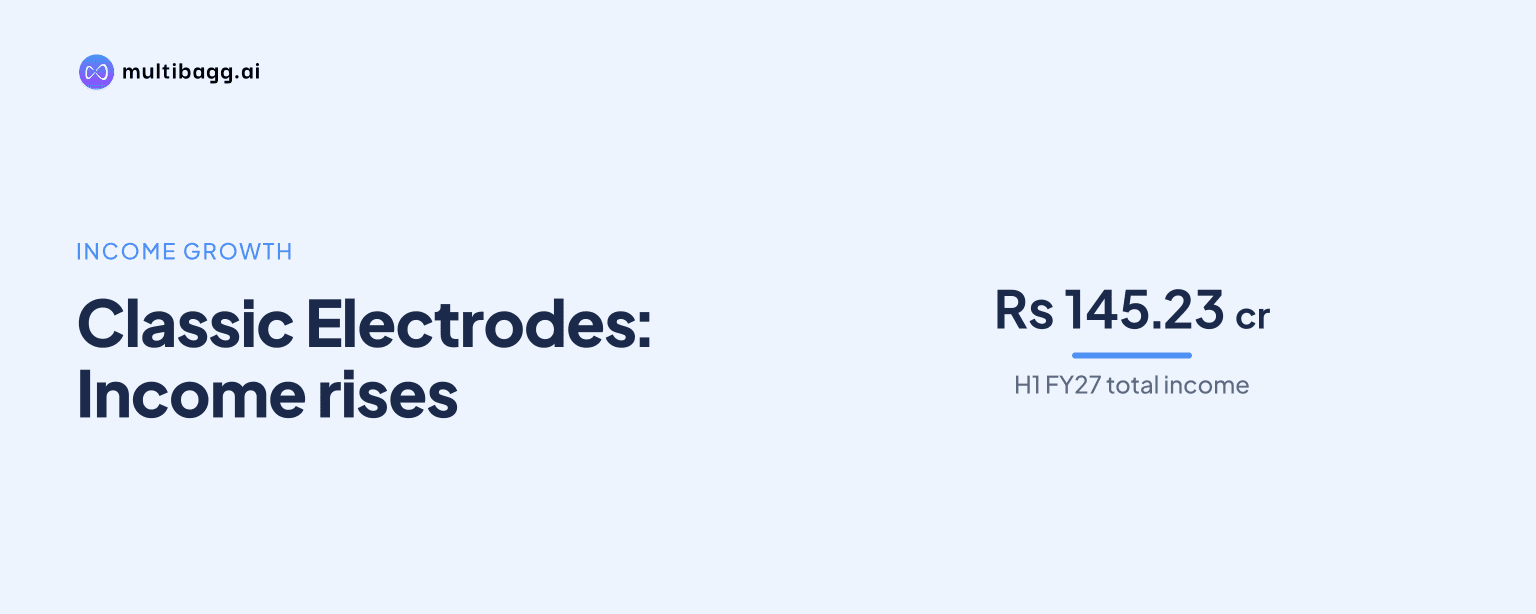
Classic Electrodes (India) Limited reported total income of ₹145.23 crore in H1 FY27, an 18% year-on-year increase, while EBITDA rose 17% to ₹13.94 crore and profit after tax increased 12% to ₹7.28 crore. The results show continued sales growth, although input-cost inflation kept operating margins broadly stable.
Know Classic Electrodes (India) inside out
Results, valuation, peers and who's buying, in one view.
What did Classic Electrodes report for H1 FY27?
Classic Electrodes reported revenue from operations of ₹143.97 crore for H1 FY27, compared with ₹122.16 crore in the corresponding prior-year period, representing growth of 17.8%. Total income stood at ₹145.23 crore, up 18% year on year, according to the investor presentation filed with the NSE on November 14, 2026.
EBITDA increased 17% year on year to ₹13.94 crore. Profit before tax rose 15.1%, while profit after tax increased 12% to ₹7.28 crore. The company described its outlook as positive, supported by infrastructure activity, railways, industrialisation and the domestic manufacturing push, but it did not provide numerical revenue or profit guidance.
Why did operating margins remain broadly stable?
Classic Electrodes reported an EBITDA margin of about 9.7% in H1 FY27, compared with about 9.8% in the earlier year. This modest compression came despite the increase in EBITDA, indicating that the growth in operating profit broadly tracked the increase in sales rather than delivering a significant margin expansion.
Raw material costs rose 18.1%, exceeding the reported growth in revenue from operations. The presentation also noted that depreciation and amortisation more than doubled to ₹2.48 crore. These cost movements are important because welding consumables manufacturing depends on material inputs, and changes in input prices can affect profitability even when sales volumes and revenue rise.
How is Classic Electrodes expanding beyond welding consumables?
Classic Electrodes is diversifying into allied engineering and metal products while continuing its core welding-consumables business. Its existing portfolio includes general-purpose, low-alloy, low-hydrogen, stainless-steel, hard-facing, cast-iron, non-ferrous and low-heat-input electrodes, along with cutting and gauging electrodes and MIG wires.
The company has identified rail clips, aluminium wire rods, cables and steel wires as diversification areas. It has also referred to a stake in HM Power and Cables. The presentation does not quantify the expected revenue contribution from these businesses, but the initiatives indicate an effort to widen the product base beyond electrodes and MIG wires.
Got a follow-up? Ask IRIS
What is the background to Classic Electrodes' listed-market presence?
Classic Electrodes has operated for 27 years and serves customers in India and overseas with welding electrodes and engineering solutions. General electrodes and MIG wires constitute the majority of turnover, while specialised consumables address requirements across low-hydrogen, stainless-steel, cast-iron and hard-surfacing applications.
The company said it raised ₹41.50 crore through its initial public offer by issuing 47,80,800 equity shares. Its equity shares were listed on NSE Emerge on September 1, 2025. The listing provided the company access to public-market capital as it pursues expansion in its existing operations and allied product categories.
What do the H1 FY27 figures mean for investors and industry participants?
For investors, the H1 FY27 update shows that Classic Electrodes maintained double-digit growth in total income, EBITDA and profit after tax. At the same time, the near-flat EBITDA margin highlights the relevance of raw-material costs and competitive conditions to earnings quality. The company itself identified raw-material volatility and competition as continuing risks.
For customers and industry participants, the company's commentary links demand to infrastructure, railway activity, industrialisation and domestic manufacturing. Its diversification into related metal and engineering products may broaden its operating presence, although the presentation does not state a timeline, capital outlay or revenue target for these initiatives. MIG wire capacity utilisation was 65.64% in FY26, a disclosed operating measure that provides context for the company's existing production base.
Conclusion
Classic Electrodes delivered H1 FY27 total income of ₹145.23 crore, with 18% growth supported by higher revenue from operations. EBITDA and profit after tax also rose, but the EBITDA margin eased slightly as raw-material costs increased faster than revenue and depreciation and amortisation rose sharply.
The next disclosures to watch are the company's progress in rail clips, aluminium wire rods, cables, steel wires and its HM Power and Cables investment. Investors will also monitor whether sales growth, raw-material costs and capacity utilisation support margin performance in the second half of FY27.