










Classic Electrodes’ West Bengal electrode utilisation reaches 86%
Key highlights
- Classic Electrodes used 9,148 MT of West Bengal electrode capacity in 2025–26, equal to 86.24% utilisation.
- Classic Electrodes’ West Bengal flux core wire line used 350 MT of 2,500 MT capacity, or 13.98%, in 2025–26.
- Classic Electrodes increased West Bengal MIG wire capacity by 2,000 MT to 7,000 MT in 2025–26.
- Classic Electrodes’ Jhajjar MIG wire utilisation fell to 65.64% in 2025–26 from 69.59% in 2024–25.
powered by IRIS
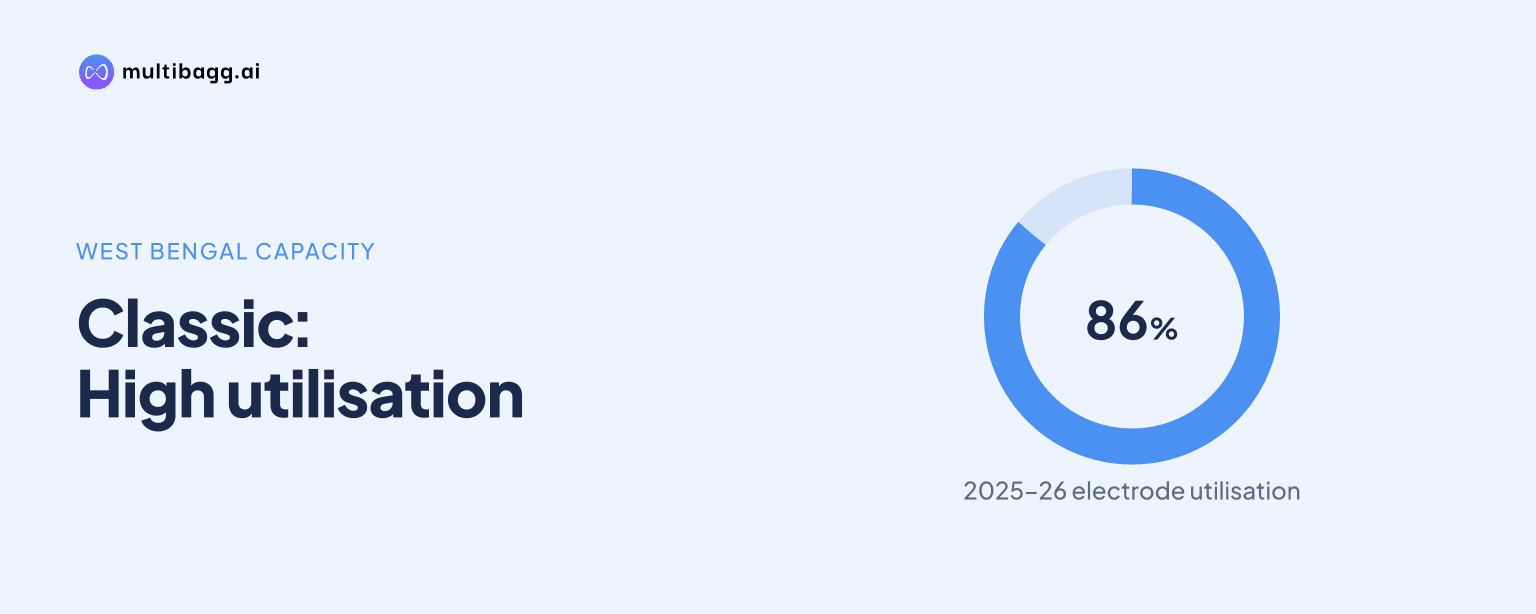
Classic Electrodes reported 86.24% utilisation of its 10,608 metric tonne (MT) West Bengal electrode capacity in 2025–26, versus 73.82% in 2024–25; its 2,500 MT West Bengal flux core wire capacity was 13.98% utilised. The presentation also shows West Bengal MIG wire at 74.38% and Jhajjar MIG wire at 65.64%.
Know Classic Electrodes (India) inside out
Results, valuation, peers and who's buying, in one view.
What was Classic Electrodes’ West Bengal capacity utilisation in 2025–26?
Classic Electrodes used 9,148 MT of its 10,608 MT West Bengal electrode capacity in 2025–26, resulting in 86.24% utilisation. The difference between installed and utilised electrode capacity was 1,460 MT. Installed electrode capacity was unchanged at 10,608 MT across 2023–24, 2024–25 and 2025–26, so the increase in the latest year reflects higher utilised capacity rather than additional disclosed electrode capacity.
West Bengal MIG wire used 5,207 MT of 7,000 MT installed capacity in 2025–26, equal to 74.38% utilisation. Flux core wire, reported for West Bengal in 2025–26, used 350 MT against installed capacity of 2,500 MT. The combined West Bengal schedule gives flux core wire utilisation as 13.98%, leaving 2,150 MT of stated capacity not utilised during the year.
How did West Bengal utilisation change over three years?
Classic Electrodes’ West Bengal electrode utilisation rose by 12.42 percentage points from 73.82% in 2024–25 to 86.24% in 2025–26. Utilised electrode capacity increased by 1,317 MT, from 7,831 MT to 9,148 MT, while installed capacity remained 10,608 MT. Compared with 2023–24, utilised electrode capacity was 1,325 MT higher than the 7,823 MT reported that year.
West Bengal MIG wire utilisation increased from 53.72% in 2023–24 to 68.41% in 2024–25 and 74.38% in 2025–26. Its installed capacity increased by 2,000 MT in 2025–26, from 5,000 MT to 7,000 MT. The combined West Bengal schedule reports 3,420 MT of MIG wire utilised in 2024–25 and 5,207 MT in 2025–26, an increase of 1,787 MT despite the larger installed-capacity base.
Why is the West Bengal MIG wire data not fully consistent?
Classic Electrodes gives two different West Bengal MIG wire utilised-capacity figures for 2024–25: 3,240 MT in the stand-alone MIG wire table and 3,420 MT in the combined West Bengal capacity table. Both tables state installed capacity of 5,000 MT and utilisation of 68.41%. The reported 68.41% rate corresponds to 3,420 MT rather than 3,240 MT.
The inconsistency changes the year-on-year volume comparison for MIG wire. On the 3,420 MT figure in the combined schedule, utilisation increased by 1,787 MT to 5,207 MT in 2025–26. On the 3,240 MT figure in the stand-alone schedule, the increase would be 1,967 MT. Classic Electrodes does not provide an explanation for the two 2024–25 figures in the supplied presentation.
Got a follow-up? Ask IRIS
How did Classic Electrodes’ Jhajjar MIG wire plant perform?
Classic Electrodes used 2,363 MT of its 3,600 MT Jhajjar MIG wire capacity in 2025–26, equal to 65.64% utilisation. That was below 69.59% in 2024–25, when the plant used 2,505 MT of the same 3,600 MT installed capacity. The decline was 142 MT in utilised capacity and 3.95 percentage points in utilisation.
Jhajjar’s 2025–26 utilisation remained above its 55.86% rate in 2023–24, when utilised capacity was 2,011 MT. The presentation states that production at Jhajjar began on 26 March 2023. It also states that only MIG wires are produced at Jhajjar and that electrode manufacturing is not undertaken there, distinguishing the plant from West Bengal’s three reported product categories in 2025–26.
What do the figures show across Classic Electrodes’ products and plants?
Classic Electrodes’ highest disclosed 2025–26 utilisation rate was 86.24% for West Bengal electrodes. West Bengal MIG wire followed at 74.38%, ahead of Jhajjar MIG wire at 65.64%, while West Bengal flux core wire was at 13.98%. The difference between the highest and lowest reported rates was 72.26 percentage points across the four disclosed product-line and plant measures.
Classic Electrodes’ product portfolio includes general-purpose, low-hydrogen, low-heat-input, low-alloy and stainless-steel electrodes, as well as solid MIG wires. However, the capacity schedules report aggregate electrode, MIG wire and flux core wire categories rather than capacity by individual product type. The presentation does not state when the 2,500 MT flux core wire capacity began production, why 350 MT was utilised in 2025–26, or a future utilisation target for that line.
Conclusion
Classic Electrodes’ 2025–26 capacity figures show a contrast between the 86.24% utilisation of West Bengal electrodes on unchanged 10,608 MT capacity and the 13.98% utilisation of 2,500 MT West Bengal flux core wire capacity. West Bengal MIG wire reached 74.38% following a 2,000 MT capacity increase, while Jhajjar MIG wire declined from 69.59% to 65.64%.
The next disclosure to watch is clarification of the two West Bengal MIG wire utilised-capacity figures for 2024–25, 3,240 MT and 3,420 MT, because the stated 68.41% utilisation matches only the latter figure. The presentation also leaves unresolved how quickly the 2,500 MT flux core wire line may be utilised, as it provides neither a start date nor a future target for that capacity.