










Devyani brings KFC openings forward before expected merger slowdown
Key highlights
- Devyani retained its current-year plan for 100 to 110 KFC stores.
- Management expects post-merger integration could temporarily slow KFC openings.
- Devyani cited Rs 99 and Rs 149 KFC price points as consumer-recruitment tools.
- Management said gas prices had doubled versus last year before appearing stable in the current period.
powered by IRIS
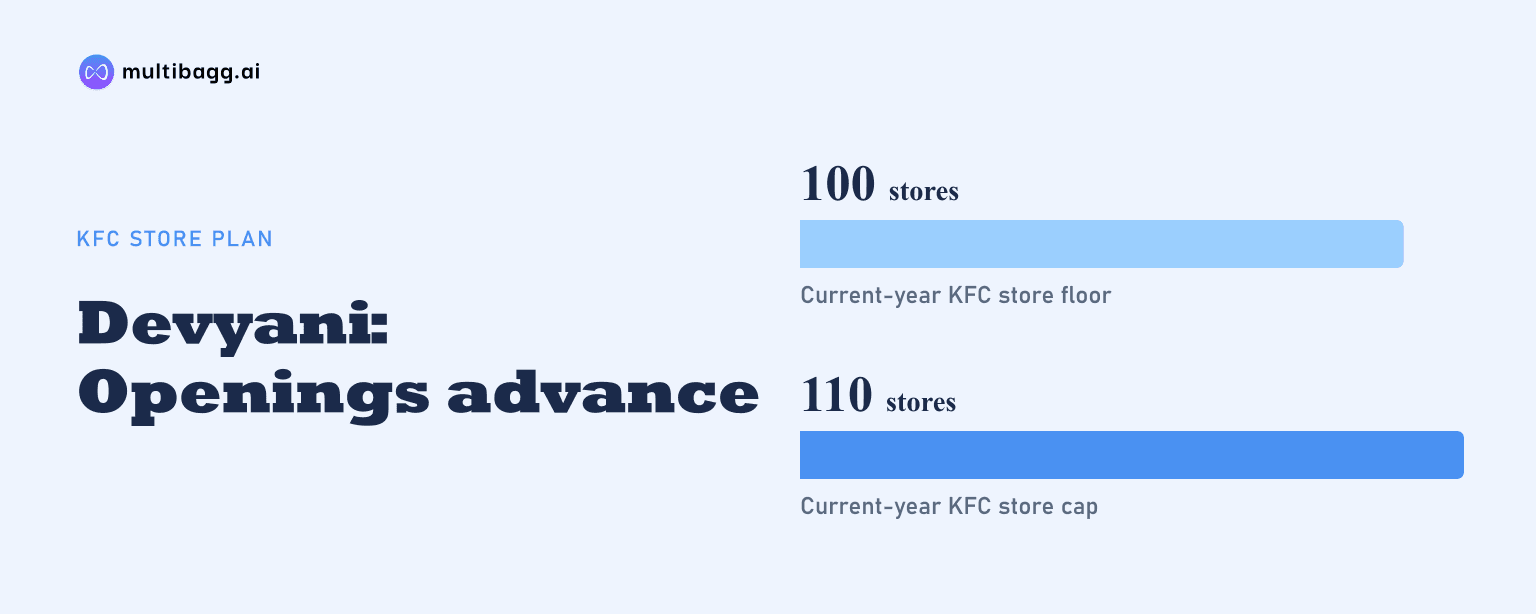
Devyani International Limited is bringing KFC openings forward while maintaining its current-year plan for 100 to 110 stores, because management expects post-merger integration and new management teams to temporarily slow expansion once the transaction is consummated, after a robust opening pace in Q2.
Know Devyani International inside out
Results, valuation, peers and who's buying, in one view.
Why is Devyani bringing KFC openings forward?
Devyani is changing the phasing of KFC openings, rather than raising its annual plan, to reduce the risk that merger integration interrupts expansion. Management said its business-development structure had been changed and was now settled and “firing”, while the company was also changing opening cycles slightly before the merger. The disclosed plan remains 100 to 110 KFC stores for the current year.
Management’s stated concern is the operating transition after the transaction closes. It expects a reset after the merger, with new management teams needing time to settle, and said this could lead to slower store openings. That expectation helps explain why Q2 openings were robust, although an analyst noted that KFC expansion has usually accelerated in Q3. Devyani did not disclose a revised Q2, Q3 or Q4 opening target.
Will Devyani still open 100 to 110 KFC stores this year?
Yes, Devyani said it would deliver its guidance of 100 to 110 KFC stores in the current year. Management explicitly said its original KFC plan had not changed despite merger planning and the near-term operating environment. An analyst said KFC additions in the first nine months of the calendar year had been meaningfully faster than in the prior year.
Devyani separated current-year execution from its future combined-company plan. Management said it had received the required merger approval and would return with guidance for the merged company after further engagement. Until then, the 100 to 110 figure applies to Devyani’s KFC network in the current year and does not establish a combined-network opening target.
The company has not specified how many of the 100 to 110 stores had opened by Q2. It also did not state whether bringing openings forward would mean fewer openings in Q3 or Q4. Management’s comment was instead about changing the timing of the cycle while keeping the overall annual number unchanged.
Why does Devyani want to keep expanding KFC?
Devyani said it does not want to slow KFC expansion because chicken demand remains strong and KFC is underpenetrated relative to competitors. Management cited India’s non-vegetarian market distribution as supportive of the brand, while also recognising limits from vegetarian days and regional festivals that have become nationally observed occasions.
Management linked the network plan to its objective of establishing KFC as a dominant market leader. It contrasted the chicken category with the pizza category, which it described as India’s largest quick-service restaurant, or QSR, category. Devyani did not disclose KFC market share, competitor outlet counts or a numerical measure of underpenetration.
Consumer offers are also part of the KFC operating plan. Management identified selectively targeted dine-in activity and a Rs 99 price point as important factors in bringing consumers back, while saying the Rs 149 price point was being rolled out. It added that Wednesday promotions continued to work well, although the Rs 99 offer carries a higher cost of sales.
Got a follow-up? Ask IRIS
What could slow Devyani’s KFC openings after the merger?
Devyani said the main expected constraint is the time needed for new management teams to settle after the merger. Management used the possibility of a post-merger slowdown to explain why it is advancing some opening activity now. It did not provide a duration for the possible slowdown or a numerical post-merger KFC opening forecast.
The company also described cost and demand conditions that require it to manage pricing carefully. Management said price increases were being taken on a staggered basis because of weak consumer sentiment, and that the small increase already taken did not cover inflation across multiple lines. Chicken, oil, paper and packing-material prices were said to be stabilising.
Utilities and wages remain additional variables. Management said gas prices had doubled versus last year, though they appeared stable in the current period, while minimum-wage increases notified by some states were fully reflected in the current quarter. It said further state notifications could add costs, but it was not expecting much additional wage pressure at that point.
For KFC gross margin, management said it did not expect further deterioration under current conditions. It retained future pricing, promotions and channel mix as operating levers, noting that it still had some price-increase agenda on the table. Those comments do not amount to a formal margin forecast or a commitment to pass through all input-cost increases.
How does the merger affect Devyani’s wider restaurant strategy?
Devyani said it needs a granular understanding of Sapphire’s Pizza Hut operations before presenting a future turnaround strategy for the combined business. Management said it had only recently received merger approval and expected to provide more detail by the time the transaction is consummated. This leaves the 100 to 110 KFC-store plan more specific than any disclosed post-merger Pizza Hut plan.
For Pizza Hut, management said its current work centres on innovation, entry-level price points and dine-in. It said the brand had a good premium assortment but weaker entry-level offerings, contributing to consumer perceptions that Pizza Hut is expensive. The intended response is product innovation and a broader price ladder across multiple price points.
Management also said it would use channel-specific offerings, promotions and dine-in activity to balance margins. It described KFC and Pizza Hut as QSR brands that need appropriate price points in the current consumer environment. Devyani said it was building the company for 2030, rather than making portfolio decisions solely around the immediate period.
Conclusion
Devyani’s decision is a timing adjustment intended to protect its current-year KFC plan rather than a reduction in expansion ambitions. The company continues to target 100 to 110 KFC stores this year, supported by a changed business-development structure, demand for chicken and consumer offers at Rs 99 and Rs 149. Management nevertheless expects merger integration may temporarily slow openings as teams settle.
The next development to watch is Devyani’s guidance for the merged company when the transaction is consummated. Management has not disclosed a combined KFC opening target, the expected length of any post-merger slowdown or a detailed Pizza Hut strategy for the combined business, saying it needs more granular insight into Sapphire’s operations before setting out those plans.