










DIL secures CCI clearance for Sapphire merger, targets FY27 close
Key highlights
- DIL received CCI approval for the Sapphire Foods merger in the week before its Q2 FY27 earnings call.
- DIL said SEBI no-objection and NCLT proceedings remain before its targeted FY27-end merger completion.
- Q2 FY27 consolidated revenue rose 10.4% year on year to Rs 1,519 crore, while operating EBITDA rose almost 34% to Rs 125 crore.
- DIL added 70 net stores in Q2 FY27, reaching 1,923 stores in India and 2,325 globally as of September 30, 2026.
powered by IRIS
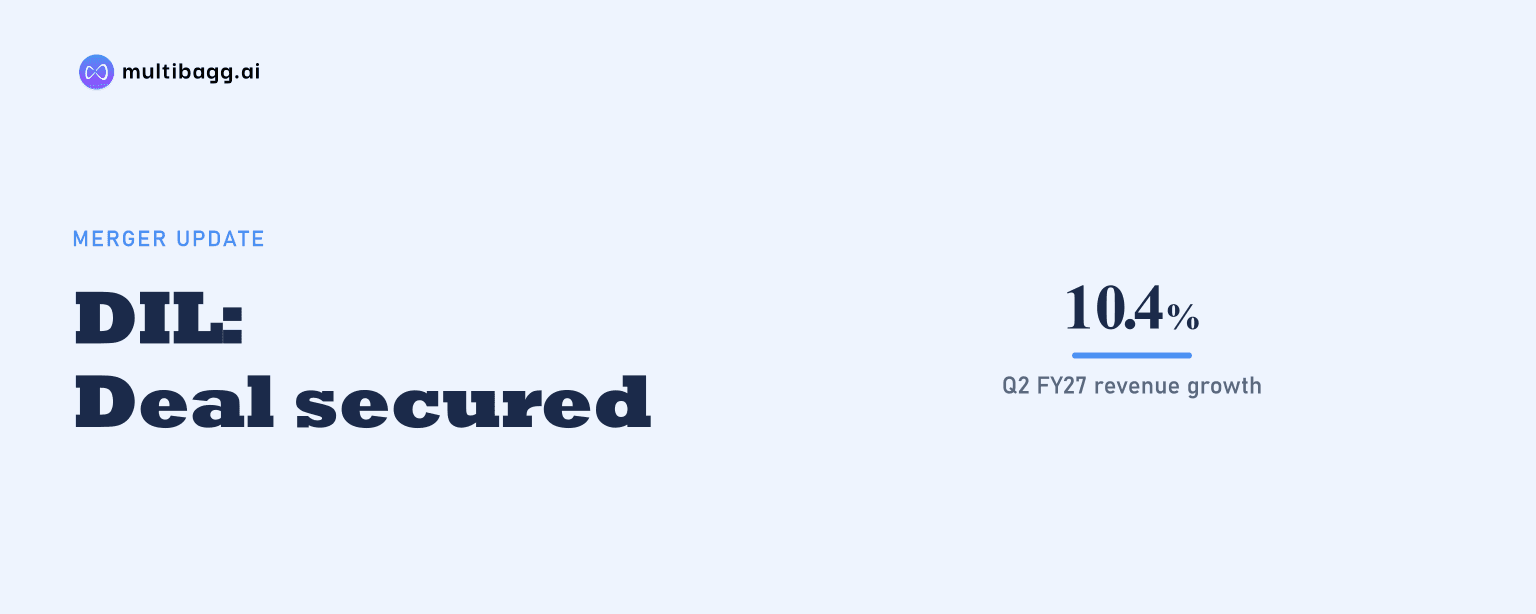
In Q2 FY27, Devyani International Limited (DIL) said its proposed merger with Sapphire Foods had received Competition Commission of India (CCI) clearance and remains targeted for completion by the end of FY27. The company is awaiting a no-objection from the Securities and Exchange Board of India (SEBI) before applying to the National Company Law Tribunal (NCLT).
Know Devyani International inside out
Results, valuation, peers and who's buying, in one view.
What clearance has DIL received for the Sapphire Foods merger?
DIL has received CCI approval for its proposed merger with Sapphire Foods. Management said on the Q2 FY27 earnings call that the approval had been received in the preceding week, but it did not provide a specific approval date or disclose conditions attached to the clearance.
The CCI decision completes the competition-regulation stage identified by DIL, but does not complete the merger. DIL said its pre-merger preparations were progressing in line with its initial plans, and merger readiness was one of its five stated operating priorities alongside store expansion, same-store sales growth, efficiency, organisation building and margin management.
DIL presented the transaction against the expansion potential of India’s branded quick-service restaurant (QSR) market. Management said the 30 largest Indian cities have about 20 branded QSR outlets per million people, compared with about four outlets per million nationally, and said a combined business with trust, value and scale could address that opportunity.
What approvals does DIL still need before the merger closes?
DIL still needs SEBI’s no-objection and subsequent NCLT proceedings before the Sapphire Foods merger can close. Management said it can file its NCLT application only after it receives the SEBI no-objection, and it did not provide a deadline for either the regulatory response or tribunal hearing.
Management remains optimistic about completing the merger by the end of FY27, but this is a target rather than a confirmed closing date. The sequence means that the timing now depends on SEBI’s no-objection, DIL’s NCLT filing and the tribunal process after that filing.
DIL separately said the Sky Gate merger was progressing according to plan and that it expected NCLT approval for that transaction very shortly. The transcript did not state whether the Sky Gate approval process would affect the proposed Sapphire Foods merger timetable.
How did DIL perform while preparing for the merger?
DIL reported Q2 FY27 consolidated revenue of Rs 1,519 crore, up 10.4% year on year, while operating earnings before interest, tax, depreciation and amortisation (EBITDA), before Indian Accounting Standards (Ind AS) adjustments, rose almost 34% to Rs 125 crore. Operating EBITDA margin increased to 8.2% from 6.8% in Q2 FY26.
Brand contribution rose 23% year on year to Rs 198 crore, taking the consolidated brand contribution margin to 13%. Gross margin improved by 70 basis points to 68.5%, with DIL reporting improvement in both Indian and international operations despite higher costs for chicken, edible oil, dairy and packaging.
DIL said liquefied petroleum gas prices were nearly double their prior-year level and cited higher minimum wages in several states. It had taken a cumulative 1% to 2% price increase year to date, while using promotions, deal optimisation and cost-saving measures to protect margins amid muted consumer sentiment.
Got a follow-up? Ask IRIS
Which DIL businesses showed different operating trends in Q2 FY27?
DIL’s KFC business outgrew Pizza Hut in Q2 FY27, with KFC revenue rising 12.3% year on year to Rs 642 crore while Pizza Hut revenue was nearly flat at Rs 184 crore. KFC reported same-store sales growth (SSSG) of 4.4% and added 50 net stores, ending the quarter with 844 outlets.
Pizza Hut’s SSSG decline narrowed to 1.4%, and its gross margin improved to 76.7% through more targeted promotions. However, higher liquefied petroleum gas and wage costs produced a brand contribution loss of Rs 3.3 crore, equal to a negative margin of 1.8%, while the network added six net stores to reach 632.
DIL said it was using Rs 99 and Rs 149 meal combinations at KFC, alongside Wednesday value offers and targeted buy-one-get-one promotions in relevant markets. It plans to roll out similar value initiatives at Pizza Hut over the next couple of quarters while working on product innovation, entry-level assortment and price layering.
The Own Brands portfolio, comprising Vaango and Biryani By Kilo, reported revenue of Rs 95 crore, nearly 11% higher year on year, and brand contribution of Rs 9 crore at a 9.4% margin. Biryani By Kilo recorded SSSG of 8.1%, Vaango recorded 6.9%, and the 225-store portfolio included 26 BBK Express outlets at quarter-end.
What operating scale does DIL have ahead of the remaining approvals?
DIL added 70 net new stores in Q2 FY27, including 68 in India, taking its India network to 1,923 stores and its global network to 2,325 as of September 30, 2026. Management said its revamped business-development structure was in place and that new openings remained in line with earlier guidance.
DIL’s international business generated quarterly revenue of Rs 509 crore despite flooding in Thailand during September and softer consumer conditions associated with higher fuel costs. International brand contribution was Rs 91 crore, while the brand contribution margin increased 1.2 percentage points year on year to 17.9%.
For Biryani By Kilo, management said its short- to medium-term objective was a brand contribution margin of about 14% to 15%, compared with a contribution margin close to double digits in Q2 FY27. It attributed the improvement to procurement benefits, store-level labour deployment and supervisory efficiencies, while saying that optimisation across several cost lines would take time.
Conclusion
CCI clearance advances DIL’s Sapphire Foods merger beyond the competition-review stage while its Q2 FY27 results showed higher revenue, operating EBITDA margin expansion and continued network additions. The operating picture remained uneven by brand: KFC delivered revenue growth and positive SSSG, while Pizza Hut’s sales were nearly flat and its brand contribution remained negative.
The next event to watch is SEBI’s no-objection, which would allow DIL to submit its NCLT application and test management’s FY27-end closing target. Management’s plan also points to watchpoints in Q3 FY27, including whether KFC SSSG improves from 4.4%, whether Pizza Hut’s value and innovation initiatives gain traction, and how staggered pricing offsets food, wage and utility costs.