










Entero H1FY27 operating cash flow was negative Rs 46.5 crore
Key highlights
- Entero reported negative Rs 46.5 crore operating cash flow in H1FY27, compared with negative Rs 57.3 crore in H1FY26.
- Trade receivables increased by Rs 249 crore to Rs 1,461 crore between March 2026 and September 2026.
- Working-capital movements used Rs 245 crore in H1FY27, while profit before tax was Rs 145.5 crore.
- Entero said government-contract collections were received in November and would have made H1FY27 operating cash flow positive if received on the due date.
powered by IRIS
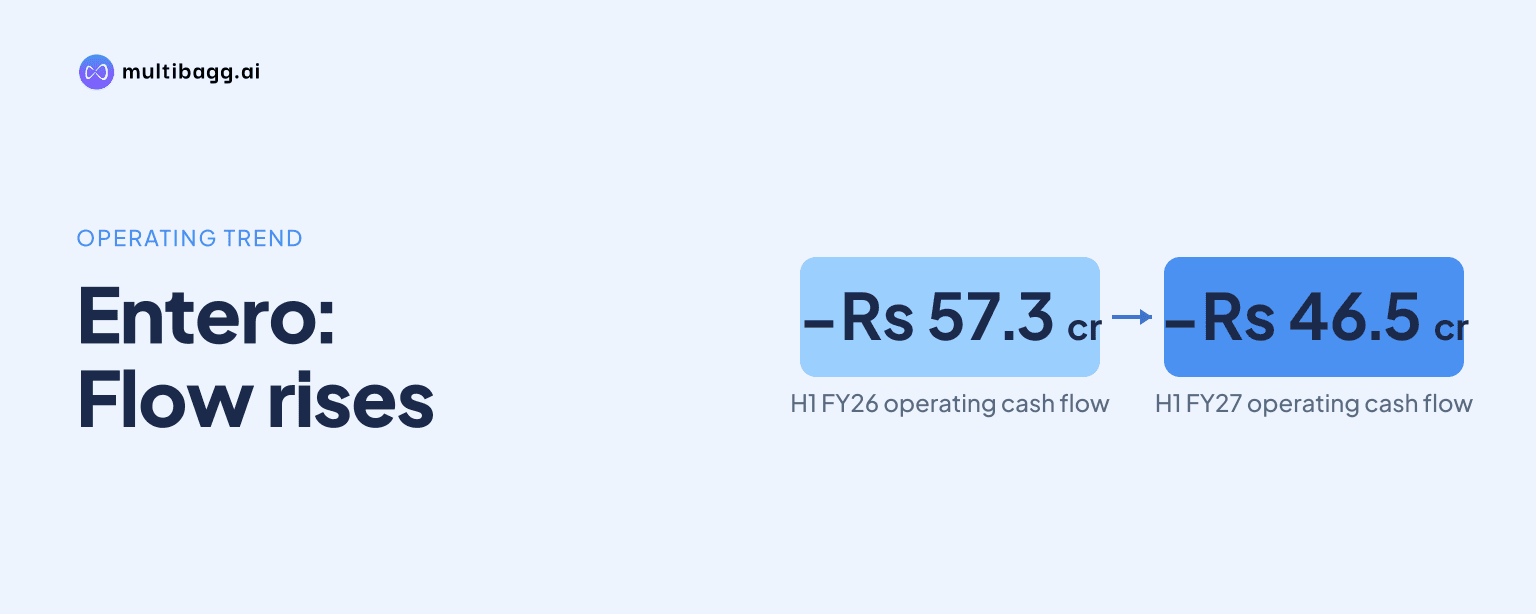
Entero Healthcare Solutions Limited reported negative Rs 46.5 crore operating cash flow in H1FY27 despite profit before tax of Rs 145.5 crore, because working capital used Rs 245 crore. Entero attributed the result to trade-receivable timing on certain government contracts and said the collection was received in November.
Know Entero Healthcare Solutions inside out
Results, valuation, peers and who's buying, in one view.
Why was Entero's H1FY27 operating cash flow negative?
Entero's H1FY27 operating cash flow was negative because a Rs 245 crore working-capital outflow and Rs 22.9 crore of net direct taxes paid outweighed Rs 145.5 crore of profit before tax and Rs 75.9 crore of non-cash and other investment or financial adjustments. Net cash from operating activities was negative Rs 46.5 crore for the half year.
The operating cash result was less negative than negative Rs 57.3 crore in H1FY26, while profit before tax increased by Rs 64.5 crore from Rs 81 crore. However, the working-capital outflow widened by Rs 96.1 crore from Rs 148.9 crore, which limited the conversion of higher reported profit into operating cash.
Investing activities used Rs 180 crore in H1FY27, compared with Rs 54.9 crore in H1FY26, while financing activities generated Rs 175.6 crore rather than using Rs 39.3 crore. The resulting net decrease in cash and cash equivalents was Rs 51 crore, compared with a Rs 151.5 crore decrease in the prior-year half.
How much did Entero's trade receivables increase?
Entero's trade receivables rose by Rs 249 crore to Rs 1,461 crore at September 2026 from Rs 1,212 crore at March 2026. This was the largest disclosed increase among the main current-asset categories during the six-month period and was close to the Rs 245 crore aggregate working-capital cash outflow.
Management attributed negative Rs 46.5 crore operating cash flow to the timing of receivables on certain government contracts. Entero said collection was received in November and stated that H1FY27 operating cash flow would have been positive had that collection been received on its due date.
Inventories increased by Rs 25 crore, substantially less than the increase in receivables, while trade payables rose by Rs 54 crore. The cash-flow statement reports working-capital changes as one Rs 245 crore line, so it does not provide a line-by-line bridge between each balance-sheet movement and the operating cash-flow result.
Got a follow-up? Ask IRIS
What happened to Entero's cash and financing in H1FY27?
Entero's cash and cash equivalents declined by Rs 51 crore in H1FY27 to Rs 96.1 crore, from Rs 147 crore at the start of the period. Negative Rs 46.5 crore of operating cash flow and Rs 180 crore used in investing activities were partly offset by Rs 175.6 crore from financing activities.
At September 2026, current borrowings were Rs 606 crore, up Rs 162 crore from March 2026, and non-current borrowings were Rs 188 crore, up Rs 65 crore. Total disclosed borrowings therefore increased to Rs 794 crore from Rs 567 crore over the six months.
The presentation does not split the Rs 175.6 crore financing inflow by instrument or specify the use of the Rs 180 crore investing outflow. In addition to Rs 96 crore of cash and cash equivalents on the September 2026 balance sheet, Entero reported Rs 127 crore of investments and Rs 7 crore of bank balances other than cash and cash equivalents.
How did the cash-flow result compare with Entero's operating growth?
Entero reported 37.2% growth in H1FY27, compared with 14.5% for the Indian Pharmaceutical Market, or IPM. During the same period, retailer customers increased to more than 92,200 from more than 85,300 in H1FY26, and warehouse count increased to 148 from 113.
The balance sheet expanded alongside this operating scale, with total assets increasing by Rs 271 crore to Rs 3,871 crore at September 2026. Current assets increased by Rs 265 crore to Rs 2,773 crore, and the Rs 249 crore receivables increase accounted for most of that movement.
Entero also increased stock-keeping units, or SKUs, handled to more than 90,400 in H1FY27 from more than 83,000 in H1FY26. Profit before tax rose to Rs 145.5 crore from Rs 81 crore, but operating cash flow remained negative because the reported half-year working-capital movement absorbed Rs 245 crore.
What should readers monitor after Entero's November collection?
Readers should monitor whether trade receivables decline from the Rs 1,461 crore reported at September 2026 after the November collection. Entero disclosed neither the amount collected nor a post-collection receivables balance, despite saying the payment would have made H1FY27 operating cash flow positive if received on its due date.
The relationship between operating cash flow, investment use and borrowings also remains relevant after H1FY27. Entero reported Rs 180 crore of investing cash outflow and Rs 794 crore of total disclosed borrowings at September 2026, while the presentation does not disclose future investment outlays or financing requirements.
Conclusion
Entero's H1FY27 reported profit and operating cash flow diverged: Rs 145.5 crore of profit before tax was followed by negative Rs 46.5 crore of operating cash flow after a Rs 245 crore working-capital outflow. The Rs 249 crore increase in trade receivables to Rs 1,461 crore is the central disclosed balance-sheet movement alongside management's explanation of government-contract collection timing.
The next point to watch is the effect of the November collection that Entero says it received after the September 2026 reporting date. Future reporting can show whether receivables reduce and operating cash flow turns positive, as well as how Rs 180 crore of investing cash use and the Rs 794 crore borrowing balance develop.