










Entero says 137 notified molecules make up only 2% of sales
Key highlights
- Entero said 137 NPPA-notified molecules account for 2% of its portfolio sales.
- Management said distributor margin percentages did not change in the 2019 oncology action.
- An analyst calculated first-half revenue near Rs 4,000 crore and MedTech revenue near Rs 600 crore, which management confirmed.
- Management retained its target of converting 50% of EBITDA into operating cash flow for the financial year.
powered by IRIS
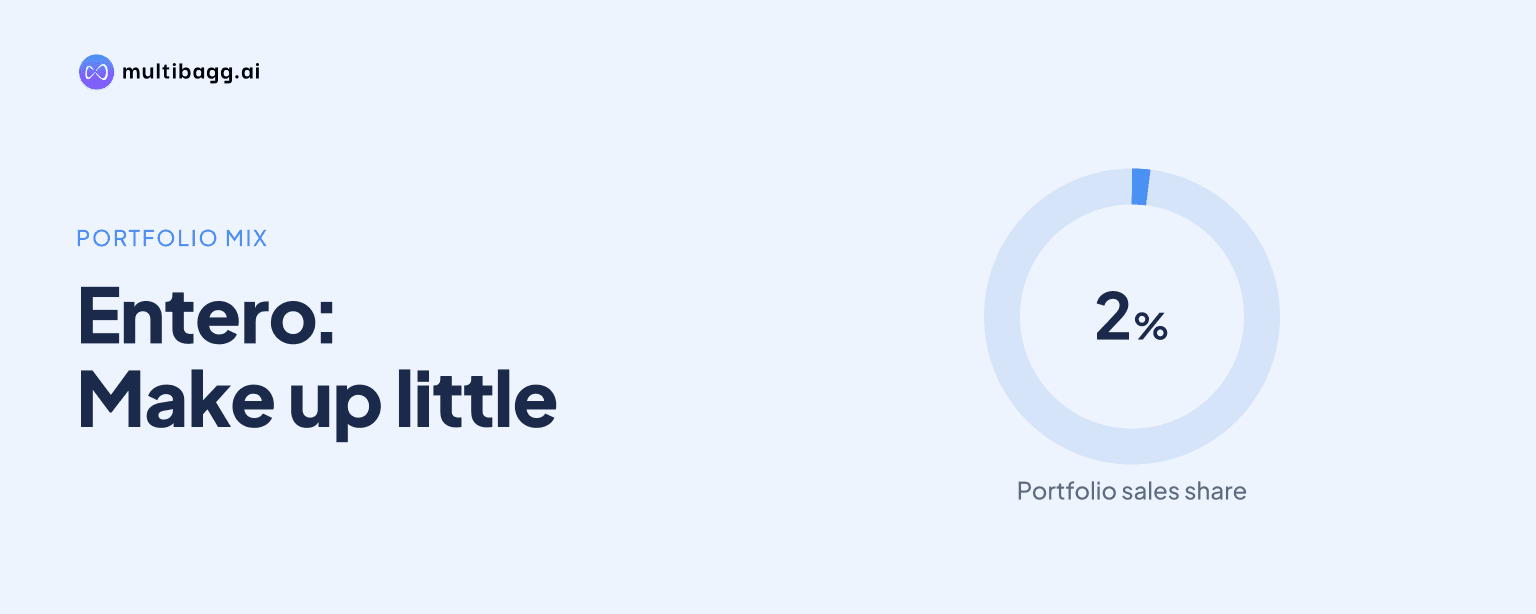
Entero Healthcare Solutions Limited said the 137 molecules notified by the National Pharmaceutical Pricing Authority, or NPPA, account for only 2% of portfolio sales as of the call, limiting its immediate exposure to the trade-margin issue. Management said distributor margin percentages did not change during the 2019 oncology action or earlier maximum retail price reductions.
Know Entero Healthcare Solutions inside out
Results, valuation, peers and who's buying, in one view.
How much of Entero's sales involve the 137 notified molecules?
Entero said the 137 molecules notified by NPPA represent only 2% of its sales portfolio, which management said limits the potential direct effect on reported sales. The estimate addresses the portion of Entero's business that could be affected if lower prices are passed through the manufacturer, distributor and hospital chain for those products.
Management described two channels through which a trade-margin cap or price intervention could affect a distributor. First, total sales can decline in absolute terms if a manufacturer lowers its selling price to the distributor and the distributor then invoices the customer at a lower price. Second, the distributor's percentage margin could change. Entero said the 2% exposure is why it does not currently see a material impact from the notified molecules.
The 2% figure applies to Entero's total portfolio rather than only its hospital-facing products. In the relevant oncology-type product category, management said the principal participants are the manufacturer, distributor and hospital because products are generally not sold extensively over the retail counter. That distinction matters because the pricing outcome can differ from a conventional retail pharmacy transaction.
Why does Entero see limited margin risk from price controls?
Entero said distributor margin percentages did not change in the 2019 oncology action and have not changed in prior Drug Price Control Order, or DPCO, or maximum retail price, or MRP, reduction events. Management illustrated the mechanism with a distributor earning a 10% margin: if the manufacturer reduces the product price, the distributor sells at a lower absolute price but continues to add its percentage margin.
That explanation separates margin percentage from revenue measured in rupees. A lower manufacturer selling price can reduce a distributor's top line even if its percentage margin is retained, because the same percentage is calculated on a smaller invoice value. Management therefore did not say price reductions are irrelevant; it said the limited 2% notified-molecule exposure makes a material company-wide revenue effect unlikely at present.
Entero also said that, in its view, most MRP reduction would be recovered from the higher margins earned by hospitals rather than distributors. Management added that manufacturers could bear part of the impact depending on competitive intensity and negotiations with hospitals. This was management's assessment of the likely allocation of a reduction, not a disclosed regulatory outcome or a confirmed pricing decision by manufacturers.
Got a follow-up? Ask IRIS
What could still change Entero's reported sales from notified products?
Entero said its sales could decline if manufacturers themselves cut prices to customers and consequently sell to distributors at lower prices. In that scenario, the distributor would continue to sell at a lower price after adding its margin, reducing the absolute value of sales recorded across the supply chain.
Management said it did not know whether some of the impact might later be passed back to manufacturers and lead to lower pricing. That unresolved point is important because Entero's current 2% calculation measures exposure to the 137 molecules notified as of the call, rather than the possible effect of any wider product list, a different final rule, or subsequent manufacturer pricing actions.
The comparison with 2019 is the main historical basis management offered for its view on margin preservation. Entero said the distributor margin percentage did not change then, and said it had not changed whenever DPCO coverage or an MRP reduction occurred. However, management also acknowledged that absolute selling prices can change, so the historical comparison does not eliminate the possibility of lower revenue per unit on affected products.
What other operating figures put the 2% exposure in context?
An analyst said Entero's first-half revenue was close to Rs 4,000 crore and that MedTech was about 15% of that amount, or close to Rs 600 crore; management confirmed the MedTech calculation. Management said Entero would exceed its earlier Rs 1,000 crore full-year MedTech revenue target, which had been stated when certain companies were acquired.
Management attributed organic growth of 17%-18% to customer-base expansion, higher wallet share from customers and new product categories. It described that growth as all-round rather than arising from one product line. By comparison, the notified molecules are 2% of portfolio sales, placing the specific regulatory exposure below the 15% MedTech share discussed for the first half.
Entero maintained guidance to convert 50% of earnings before interest, tax, depreciation and amortisation, or EBITDA, into operating cash flow, or OCF, for the financial year. Management said delayed collections during the quarter related to certain government contracts in Maharashtra after funds were reallocated because of drought conditions; excluding that event, it said net working-capital days would have matched the previous quarter.
Government business was described as about 3% of Entero's total business and as an existing activity rather than a new initiative. Separately, management said it is evaluating acquisition opportunities in portfolio expansion, new product categories and geographies, with greater interest in product expansion. It said it was not looking at acquisitions below Rs 100 crore and was hopeful that an opportunity could occur during the year.
Conclusion
Entero's central message is that the notified-molecule issue has limited immediate scale within its portfolio: 137 notified molecules account for 2% of sales. Management's experience from the 2019 oncology action and earlier MRP reductions supports its view that distributor percentage margins can remain unchanged, although a manufacturer-led price reduction could still lower absolute sales value on the affected products.
The next items to watch are whether the regulatory process changes the notified-product scope and whether manufacturers alter selling prices or shift part of the burden through the supply chain. Investors can also track Entero's stated 50% EBITDA-to-OCF conversion target for the financial year, its plan to exceed Rs 1,000 crore of MedTech revenue, and whether its evaluation of acquisitions results in a transaction during the year.