










Everest Kanto Cylinder Limited starts Egypt CNG production
Key highlights
- EKC began commercial CNG-cylinder production at its Egypt facility in September 2026.
- EKC started commercial CNG-cylinder dispatches from Egypt in October 2026.
- EKC's Egyptian subsidiary signed a November 2026 MoU with CARGAS for potential CNG transportation units and trailers.
- EKC operates 6 manufacturing facilities with capacity of about 1.8 million cylinders a year.
powered by IRIS
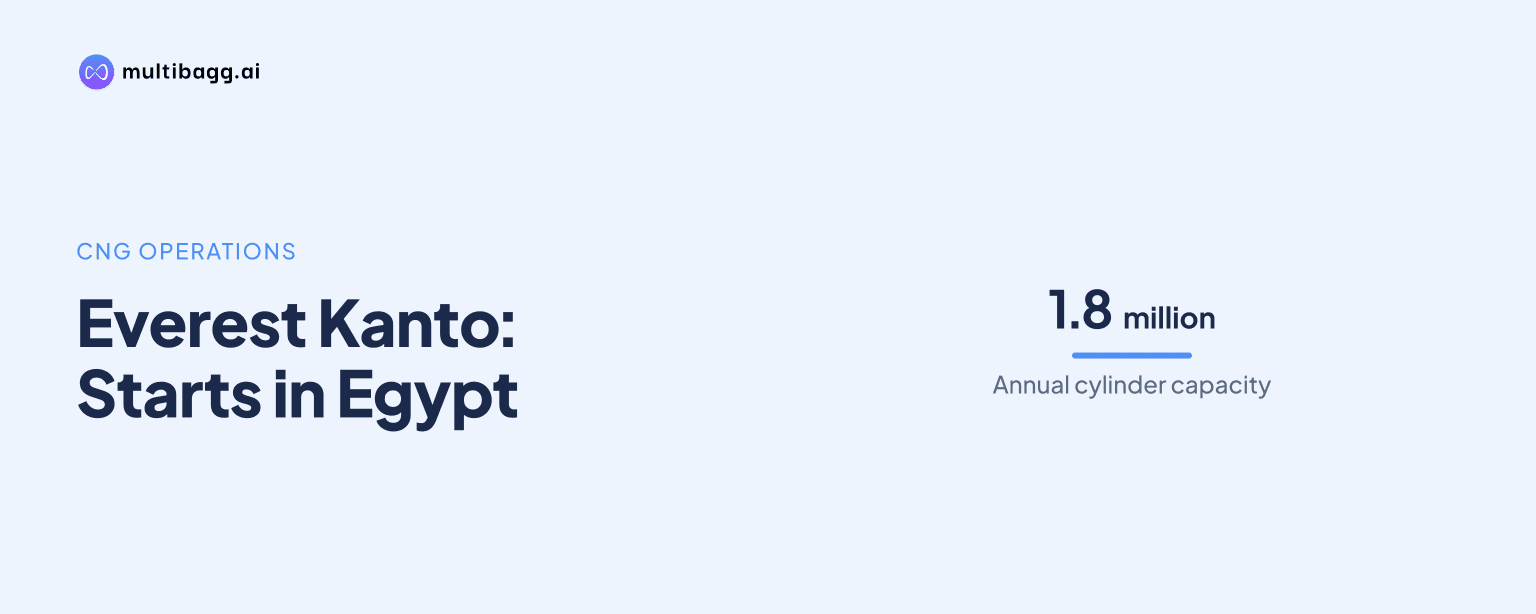
Everest Kanto Cylinder Limited began commercial compressed natural gas (CNG) cylinder production at its Egypt facility in September 2026 and made commercial dispatches in October 2026, adding Egypt to its six-facility manufacturing network. Its Egyptian subsidiary then signed a November 2026 memorandum of understanding (MoU) with CARGAS to explore CNG transportation units and trailers.
Know Everest Kanto Cylinder inside out
Results, valuation, peers and who's buying, in one view.
When did EKC begin CNG production and dispatches in Egypt?
EKC commenced commercial production of CNG cylinders at its new Egypt manufacturing facility in September 2026, the final month of Q2 FY27, which ended on September 30, 2026. The company disclosed the operating milestone in its Q2 FY27 results release dated November 13, 2026, identifying the product made at the site as CNG cylinders.
Commercial dispatches of CNG cylinders followed in October 2026, one month after production began and after the end of the reported Q2 FY27 period. EKC did not disclose the number of cylinders dispatched, the value of those dispatches, customer names, destination markets or whether the first consignments were for Egypt or export markets.
The sequence distinguishes an operating start from a financial contribution. EKC reported consolidated income from operations of Rs 399 crore for Q2 FY27, versus Rs 360 crore in Q2 FY26, but October dispatches occurred after September 30. The release therefore does not provide evidence that revenue from commercial Egypt dispatches was included in Q2 FY27 income.
What does EKC's CARGAS MoU cover?
EKC's Egyptian subsidiary signed an MoU with Natural Gas Vehicles Company, known as CARGAS, in November 2026 to explore manufacturing CNG transportation units and associated trailers for regional markets. The disclosure describes an exploration of opportunities rather than a confirmed supply agreement, customer order, investment commitment or production schedule.
The potential transportation units and trailers are a separate opportunity from the CNG cylinders that entered commercial production in September 2026. EKC did not disclose trailer specifications, production capacity, capital expenditure, expected start date, ownership arrangements or countries that could be served under the MoU.
Management said the production start and CARGAS MoU were milestones in establishing operations in Egypt and positioning EKC to pursue opportunities in the region's natural-gas infrastructure market. That statement sets out management's rationale for the November 2026 agreement, while the release leaves the commercial outcome of the MoU unresolved.
How does Egypt fit into EKC's manufacturing network?
Egypt is one of EKC's six manufacturing locations, alongside Tarapur, Kandla Special Economic Zone and Mundra in India, Jebel Ali in Dubai, and Pittsburgh in the United States. The company states that the network has capacity of about 1.8 million cylinders a year and has more than 30 million cylinders in service.
EKC describes itself as a manufacturer of seamless steel gas cylinders for industrial, CNG and clean-energy applications. Its stated storage applications include oxygen, hydrogen, nitrogen, argon and helium, serving manufacturing, medical, aerospace and defence, and automotive sectors; the September 2026 Egypt announcement specifically concerns CNG cylinders.
The results release provides a network-wide capacity figure but no capacity allocated to Egypt. It also does not state the facility's utilisation, capital cost, number of production lines, product range beyond CNG cylinders, or contribution to group cylinder capacity following the commercial start.
Got a follow-up? Ask IRIS
What was EKC's financial context when Egypt production began?
EKC reported higher consolidated quarterly income and earnings before interest, tax, depreciation and amortisation (EBITDA) in Q2 FY27 than in Q2 FY26, while first-half income was marginally lower than a year earlier. Consolidated income from operations rose by Rs 39 crore in the quarter, whereas H1 FY27 income was Rs 2 crore below H1 FY26.
India revenue was Rs 255 crore in Q2 FY27, up 10% year on year and 26% quarter on quarter, according to the operating highlights. The United States reported revenue of Rs 112 crore, up 29% year on year, and its segment profitability increased 76% year on year to a 19% segment margin; the release provides no comparable Egypt revenue or profitability figure.
Standalone EBITDA rose to Rs 37 crore in Q2 FY27 from Rs 26 crore in Q2 FY26, with the standalone EBITDA margin increasing to 15% from 11%. In contrast, consolidated profit after tax for H1 FY27 was Rs 50 crore, compared with Rs 65 crore in H1 FY26, showing that the higher quarterly consolidated profit did not translate into higher first-half profit.
Management said EKC continues to ramp up expanded manufacturing capacities and pursue higher-value applications in industrial gases, semiconductors, defence, hydrogen and other clean-energy segments. The Q2 FY27 release does not assign an Egypt-specific revenue target, margin target or timetable to those wider plans.
Conclusion
The disclosed Egypt sequence moves EKC from facility establishment to commercial activity: CNG-cylinder production began in September 2026, dispatches followed in October 2026, and the CARGAS MoU was signed in November 2026. The development adds a manufacturing location and a possible trailer-unit product line, but EKC has not disclosed Egypt-specific capacity, sales, dispatch volumes, costs or profits.
The next item to watch is management's disclosed plan to ramp up expanded manufacturing capacity and pursue industrial gas, semiconductor, defence, hydrogen and clean-energy applications. For Egypt, later disclosures would need to show whether the November 2026 CARGAS exploration becomes a defined manufacturing programme, with investment, specifications, customer orders, regional markets or measurable financial contribution.