










Foreign portfolio investors buy $8.9B in Indian equities
Key highlights
- FPIs bought net Indian equities worth Rs 84,291 crore through November 13 across nine trading sessions.
- The cited NSDL daily dollar figures total about $8.94 billion for November 2 to 13.
- September and October FPI equity outflows were Rs 35,861 crore and Rs 34,843 crore, respectively.
- FPIs added Rs 7,815 crore to debt through the Fully Accessible Route during the same period.
powered by IRIS
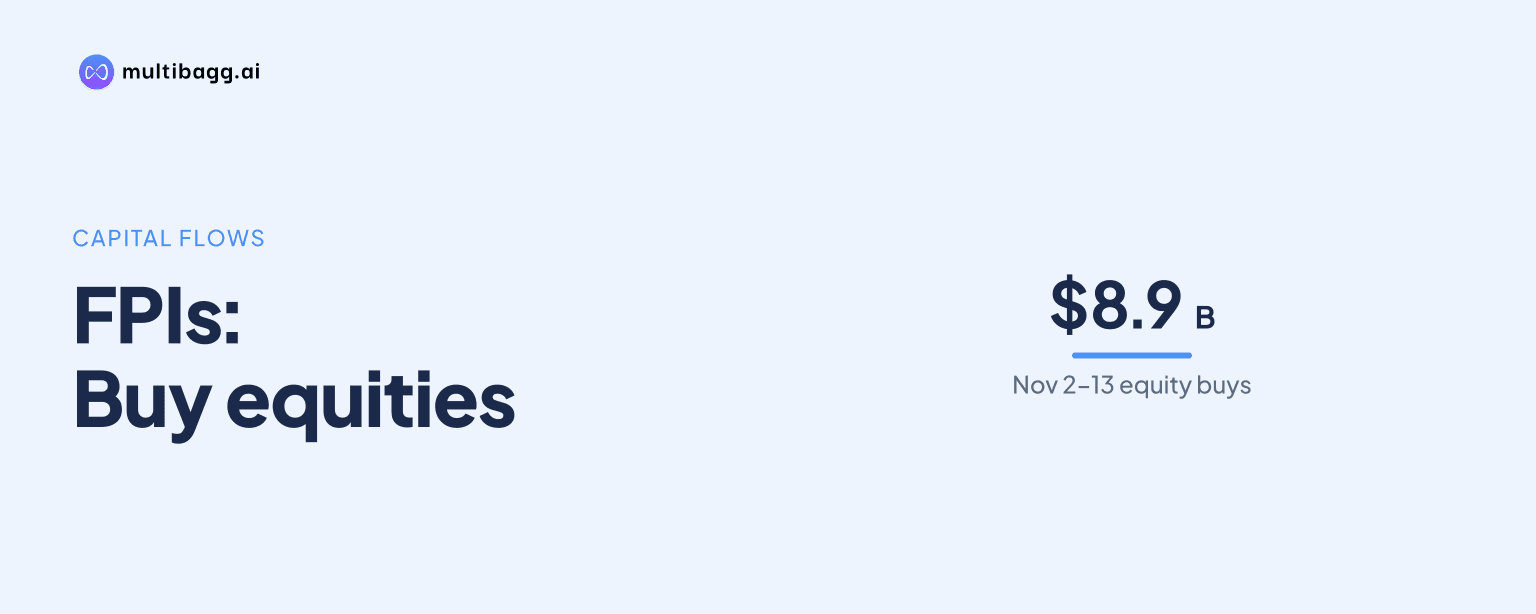
Foreign portfolio investors bought a net Rs 84,291 crore, or about $8.9 billion, of Indian equities in the nine trading sessions from November 2 to November 13, reversing two consecutive months of withdrawals. The buying reduced calendar-year 2026 equity outflows to roughly Rs 2.1 trillion from nearly Rs 3 trillion.
How much did FPIs buy in November 2026?
FPIs recorded net equity inflows of Rs 84,290 crore to Rs 84,291 crore through November 13, according to the figures cited in market discussions. The nine daily dollar figures published by NSDL add up to about $8.94 billion, while Bloomberg-compiled data put the November buying at $8.5 billion because of a different dataset and cut-off.
The flow marks a sharp reversal after substantial foreign selling in September and October. Foreign investors had withdrawn Rs 35,861 crore in September and Rs 34,843 crore in October, while cumulative net equity outflows from January through October were cited at $31.4 billion. November's buying offset roughly 28.5% of the earlier selling this year.
Why did FPIs return to Indian equities?
FPIs returned as global capital rotated away from expensive artificial intelligence-focused technology markets, Brent crude prices fell and Indian large-cap valuations were viewed as attractive. Brent crude was reported to have declined by roughly 13% in the first week of November toward $97 a barrel.
Market commentary also linked the move to improving earnings and a shift in global investment preferences. However, the available discussion does not establish that the reversal is a lasting allocation change. Strategists described it as tactical closing of extreme underweight positions on India, rather than confirmation of a structural turn in foreign flows.
Got a follow-up? Ask IRIS
Which sectors received FPI buying?
FPIs concentrated their reported buying in index-heavy sectors including financials, telecom, capital goods, pharmaceuticals and automobiles. The focus on large-cap shares is consistent with the scale of the inflows and the market's response during the period.
Short-covering in frontline banking counters was also cited as a factor behind the Nifty 50 moving back above 25,000. Separate market commentary said foreign investors had invested nearly Rs 80,000 crore since mid-October, although the figures reported for November varied with the reporting date used. The common trend was a clear switch from aggressive selling to net buying.
What happened in the Indian debt market?
FPIs also added money to Indian debt through the Fully Accessible Route and the general route during the same period. They invested Rs 7,815 crore through the Fully Accessible Route and Rs 1,167 crore through the general route, while withdrawing Rs 702 crore under the Voluntary Retention Route.
The debt flows show that foreign activity was not limited entirely to equities, though equity purchases were far larger in value. The route-wise split also underlines that foreign participation can differ across market segments and investment frameworks, even within the same fortnight.
Conclusion
The November buying has materially narrowed the scale of 2026 foreign equity outflows and supported a recovery in frontline Indian shares. Still, the evidence in market commentary points to a tactical reassessment of India exposure after a period of heavy selling, not yet a confirmed long-term reversal in FPI positioning.
The next test is whether inflows persist after the initial nine-session surge. Investors will watch the upcoming US Federal Reserve minutes, crude-price volatility amid Gulf tensions, rupee stability and any Reserve Bank of India policy-rate action, all of which were identified as near-term drivers of the flow outlook.