










Gaja Alternative AMC Q2 PAT rises 138% on tax write-back
Key highlights
- Gaja Alternative AMC reported Q2 FY27 PAT of Rs 64.7 crore, up 138% sequentially.
- Q2 FY27 PAT included a Rs 15 crore write-back of a lower tax provision on sponsor-commitment gains.
- Performance income rose 55% from Q1 after a significant Fund II exit, while Q2 fee income was largely flat at Rs 15 crore.
- Cash and liquid investments were Rs 690 crore at September 30, 2026, with estimated capacity for about Rs 8,000 crore of new funds.
powered by IRIS
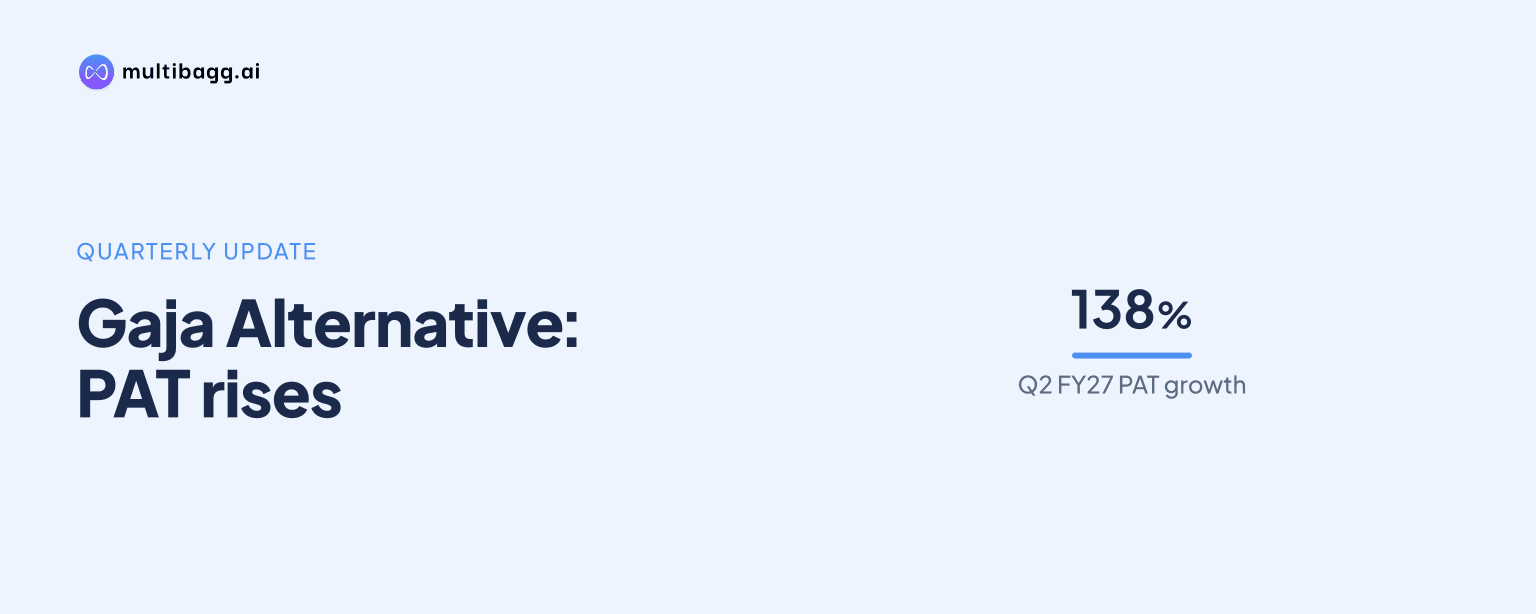
Gaja Alternative Asset Management Limited reported Q2 FY27 profit after tax, or PAT, of Rs 64.7 crore, up 138% from Q1, with the result including a Rs 15 crore write-back of a lower tax provision on sponsor-commitment gains. Performance income also rose 55% sequentially after a significant Fund II exit.
Know Gaja Alternative Asset Management inside out
Results, valuation, peers and who's buying, in one view.
What drove Gaja Alternative AMC’s Q2 PAT rise?
Gaja Alternative AMC’s Q2 PAT rise reflected both a tax-provision reversal and higher performance income, rather than a broad increase in management fees. Management said Rs 15 crore of the Rs 64.7 crore Q2 FY27 PAT came from a lower tax provision on sponsor-commitment gains, after the tax-liability estimate was revised on the advice of new auditor PricewaterhouseCoopers. Total income was Rs 65.5 crore, up 26% from Q1.
The tax item was separate from the company’s operating income streams. Management described it as a write-back of tax provision related to sponsor-commitment gains, rather than recurring fee income or carried interest. This distinction is material because Q2 PAT was close to Q2 total income of Rs 65.5 crore, and the Rs 15 crore reversal contributed to the reported profit increase.
Performance income was the other disclosed contributor. It rose 55% over Q1 after carried interest from a significant Fund II exit, while the quarter also generated income from Fund III and Fund IV. Gaja Alternative AMC said it uses a European waterfall, under which carried interest starts only after the fund as a whole has returned capital and the hurdle to investors.
Fee income, in contrast, was largely flat at Rs 15 crore in Q2 FY27. Management fees are earned on initial committed capital in earlier fund years and subsequently on net invested capital, according to management. The period’s earnings mix therefore changed through Fund II-related carried interest and the tax revision, not through a disclosed sequential lift in fee income.
How did Gaja Alternative AMC’s first-half performance compare?
Gaja Alternative AMC’s H1 FY27 PAT increased 48% year on year to Rs 91.9 crore, while total income rose 6% to Rs 117.3 crore. Management reported a cost-to-income ratio of 29% for H1 FY27, compared with 38% a year earlier. The larger growth in profit than income included the Q2 tax-provision write-back.
The quarterly movement was more pronounced than the half-year comparison. Q2 FY27 total income of Rs 65.5 crore was 26% above Q1, while PAT of Rs 64.7 crore was 138% higher sequentially and 54% above the corresponding quarter a year earlier. Management attributed the income growth to Fund II carried interest and identified the tax provision revision as an additional driver of PAT.
For the 12 months ended September 2026, Gaja Alternative AMC reported total income of Rs 164.8 crore, up 5% year on year, and PAT of Rs 111.8 crore, up 28%. Management said PAT margin was 68% for that 12-month period, versus 43% in FY24, and return on equity was 13%. The period included the company’s August 2026 initial public offering, or IPO.
Which income streams supported Gaja Alternative AMC’s results?
Gaja Alternative AMC reported management fees, performance income, sponsor-commitment gains and treasury income as its income sources. For the 12 months to September 2026, performance income was Rs 85.4 crore, or 52% of total income; fee income was Rs 61.3 crore, or 37%; and treasury income was Rs 18.1 crore, or 11%. Management called treasury income a fourth pillar of growth during the quarter.
The Q2 figures show how those sources can move differently. Fee income was largely unchanged at Rs 15 crore, while performance income increased 55% from Q1 following the Fund II exit. Gaja Alternative AMC said management fees, carried interest and sponsor-commitment income from every fund it manages accrue to the listed asset manager.
Sponsor commitments are the manager’s investments alongside fund investors. Gaja Alternative AMC reported Rs 589 crore of commitments across existing and proposed funds, equal to 7.1% of total fund size. The disclosed commitment levels were 6% for Fund II, 4.4% for Fund III, 8.5% for Fund IV, 8.4% for proposed Fund V and 7% for proposed Eastgate Secondaries Fund I.
The tax write-back and carried-interest increase came from different mechanisms. The Rs 15 crore provision reversal concerned sponsor-commitment gains, while the significant Fund II exit increased performance income. Management said sponsor commitments receive fund returns, whereas carried interest is earned after the European-waterfall capital-return and hurdle conditions are met at fund level.
Got a follow-up? Ask IRIS
What changed in Gaja Alternative AMC’s balance sheet?
Gaja Alternative AMC’s net worth reached Rs 1,106 crore at September 30, 2026, up 92% from Rs 574.6 crore a year earlier. The company listed on August 26, 2026, after an Rs 550 crore IPO that included an Rs 450 crore fresh issue. Management said the company was nearly debt-free at the September quarter-end.
The IPO’s net proceeds are designated for sponsor commitments to Fund IV, Fund V and Eastgate Secondaries, plus general corporate purposes. Cash and liquid investments stood at Rs 690 crore on September 30, 2026. Management estimated that this capital could sponsor approximately Rs 8,000 crore of new funds at an 8.4% sponsor-commitment level.
Treasury income of Rs 18.1 crore in the 12 months to September 2026 reflects the enlarged balance sheet’s contribution to income. Management said it plans over time to raise sponsor commitments to 10% of fund size. That is a stated objective, while the Rs 8,000 crore figure is a capacity estimate rather than a disclosed fundraising result or investment timetable.
How are Gaja Alternative AMC’s next funds progressing?
Gaja Alternative AMC said Fund V and Eastgate Secondaries Fund I were making steady progress towards their capital-raising targets, but did not disclose fund sizes, capital raised or closing dates during the November 4, 2026 call. Fund V is the fifth fund in the flagship strategy, while Eastgate Secondaries Fund I is part of its secondaries strategy.
Since 2005, Gaja Alternative AMC has raised four flagship funds with more than Rs 4,200 crore of committed capital and generated an average gross multiple of 3.8 times across mature funds. Management said Fund I is realised, Funds II and III are exiting, and Fund IV is investing. The Fund II exit in Q2 illustrates why exits from the maturing funds can affect performance income.
The company reported 298 limited partners, or LPs, across its existing funds and a wider network of about 900 investor relationships in India and more than 20 countries. Management said it raises most capital directly through this network, with less reliance on distributors and intermediaries. Proposed Fund V’s sponsor commitment is 8.4%, while Eastgate Secondaries Fund I’s is 7%.
Conclusion
Gaja Alternative AMC’s Q2 result combined a 55% sequential increase in performance income from a significant Fund II exit with a Rs 15 crore write-back of tax provision on sponsor-commitment gains. That combination helps explain why Q2 PAT increased 138% sequentially to Rs 64.7 crore, while H1 total income increased by a more moderate 6% to Rs 117.3 crore.
The next disclosed milestones are fundraising progress for Fund V and Eastgate Secondaries Fund I, for which management did not provide amounts or dates. Investors can also watch whether the Rs 690 crore of cash and liquid investments is deployed into sponsor commitments as management works towards its stated long-term target of commitments equal to 10% of fund size.