










GKSL Prioritises Stakes in Three Existing Hospital Subsidiaries
Key highlights
- GKSL said raising ownership in three 51%-owned subsidiaries is its first acquisition priority.
- H1 FY27 revenue from operations reached Rs 72.4 crore, up 157% from Rs 28.2 crore in H1 FY26.
- GKSL reported Rs 32.2 crore of cash and bank balances against Rs 17.3 crore of borrowings on September 30, 2026.
- The Dubai polyclinic had an existing revenue base of approximately Rs 20 crore, according to management.
powered by IRIS
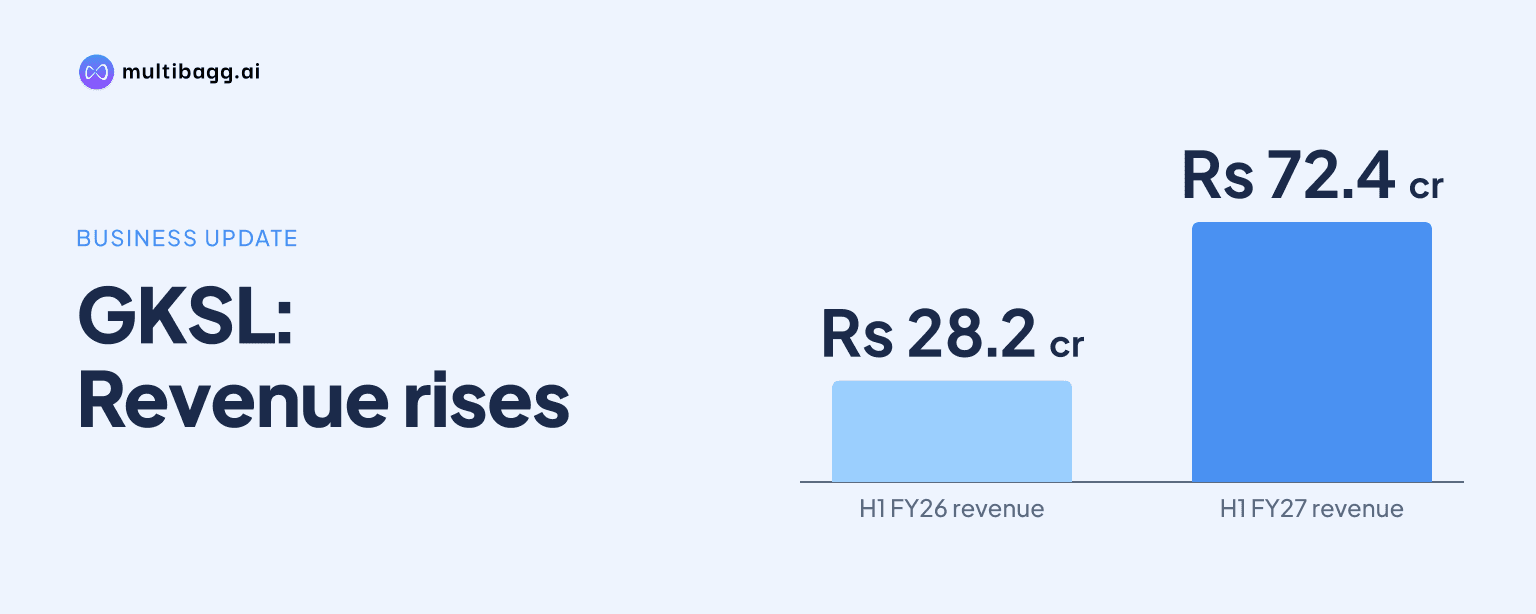
Gujarat Kidney and Super Speciality Limited said in its Q2 FY27 call that raising ownership in three 51%-owned hospital subsidiaries in Dubai, Bharuch and Ankleshwar is its first acquisition priority, ahead of further greenfield or external hospital transactions. The group reported H1 FY27 revenue from operations of Rs 72.4 crore, up 157% year on year.
Know Gujarat Kidney & Super Speciality inside out
Results, valuation, peers and who's buying, in one view.
Which hospital stakes does GKSL plan to buy first?
GKSL plans to pursue the remaining stakes in its Dubai, Bharuch and Ankleshwar subsidiaries before considering other acquisitions. Managing Director Pragnesh Bharpoda identified the Dubai polyclinic, Raj Farm in Bharuch and Patel Multispecialty in Ankleshwar as the three targets, saying GKSL already holds 51% in each subsidiary and is negotiating with them while assessing their results.
The Dubai operation was described earlier in the call as an established polyclinic in which GKSL acquired a 51% stake, with an existing revenue base of about Rs 20 crore. Management said the valuation had already been decided for the Dubai business, but it wanted to review one or two quarters of results and see whether the operation met its commitments before acquiring the remaining 49%.
Management did not disclose a timetable, purchase consideration or financing structure for buying the minority interests in the Bharuch and Ankleshwar businesses. It also did not name any external acquisition candidate, citing confidentiality commitments and non-disclosure agreements. The stated sequence is clear: increasing ownership in existing subsidiaries is the first target, with other inorganic opportunities considered afterwards.
Why is GKSL putting existing subsidiaries ahead of new hospital deals?
GKSL is prioritising its subsidiaries because management wants to increase ownership in businesses already within its network and whose operating results it can monitor. Bharpoda said the group was negotiating with the three 51%-owned units and reviewing their performance, rather than committing to complete every buyout immediately.
This approach follows GKSL's acquisitions-led, asset-light model, which combines leased facilities with controlling stakes in established hospitals. As of the Q2 FY27 call, the network comprised 11 hospitals and 10 pharmacies in nine cities. Management said acquiring established hospitals can provide an existing patient base and clinical credibility while requiring lower upfront capital than a wholly greenfield approach.
The group still has two greenfield projects in its pipeline: an expansion at its Ahmedabad hospital and an expansion at its Bharuch hospital. Management said that if it finds an acquisition opportunity in Gujarat or outside the state that meets its criteria, it would prefer that transaction over a greenfield project. The current priority for subsidiary stakes therefore does not rule out development spending or future external deals.
What criteria will GKSL use for external hospital acquisitions?
GKSL said an external acquisition must generally involve a hospital run by doctors with at least 15 years of history, a good reputation and no litigation involving either the hospital or the doctors. Management also said the doctors must commit to remain associated with the business for at least seven years, a condition intended to preserve clinical continuity after a transaction.
Those criteria apply to opportunities inside and outside Gujarat, according to management. GKSL did not provide a target geography, deal count or budget for such transactions during the call. It said that an eligible acquisition would receive preference over a greenfield project, but its first stated objective remains raising its stakes in the three existing subsidiaries.
The Dubai polyclinic also has a separate role in management's plan. GKSL said the business gives it access to international patients and could become a medical-tourism gateway by referring patients into its specialised network in India. Management added that the polyclinic had been profitable for the past five years, though it did not disclose a separate profit figure or patient referral volumes.
Got a follow-up? Ask IRIS
How does the acquisition plan fit GKSL's financial position?
GKSL reported net worth of Rs 263.6 crore as of September 30, 2026, with cash and bank balances of Rs 32.2 crore and borrowings of Rs 17.3 crore. Cash and bank balances exceeded borrowings by Rs 14.9 crore. Management presented this balance-sheet position alongside its intention to continue selective acquisitions and hospital upgrades.
During H1 FY27, GKSL deployed about Rs 16.7 crore towards acquisitions and Rs 6.2 crore on capital expenditure, while operating cash flow turned positive. Management did not separate how much of the acquisition spending related to the Dubai 51% stake or other hospital transactions. It also did not indicate whether future minority-stake purchases would be paid from cash, borrowings or another source.
The company's profitability changed as its consolidated base expanded. H1 FY27 revenue from operations rose to Rs 72.4 crore from Rs 28.2 crore in H1 FY26, while earnings before interest, tax, depreciation and amortisation, or EBITDA, rose 35% to Rs 18.6 crore. EBITDA margin was about 25.7%, compared with the 32.8% reported for FY26, while profit after tax, or PAT, increased 44% to Rs 11.9 crore.
What operating results will influence GKSL's next acquisition decisions?
GKSL said subsidiary performance and commitments will influence whether it buys the remaining stakes, particularly in Dubai after one or two more quarters of results. In Q2 FY27, consolidated revenue was Rs 38.1 crore, up 11% quarter on quarter and 195% year on year. EBITDA was Rs 10.2 crore, up 22% quarter on quarter, and EBITDA margin increased to 26.8% from 24.4% in Q1 FY27.
Management linked margin improvement to the consolidation and subsequent upgrading of hospitals acquired during FY26. It also said complex super-speciality procedures in urology, nephro-urology and cardiology can deliver higher margins than dialysis services. GKSL reported average bed occupancy of about 65% in FY26 and average revenue per occupied bed of about Rs 9,221 a day, leaving capacity available within existing facilities.
Management did not issue FY27 revenue or margin guidance. Bharpoda cautioned that hospital results may fluctuate by quarter because of festival periods, doctor leave and patient-season patterns, while saying the annual average should be considered instead. Management also said it uses internal auditors across its 11 hospitals to identify operational leakages, including differences between the parent hospital and subsidiaries.
Conclusion
GKSL's acquisition strategy is centred on increasing ownership in three businesses it already controls: the Dubai polyclinic, Raj Farm in Bharuch and Patel Multispecialty in Ankleshwar. That emphasis is consistent with a network of 11 hospitals that generated Rs 72.4 crore of H1 FY27 revenue and spent about Rs 16.7 crore on acquisitions during the half year.
The next points to watch are the one or two quarters of Dubai performance management said it wants to assess, progress in negotiations for the three minority stakes, and development of the Ahmedabad and Bharuch expansion projects. Management has not disclosed transaction values, deadlines, funding plans or FY27 financial guidance, leaving those matters unresolved.