










Globe International Carriers Q2 Profit Rises 19% on Revenue Growth
Key highlights
- GICL's standalone Q2 FY27 revenue rose 25.5% year on year to ₹45.36 crore.
- Standalone Q2 FY27 profit after tax increased 18.9% to ₹2.16 crore.
- Standalone operating expenses increased 29.3% to ₹42.74 crore in Q2 FY27.
- GICL reported standalone half-year FY27 revenue of ₹80.59 crore and net profit of ₹4.26 crore.
powered by IRIS
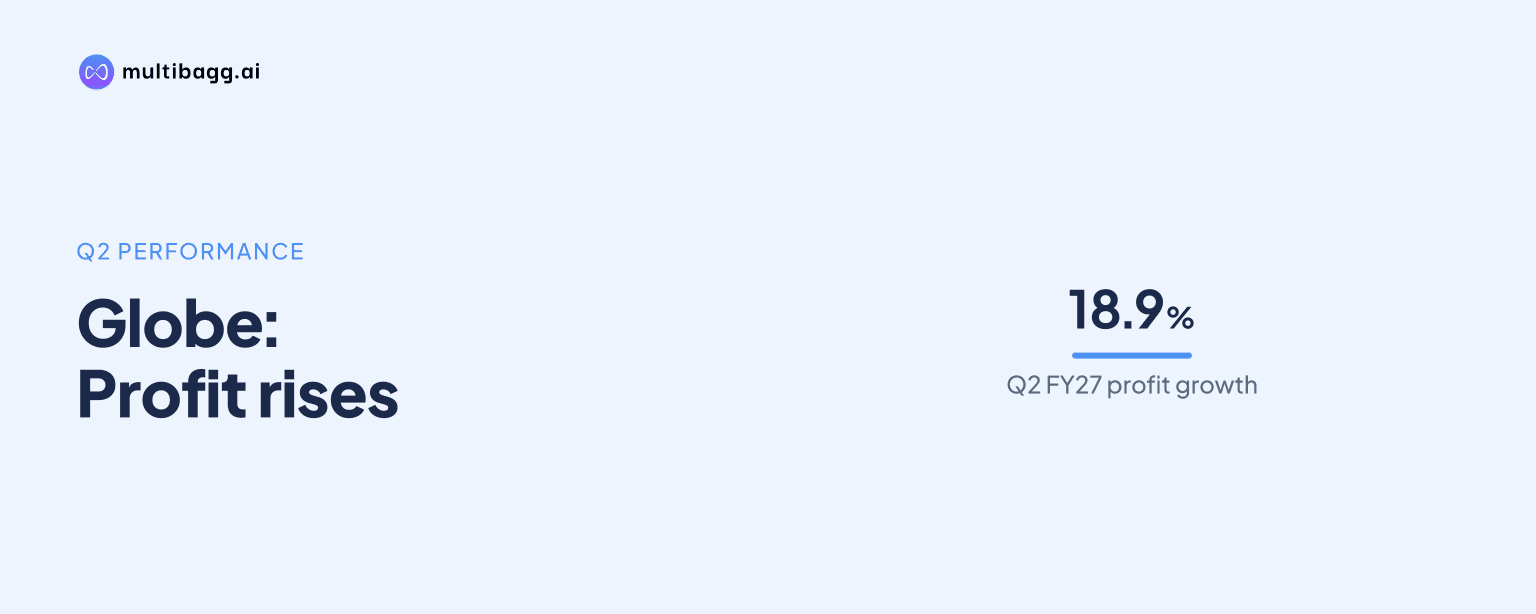
For the quarter ended September 30, 2026, Globe International Carriers Limited reported standalone net profit of ₹2.16 crore, up 18.9% year on year, as revenue from operations increased 25.5% to ₹45.36 crore. The result highlights stronger business volumes, although operating expenses grew faster than revenue and pressured operating profitability.
Know Globe International Carriers inside out
Results, valuation, peers and who's buying, in one view.
What did GICL report for Q2 FY27?
GICL reported standalone revenue from operations of ₹45.36 crore in the September 2026 quarter, compared with ₹36.15 crore in the corresponding quarter a year earlier. The 25.5% increase came alongside total income of ₹46.01 crore, including ₹0.65 crore of other income.
Standalone profit after tax was ₹2.16 crore, against ₹1.82 crore in Q2 FY26, while basic and diluted earnings per share were ₹0.19. The company filed its unaudited standalone and consolidated financial results for the quarter and half year ended September 30, 2026, with the exchange on November 15, 2026.
The year-on-year increase in profit was lower than revenue growth. This reflects the pace of expense growth during the quarter, even as other income rose from ₹0.01 crore in the year-ago period to ₹0.65 crore.
How did costs affect GICL's operating performance?
GICL's operating expenses rose 29.3% year on year to ₹42.74 crore in Q2 FY27 from ₹33.05 crore in Q2 FY26, outpacing the 25.5% growth in revenue. Employee cost increased to ₹1.10 crore from ₹0.90 crore, while other expenses increased to ₹41.60 crore from ₹32.20 crore.
A quarterly operating-profit summary placed operating profit at ₹2.62 crore, down from ₹3.10 crore a year earlier. That summary showed operating margin at 5.8%, compared with 8.4% in Q2 FY26, a decline of 264 basis points.
The filed-result summary separately described standalone operating margin before interest, tax, depreciation and amortisation at 7.1%, compared with 9.3% a year earlier. These measures use different expense classifications, so investors should compare like-for-like definitions when assessing margins across the reported summaries.
What do GICL's half-year figures show?
GICL recorded standalone revenue from operations of ₹80.59 crore for the half year ended September 30, 2026, a 14.3% increase over the corresponding period of FY26. Standalone total income for the first half was ₹81.76 crore.
Standalone net profit for the half year was ₹4.26 crore, and earnings per share were ₹0.38. The company also reported positive cash generated from standalone operations of ₹1.48 crore for the half year.
The half-year data places the September quarter in context. Q2 revenue of ₹45.36 crore was higher than the ₹35.23 crore reported for the June 2026 quarter in the quarterly comparison, while operating profit was lower than ₹3.16 crore in the preceding quarter. This indicates that revenue expanded sequentially but profitability did not rise at the same pace.
Got a follow-up? Ask IRIS
How do the consolidated results differ from standalone results?
GICL reported consolidated revenue from operations of ₹52.34 crore for Q2 FY27, compared with ₹37.57 crore in Q2 FY26, a year-on-year increase of 39.3%. Consolidated net profit was ₹4.15 crore, compared with ₹1.77 crore in the previous-year quarter.
Consolidated profit attributable to owners was ₹3.17 crore, and consolidated basic and diluted earnings per share were ₹0.37. For the first half, consolidated revenue from operations was ₹89.52 crore, consolidated net profit was ₹5.77 crore, and profit attributable to owners was ₹5.03 crore.
The gap between standalone and consolidated figures is relevant because the company reports both logistics and real-estate-related activities at the group level. For the half year, the logistics segment reported revenue of ₹80.59 crore, while the real estate segment reported revenue of ₹8.93 crore.
Why do these results matter to investors?
GICL's quarter shows that higher revenue did translate into higher standalone profit, but expense growth reduced the operating benefit from that expansion. Revenue rose by more than ₹9 crore year on year, while operating expenses increased by nearly ₹9.69 crore, leaving limited room for operating-profit growth.
For investors, the result therefore presents two distinct trends. The standalone business delivered a 25.5% increase in quarterly revenue and an 18.9% increase in profit after tax, while the consolidated business reported faster growth in both revenue and profit. The results were accompanied by an unmodified review opinion, which indicates that the reviewer did not modify the conclusion on the financial statements.
The company also stated that comparative earnings per share figures were restated following a share split and bonus issue. Investors comparing per-share data with earlier periods should use the restated figures rather than unadjusted historical EPS.
Conclusion
GICL's Q2 FY27 standalone result was marked by revenue growth of 25.5% to ₹45.36 crore and profit after tax growth of 18.9% to ₹2.16 crore. The increase in operating expenses, which rose faster than revenue, kept operating-profit and margin trends under pressure despite the rise in other income.
The next reported benchmark is the company's subsequent quarterly filing, which will show whether revenue growth can be sustained alongside better cost absorption. Investors can also track the difference between standalone logistics performance and consolidated results that include the real estate segment.