










Highness Microelectronics cites 30%-40% medical-monitor margins
Key highlights
- Highness said India-made medical-grade surgical monitors generate margins of about 30% to 40%.
- Highness reported H1 FY2027 operating EBITDA margin of 32.1%, up from 24.1% in H1 FY2026.
- H1 FY2027 revenue from operations rose 63.4% to Rs 12.01 crore from Rs 7.35 crore.
- Net cash used in operating activities was Rs 14.58 crore in H1 FY2027, with receivables at Rs 13.73 crore on September 30, 2026.
powered by IRIS
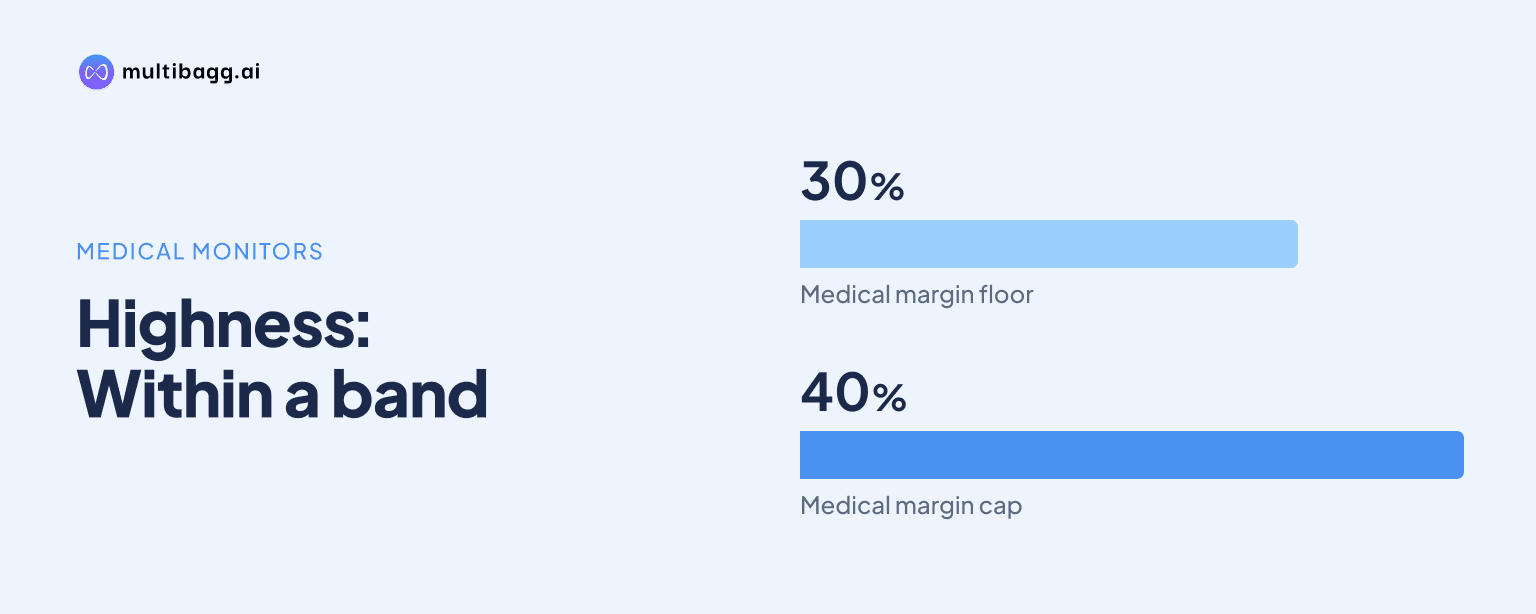
Highness Microelectronics Limited said on November 6, 2026 that its India-manufactured medical-grade surgical monitors generate margins of about 30% to 40%, according to management, supported by in-house design and local production. Management also said Highness is the only domestic manufacturer listed by the Ministry of Health & Family Welfare with a licence for these monitors.
Know Highness Microelectronics inside out
Results, valuation, peers and who's buying, in one view.
What margins does Highness expect from medical surgical monitors?
Highness said medical-grade surgical monitors deliver margins of about 30% to 40%, with management attributing that range to products it has designed itself and manufactures locally. The company did not disclose medical-monitor revenue, volume, order backlog or a separate segment profit figure during the November 6, 2026 call, so the stated 30% to 40% range cannot be compared directly with reported company-wide margins.
The product-level margin indication is above Highness's reported operating EBITDA margin of 32.1% in H1 FY2027. Company-wide operating EBITDA was Rs 3.85 crore on revenue from operations of Rs 12.01 crore, compared with a 24.1% margin and Rs 1.77 crore of operating EBITDA in H1 FY2026. That comparison indicates that medical displays may be one component of the broader profitability mix, but management did not quantify their contribution.
Highness described the opportunity as sizeable but declined to provide an exact market size. Management linked demand to higher government and private-sector healthcare spending after COVID, capital purchases by healthcare providers, customer inquiries and interest in the Make in India programme. It also said government-related tenders can give preference to Make in India products, a mechanism that management believes provides an advantage relative to imported alternatives.
Which approvals does Highness have for medical monitors?
Highness said its medical-grade products are BIS approved, and that it holds a CDSCO MDR 14 licence for domestic medical-grade manufacturing. Management described the MDR 14 licence as compulsory for medical-device manufacturing in India, while calling BIS approval the government's mandatory product requirement.
Highness also said its Rabale factory has ISO 13485 certification, which management described as a medical standard. This factory-level certification sits alongside the stated medical-device licence and BIS approvals, rather than replacing them. The company did not provide certification dates, monitor model numbers or details of the scope of individual approvals in the call.
Management further said many Highness products with export potential carry CE certification and are already used by a wide range of customers. It did not specify how many medical-monitor models have CE certification, which countries are receiving those products, or the value of exports. The disclosed approvals therefore establish the certifications management cited, but not the geographical revenue mix of the medical-monitor business.
Why does local manufacturing matter to Highness's medical strategy?
Highness said it retains a margin of about 30% to 40% on medical monitors because it performs the design and manufacturing locally. Management acknowledged that its bill of materials still includes import-reliant goods, but said localisation of design, integration, assembly, labour and processing means the company does not have to pay an overseas supplier for those production stages.
The company cited its glass-cutting line and planned new facilities as parts of this localisation effort. It also gave controller boards as an example: these were previously made overseas, whereas Highness can now use Indian EMS providers and SMT lines. Management did not disclose the percentage of inputs that are imported or the cost saving per monitor from switching work to India.
Highness's approach is focused on specialised applications rather than mass-market screens. Management said it does not intend, for the foreseeable future, to make television, mobile-phone, laptop or conventional monitor displays, categorising these as commercial displays. Instead, it identified industrial automation, medical and healthcare, transportation, surveillance, defence and avionics as its operating focus, alongside exports where product requirements permit.
Got a follow-up? Ask IRIS
How does the medical-monitor plan fit Highness's H1 FY2027 results?
Highness reported revenue from operations of Rs 12.01 crore in H1 FY2027, up 63.4% from Rs 7.35 crore in H1 FY2026, while profit after tax rose 167% to Rs 2.47 crore from Rs 0.92 crore. The reported improvement reflects the full business rather than medical monitors alone, because management did not provide a segment-wise sales or profit split during the call.
Cost of goods sold rose to Rs 2.70 crore from Rs 2.26 crore while revenue increased by 63.4%, according to management. Employee benefit expense rose to Rs 2.60 crore from Rs 1.35 crore as Highness built its team and capability for the next growth phase, and other expenses increased to Rs 2.85 crore from Rs 1.61 crore. Management said it would monitor employee and other expenses to sustain operating leverage.
The company also reported a working-capital constraint alongside the higher profit. Net cash used in operating activities was Rs 14.58 crore in H1 FY2027, while trade receivables stood at Rs 13.73 crore and inventory at Rs 8.20 crore as of September 30, 2026. Management attributed the cash outflow to supplier advances, higher current assets and lower trade payables, and said accounting profit had not yet translated into operating cash.
What could expand Highness's specialised-display business?
Highness said medical monitors are one of several specialised-display areas, alongside rail and metro transportation, industrial automation, surveillance, defence and avionics. In transportation, management said it supplies displays to Indian Railways, long-distance trains and urban metro and subway systems. It said Chennai Metro orders were dispatched in H1 FY2027 and that it had bid for Phase 2 expansion work.
Management also described a separate Goa Fast Track project for an energy-sector opportunity, funded through the recent fundraise. It said an initial customer memorandum of understanding was at an advanced signing stage and a second customer order was also being finalised, with the prospective arrangement intended to run for at least 3 years. The project concerns locally sourced LCD displays and components for customers with PLI obligations, not the medical-monitor business.
Highness said its main factory would take about 1 year to become operational, leading it to lease interim space for the fast-track manufacturing line. Management did not attach a revenue figure to the medical-monitor expansion or the energy project, although it said the new opportunity could help it top up projections after agreements are signed. These remain management plans and expectations rather than reported orders or revenue.
Conclusion
Highness's stated 30% to 40% margin range for India-made medical-grade surgical monitors identifies a specialised product category that management says is supported by in-house design, local assembly and a stated domestic manufacturing licence. The category's claimed margin range compares with the company-wide 32.1% operating EBITDA margin in H1 FY2027, but Highness has not disclosed medical-display sales or profit separately.
The next issue to watch is whether Highness converts customer inquiries and tender preferences into disclosed medical-monitor orders while improving cash conversion. Management said H2 is historically stronger than H1, expects additional Delhi Metro orders during H2, and plans to monitor receivable collections, inventory, supplier terms and capital expenditure as its main factory remains about 1 year from going live.