










IC Electricals Discusses Korean Technology for Rail Upgrades
Key highlights
- IC Electricals had a Rs 231 crore order book at September 30, 2026, including Rs 140 crore in contracts.
- Management said a 2x25 kV upgrade could increase trains in a 40-kilometre block from 2 to 4.
- IC Electricals said its pending bid book exceeded Rs 250 crore, with a historical win rate of around 30-35%.
- Management guided to around Rs 270 crore of next-year revenue and more than Rs 200 crore of pending orders at March 2027.
powered by IRIS
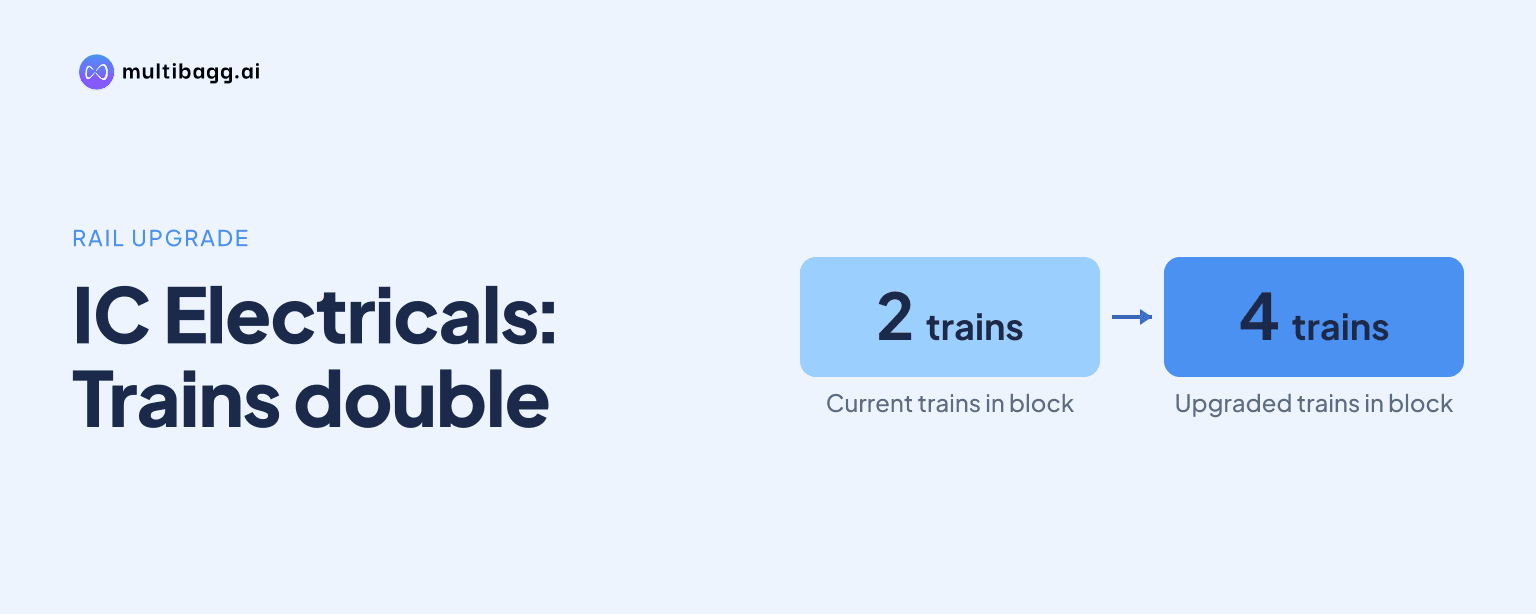
IC Electricals said during its earnings call that it is discussing Korean technology for Railways upgrades from 1x25 kV to 2x25 kV, a capacity programme management said could increase trains in a 40-kilometre block from two to four. The discussions cover advanced overhead equipment, electronics, rotating machines and EPC work.
Know IC Electricals Company inside out
Results, valuation, peers and who's buying, in one view.
Why is IC Electricals discussing Korean rail technology?
IC Electricals is discussing Korean technology because management said advanced overhead equipment is needed for Railways' stated ambitions of operating trains at 180 kilometres per hour and 200 kilometres per hour. Management said the Korean vendors under discussion operate normal trains at 180-200 kilometres per hour and high-speed trains above 300 kilometres per hour.
Management did not identify the prospective Korean companies, products or commercial terms. It said discussions and signing were still in process and that non-disclosure agreements, or NDAs, would need to be signed before partner names could be disclosed. The potential collaboration relates to electronics, rotating machines and the contract division, rather than only one product category.
IC Electricals also linked the proposed technology to its engineering, procurement and construction, or EPC, operations and product division. Management said backward integration and new products would support EPC work, while the EPC business would also support product demand. This is a management strategy statement, not a disclosed technology-transfer agreement or customer order.
What rail-upgrade opportunity does IC Electricals see?
IC Electricals sees upgrades to existing electrified routes as an EPC opportunity because management said about 90% of railway electrification is complete. Management said the remaining 10% remains a large opportunity, but also described the conversion of the completed network from 1x25 kV to 2x25 kV as a further workstream.
Management said the 2x25 kV conversion requires substations, SSPs, upgrades to the overhead transmission system and advanced overhead equipment. It characterised the change as doubling the capacity of the overhead transmission system. The call did not provide a Railways budget, route target, tender value, project date or order awarded to IC Electricals.
The stated opportunity is not limited to high-speed rail. Management said that a system is divided into four zones of around 440 kilometres and that only two trains can currently run within a 40-kilometre range. It said an upgrade could allow four trains to operate in that range, doubling capacity on the same track.
Management said this approach could reduce the need for additional track construction, which it described as requiring substantial investment. Its explanation was that more trains could run on the same track after capacity augmentation. That is management's rationale for the programme, rather than a disclosed Railways implementation schedule.
Got a follow-up? Ask IRIS
How does the strategy fit IC Electricals' contract business?
IC Electricals had Rs 140 crore of contract-division orders within its Rs 231 crore outstanding order book at September 30, 2026. The product division accounted for the remaining Rs 91 crore. Management said the contract portion was expected to be executed over six months to 1.5 years.
Management expects the contract division to gain pace in the next five months after a seasonally difficult first half. It said field work in April, May, June, July and August is affected by hot weather and the rainy season, and said the project division could overtake manufacturing in the next six months. This is management's operating expectation rather than a reported revenue result.
The contract division has a longer working-capital cycle than the product division, according to management. Product-division working capital was around 90-120 days, compared with 120-150 days for contracts. Contract billing is milestone-based and section-wise, while final payment follows project completion and a Railways closure certificate.
Management described approximately Rs 97 crore of capital employed in the contract business as a peak level because it had built inventory ahead of a busy execution period. It said inventory should reduce as work proceeds and that the build-up was intended to avoid delays caused by material shortages. No inventory-reduction target or future capital-return measure was disclosed.
What order-book evidence supports IC Electricals' plans?
IC Electricals reported a rising order-book sequence that management cited when discussing future execution. It closed March 31, 2025 with an order book of Rs 120 crore, while FY26 turnover was Rs 143 crore and the March 2026 order book was Rs 170 crore. At September 30, 2026, the order book had risen to Rs 231 crore.
Management said it expected more than Rs 100 crore of additional orders over the next four to five months and targeted a pending order book of more than Rs 200 crore at March 2027. It also guided to around Rs 270 crore of top-line revenue next year. An analyst calculated this would imply close to 35% growth, and management agreed.
The pending bid book was more than Rs 250 crore, with a historical win rate of around 30-35%, management said. It said bidding was being limited by financial capability rather than extended to every tender. Product contracts typically have execution periods of three months to one year, while contract-division projects can run from one year to two years depending on site conditions and Railways requirements.
Conclusion
IC Electricals is positioning its EPC and product operations for rail capacity upgrades alongside the remaining electrification opportunity. Management's central case is that conversion from 1x25 kV to 2x25 kV can raise capacity in a 40-kilometre block from two trains to four, while Korean technology could support the advanced equipment needed for those projects.
The next points to watch are whether IC Electricals completes the NDA and signing process needed to disclose Korean partners, whether capacity-upgrade tenders become orders, and whether it reaches its March 2027 target of more than Rs 200 crore in pending orders. Management also expects more than Rs 100 crore of order additions in the next four to five months and around Rs 270 crore of next-year revenue.