










India's oil PSUs Q2 profit reaches ₹30,106 crore on margins
Key highlights
- India's three state-run fuel retailers posted combined standalone Q2 net profit of ₹30,106 crore, nearly 39% of the previous financial year's profit.
- BPCL's Q2 gross refining margin rose to $32.53 per barrel from $10.78 a year earlier.
- HPCL's Q2 gross refining margin increased to $32.15 per barrel from $8.80 a year earlier.
- Indian Oil Corporation recorded ₹21,630 crore standalone Q2 profit, including an approximately ₹7,000 crore inventory gain.
powered by IRIS
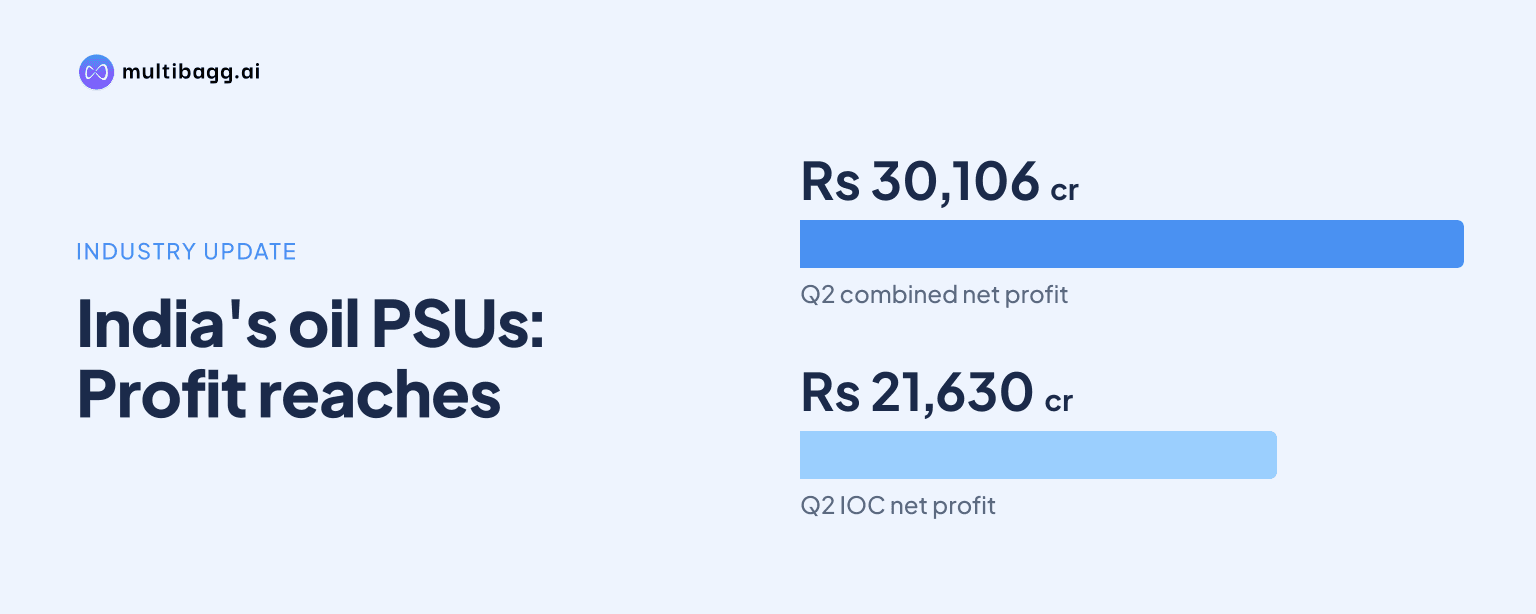
India's state-run fuel retailers reported combined standalone net profit of ₹30,106 crore in the July-September quarter, driven primarily by elevated refining margins and inventory gains. The total was nearly 39% of their profit for the entire previous financial year, while Indian Oil Corporation accounted for the largest share with record standalone profit of ₹21,630 crore.
Why did India's oil PSUs report ₹30,106 crore in Q2 profit?
India's oil PSUs reported the ₹30,106 crore Q2 profit because higher refining margins and inventory gains more than offset losses on petrol and diesel sales and an unpaid LPG subsidy bill. The three state-run fuel retailers swung from a combined loss to profit during the July-September period.
The result reflects an unusually favourable refining environment rather than a clear improvement in fuel marketing economics. Global supply disruptions, lower fuel inventories and tight product availability supported prices for diesel, gasoline and aviation turbine fuel. For the oil PSUs, converting crude into these products became substantially more profitable during the quarter.
The profit number is significant in relation to the preceding full financial year, as the September-quarter total alone represented nearly 39% of annual earnings from that period. However, the available information indicates that part of the increase came from factors that may not recur at the same scale, including inventory valuation gains and government compensation linked to past LPG losses.
How high did refining margins rise for BPCL and HPCL?
Bharat Petroleum Corporation and Hindustan Petroleum Corporation reported gross refining margins above $32 per barrel in Q2, compared with roughly $9-$11 per barrel a year earlier. BPCL's gross refining margin rose to $32.53 per barrel from $10.78, while HPCL's rose to $32.15 per barrel from $8.80.
These figures show the extent of the change in the product market. During the September quarter, gasoline cracks nearly tripled year on year, diesel cracks rose to about 3.5 times their year-earlier level, and aviation turbine fuel cracks increased to around 3.7 times. Such moves lifted the value refiners received for products relative to crude feedstock costs.
Indian Oil Corporation also reported a SAED-adjusted gross refining margin of $36.67 per barrel, compared with $36.10 per barrel in Q1 FY 2026-27. Its refineries processed 18.1 million metric tonnes of crude at capacity utilisation of 102.3% during the quarter.
What lifted Indian Oil Corporation's quarterly earnings?
Indian Oil Corporation's record standalone Q2 profit of ₹21,630 crore was supported by refining margins, petrochemical and gas contributions, and an inventory gain of about ₹7,000 crore. Its revenue from operations rose 29.5% year on year to ₹262,936 crore.
A temporary fall in crude oil prices from mid-June to mid-August lowered feedstock costs and produced the inventory valuation gain. This is important when assessing the earnings quality because an inventory gain is linked to crude-price movements and is not the same as recurring operating profitability from refining or marketing.
Indian Oil Corporation also reported consolidated net profit of ₹22,503 crore, up 174% year on year, after a consolidated loss of ₹1,141 crore in the previous quarter. The company said the July-September profitability was also aided by robust petrochemical and gas margins, even as it faced losses on petrol and diesel sales where higher costs were not passed to consumers.
Got a follow-up? Ask IRIS
Are these refinery profits likely to be sustainable?
These refinery profits may not be sustained at Q2 levels because the margin expansion is cyclical and fuel margins have already begun to move off their peak. Indian refiners expect supportive conditions from disruptions in West Asia and Russia, low fuel inventories and tight product supplies, but their earnings remain exposed to shifts in crude prices, product cracks and operating costs.
The current market has created attractive opportunities in diesel, gasoline and aviation turbine fuel. India's diversified crude sourcing and refining capabilities can help domestic refiners participate in tight global fuel markets. India also earned roughly $41.2 billion from refined-product exports between April and September, 37% more than in the same period a year earlier.
Yet higher crude premiums, freight costs and insurance costs can reduce the benefit of strong product prices. India imports close to 90% of its crude requirements, meaning higher crude costs remain a major pressure point even when exports of refined products rise. The export windfall can cushion the import bill but does not fully offset the higher cost of crude imports.
What should investors separate in oil PSU earnings?
Investors should separate high refining margins and one-off inventory gains from recurring marketing and operational earnings. Indian Oil Corporation's roughly ₹7,000 crore inventory gain was a material component of its record profit, while the quarter also included recognition of government compensation for past LPG losses.
BPCL and HPCL did not report similarly large inventory gains in the supplied information and recorded lower profits than a year earlier despite the sharp increase in refining margins. That contrast highlights why a high gross refining margin does not automatically translate into equivalent growth in reported net profit for every oil PSU.
Domestic fuel pricing is another constraint. The oil marketing companies have kept retail fuel prices unchanged despite higher crude costs, resulting in marketing losses on petrol and diesel. The context also notes that the fiscal framework can reclaim part of a refining windfall, potentially capping the benefit that ultimately reaches shareholders.
Conclusion
The ₹30,106 crore Q2 profit at India's oil PSUs demonstrates the earnings power of the refining cycle when global product supplies are tight. The strongest reported margins came from BPCL and HPCL, both above $32 per barrel, while Indian Oil Corporation's record profit was additionally supported by petrochemicals, gas operations and an approximately ₹7,000 crore inventory gain.
The next quarters will depend on whether supply disruptions, low fuel inventories and product cracks continue to support margins. Investors should also watch crude-price direction, as Indian Oil Corporation has warned that a potential fall in crude prices following normalisation in West Asia could create inventory losses, alongside domestic fuel pricing, freight, insurance and crude-premium pressures.