










Intellect plans MSOCK subscriptions for new market access
Key highlights
- Intellect said MSOCK is being used in 141 internal implementations.
- Management cited four deliveries advanced by three to four months using MSOCK.
- Intellect plans to sell MSOCK as a standalone subscription product line.
- Management named Latin America and Japan as markets MSOCK could help Intellect access.
powered by IRIS
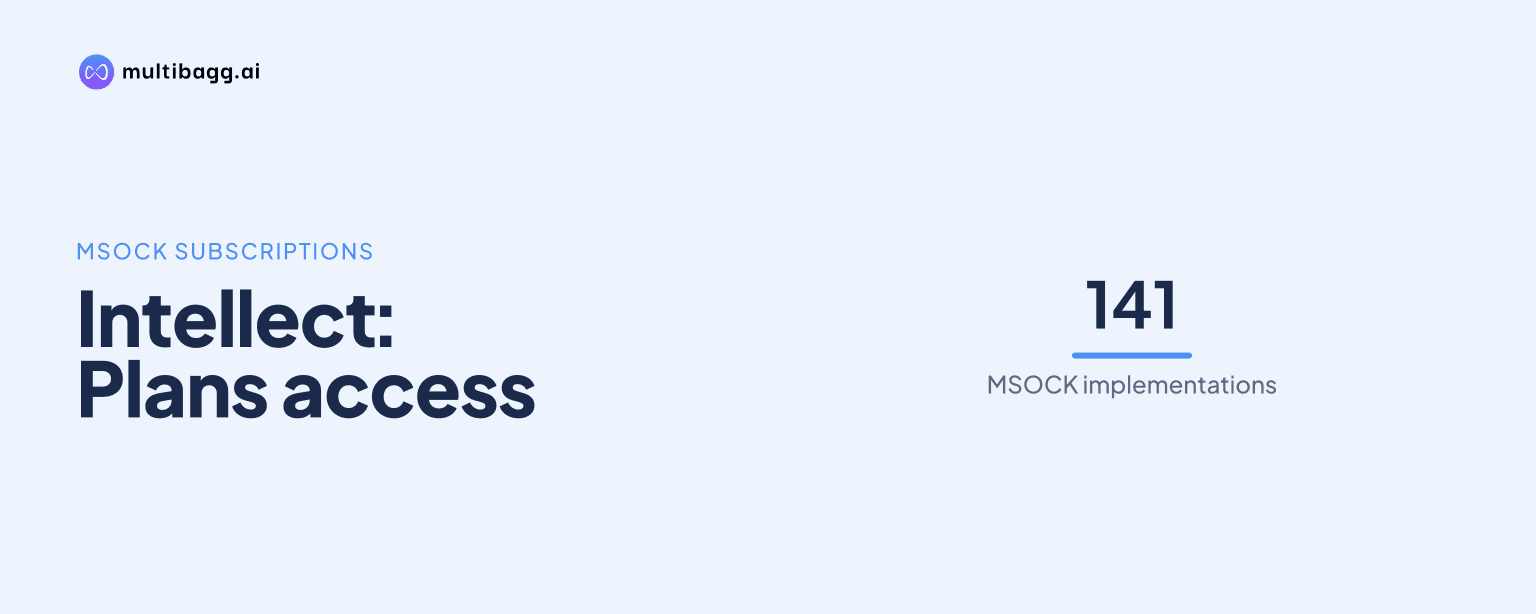
In the earnings-call discussion, Intellect said it will sell MSOCK as a subscription product, supported by 141 internal implementations, while evaluating acquisitions and partnerships for market access. Management said MSOCK could be sold independently of eMACH, creating a route into markets such as Latin America and Japan that Intellect does not currently access.
Know Intellect Design Arena inside out
Results, valuation, peers and who's buying, in one view.
How will Intellect sell MSOCK?
Intellect plans to take MSOCK to market as a separate subscription product line rather than only use it within eMACH implementations. Manish Maakan said the first proof point was delivering eMACH through MSOCK, which established product hardening, customer confidence and trust. The next use case is for customers to apply MSOCK to proprietary or legacy-system modernisation, particularly mainframe-to-cloud work.
Arun Jain said eMACH, Purple Fabric and MSOCK are three independent offerings that can each go to market separately. This differs from MSOCK's current internal role of improving implementation margins through faster delivery. Management described a top-down strategy for large accounts and a bottom-up route, but did not disclose subscription pricing, external customer contracts or a revenue target.
What internal results support Intellect's MSOCK launch?
Intellect said it is using MSOCK across 141 internal implementations, which management presented as the operating record behind its customer launch. Maakan cited four customer examples where deliveries were advanced by three to four months. He said this history helps answer a prospective customer's question about where the technology has been used before.
MSOCK is also part of Intellect's cost-containment approach. Jain said that, when the company had more contracts, costs had risen; MSOCK gave it greater ability to contain those costs while delivering faster. The transcript does not quantify MSOCK's standalone revenue, margin contribution or the portion of the 141 implementations that have completed.
Management illustrated the wider operating leverage using Rs 845 crore of operational revenue and Rs 680 crore of cost in the current book. Jain said that if revenue rose to Rs 950 crore while cost stayed at Rs 700 crore, earnings before interest, tax, depreciation and amortisation, or EBITDA, would be Rs 250 crore, equal to a 27% margin. This was an illustrative company-level example, not MSOCK-specific guidance.
Which markets could Intellect enter through MSOCK?
Intellect said MSOCK could help it reach markets that its eMACH sales model does not currently access, specifically naming Latin America and Japan. Jain said a Latin American bank could be acquired as an MSOCK customer faster than through eMACH, because eMACH takes longer to acquire and grow. Management did not provide a quantified difference in sales cycles.
The company is evaluating how to structure that market entry. Jain said MSOCK could be leveraged within Intellect, housed in a separate subsidiary or taken to market through another route. He said he spent four weeks in the United States assessing the market opportunity, while Rajesh, Manish and Banesh ran the eMACH business during his 90-day focus on MSOCK positioning.
Jain linked the strategy to a shift from product-led organisation design to market-led design. In that model, acquisitions and market access are required, according to management. Intellect has not named acquisition targets, disclosed a budget or announced a transaction, so the acquisition element remains an evaluation rather than a completed programme.
Got a follow-up? Ask IRIS
What partnerships and licensing models is Intellect considering?
Intellect is considering direct licensing, partnerships, royalty arrangements and exclusive partnerships for MSOCK. Jain said monetisation is the second strategic component after market access, and that these options remain open. He also said MSOCK can operate in a Claude mode and as a plug-in to Claude Code, which management views as a potential source of added value.
Jain called partnerships a low-hanging fruit, but differentiated the preferred partners from cloud hyperscalers. When asked whether Intellect was engaging hyperscalers or systems integrators, he said the company was not pursuing participation with hyperscalers and instead wanted consulting companies to have more involvement in the commercial outcome. No MSOCK consulting partner was named on the call.
Purple Fabric provides a contrast in management's expected timing for adjacent products. Jain said its artificial-intelligence implementations remain at an early stage and that banks can return to platform vendors after 12 months of unsuccessful internal work. He said Purple Fabric would deliver results in 2027-28, while characterising MSOCK as a faster route to results; this was management's view, not a subscription-revenue forecast.
How could MSOCK change Intellect's growth model?
Management said MSOCK could improve Intellect's ability to win business by offering a shorter-cycle entry product than eMACH. Jain said Intellect would “likely” accelerate growth and that MSOCK would make its winnability much higher. Those comments followed discussion of 21 deal wins, described by the analyst as the highest number won, but the call did not disclose an MSOCK-specific win-rate or bookings target.
The distinction between the products is central to the strategy. eMACH is a broader platform sale that management said can take longer to acquire, whereas MSOCK can be offered independently for modernisation work. The subscription structure, possible consulting partnerships and potential acquisitions would give Intellect several distribution routes, although their commercial scale has not yet been disclosed.
Conclusion
Intellect is positioning MSOCK as both an internal implementation tool and a standalone subscription product. Its evidence for the launch consists of 141 internal implementations and four deliveries advanced by three to four months, while the strategy extends beyond existing eMACH projects to legacy modernisation, mainframe-to-cloud work and new geographic markets.
The next points to watch are management's decision on the go-to-market structure, any acquisition or consulting-partnership announcement, and the first disclosure of external MSOCK contracts or pricing. Intellect also said it would schedule a Technology Day, but did not provide a date or detail the format.