










Matangi Rubber EMGEE tube plant operated at 17% utilisation
Key highlights
- Matangi Rubber's Selaqui EMGEE tube plant used 17.13% of its 2,61,000-unit pro-rata capacity in fiscal 2026.
- Matangi Rubber produced 44,706 tubes and sold 38,000 tubes in fiscal 2026 after production started on December 16, 2025.
- Matangi Rubber recorded Rs 42.33 lakh of Selaqui tyre-tube sales in fiscal 2026, compared with Rs 2.28 crore of rubber-compound sales.
- Matangi Rubber's Selaqui tube-plant utilisation was 22.36% in the period ended June 30, 2026.
powered by IRIS
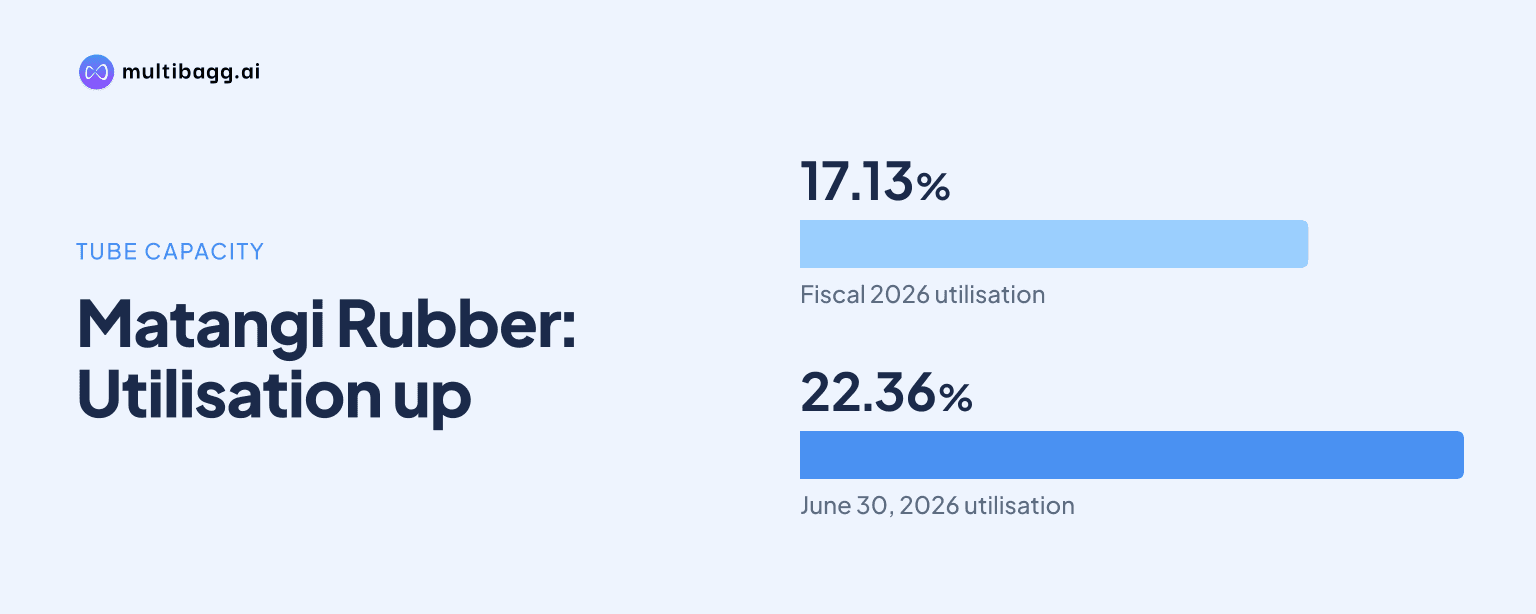
Matangi Rubber Limited’s EMGEE-branded tyre-tube plant at Selaqui operated at 17.13% of its pro-rata fiscal 2026 capacity, producing 44,706 tubes against 2,61,000 units of capacity after commercial production began on December 16, 2025. Matangi Rubber recorded Rs 42.33 lakh of tyre-tube sales during that initial operating period.
Why did Matangi Rubber's EMGEE tube plant operate at 17% utilisation?
Matangi Rubber's EMGEE tube plant operated at 17.13% utilisation in fiscal 2026 because production started only on December 16, 2025, leaving 87 working days until March 31, 2026. The Selaqui facility produced 44,706 tyre tubes against pro-rata installed capacity of 2,61,000 tubes, calculated from annual installed capacity of 9,00,000 tubes and 300 working days.
The utilisation calculation depends on working-day and product-mix assumptions used by the independent chartered engineer, who certified the capacity information on October 15, 2026. Matangi Rubber states that actual production and utilisation may differ from calculated capacity because working days and product mix can change, so the fiscal 2026 result is not a full-year operating measure.
For the period ended June 30, 2026, the Selaqui plant produced 50,312 tubes against installed capacity of 2,25,000 tubes, taking utilisation to 22.36%. This was 5.23 percentage points above fiscal 2026 utilisation, although Matangi Rubber does not disclose a target utilisation level or a production forecast for the plant.
How does Matangi Rubber's EMGEE business model differ from job work?
Matangi Rubber sells EMGEE tyre tubes under its own brand by independently procuring raw materials, manufacturing the products in-house and selling through its distribution and sales network to replacement-market distributors. The Selaqui tube plant operates under MG Industries Limited, Matangi Rubber's subsidiary, and is located beside its existing Selaqui tyre-flap plant.
This differs from Matangi Rubber's Bhind tyre-tube job-work operation, where substantial raw materials are supplied by JK Tyre and finished tubes or rubber compound are collected by JK Tyre or other customers. Bhind generated Rs 20.08 crore from tyre-tube job-work services in fiscal 2026, compared with Rs 42.33 lakh of Selaqui tyre-tube goods sales in the latter plant's initial operating period.
The EMGEE model therefore adds responsibility for raw-material buying and distribution-led sales to the manufacturing process. Matangi Rubber generally purchases materials in the spot market without long-term supply contracts; the inputs include natural and synthetic rubber, carbon black, rubber chemicals, fillers and oils.
What do Matangi Rubber's production and sales figures show?
Matangi Rubber produced 44,706 tyre tubes and sold 38,000 tubes in fiscal 2026, while it produced 50,312 tubes and sold 24,000 tubes in the period ended June 30, 2026. The fiscal 2026 production-sales difference was 6,706 tubes, but the disclosed figures do not identify the related inventory position, returns or dispatch timing.
Tyre-tube sales were Rs 42.33 lakh in fiscal 2026 and Rs 42.18 lakh in the period ended June 30, 2026. The Rs 15,000 difference indicates that nearly all reported fiscal 2026 tube sales were recognised in the period ended June 30, 2026, following the December 16, 2025 production start.
Rubber compound, which Matangi Rubber also sells to customers other than JK Tyre on a small scale, was the larger Selaqui revenue line. Rubber-compound sales were Rs 2.28 crore in fiscal 2026 and Rs 1.42 crore in the period ended June 30, 2026, compared with tube sales of Rs 42.33 lakh and Rs 42.18 lakh respectively; total Selaqui revenue was Rs 2.70 crore and Rs 1.84 crore.
Got a follow-up? Ask IRIS
Why is Matangi Rubber's EMGEE tube plant utilisation important?
Matangi Rubber's EMGEE tube plant utilisation is important because the 17.13% fiscal 2026 measure compares output of 44,706 tubes with only the 2,61,000-unit pro-rata capacity applicable after the December 2025 launch. The annual installed capacity of 9,00,000 tubes is substantially higher, but it was not available for the full fiscal year.
Matangi Rubber's later 22.36% utilisation measure also covers a partial period, ending June 30, 2026, and uses 2,25,000 tubes of capacity. Both measures use the company's 300-working-day assumption and are affected by management's allocation of manufacturing capacity across product types.
Matangi Rubber says an inability to effectively use expanded capacity, machinery failure, power disruption or an unplanned shutdown could adversely affect its operations, financial condition and cash flows. The Selaqui facility has power-backup arrangements and in-house storage for raw materials, finished goods and scrap, while products can be transported by company vehicles, third-party transporters or customer pickup.
What will determine whether Matangi Rubber can raise EMGEE output?
Matangi Rubber has stated that it envisages increasing the revenue share from tube manufacturing at Selaqui, which requires greater production and distributor sales of EMGEE tubes. That expansion must operate alongside separately sold rubber compound because no standalone compound capacity is calculated and available tube capacity depends on the product mix selected by management.
The tube process includes mixing raw materials, extrusion, valve fixing, splicing, crown chilling, preforming, curing and inspection. Vulcanisation is the curing stage that turns an uncured green tube into its final form through specified time, temperature and pressure, making production control and machinery availability relevant to output.
Raw-material sourcing is another variable because Matangi Rubber reported total procurement of Rs 70.21 crore in fiscal 2026, including Rs 1.76 crore of imports. Delhi accounted for Rs 27.55 crore, or 39.25%, of domestic procurement in fiscal 2026, and Matangi Rubber says it has moved to ready-made premix materials for flaps and tubes because this is more cost-effective than sourcing and mixing individual components.
Conclusion
Matangi Rubber's initial EMGEE results show a newly launched own-brand replacement-market operation operating below its calculated capacity: fiscal 2026 production was 44,706 tubes, utilisation was 17.13%, and tyre-tube sales were Rs 42.33 lakh. In the period ended June 30, 2026, utilisation rose to 22.36%, while rubber compound remained the larger Selaqui revenue line at Rs 1.42 crore.
The next disclosed marker is Matangi Rubber's plan to increase the revenue contribution from tube manufacturing. Subsequent disclosures will show whether the plant can raise production and EMGEE distributor sales while balancing the tube-and-rubber-compound product mix that determines its available manufacturing capacity.