










Jeena Sikho Q2FY27 revenue rose 24% while PAT fell 38% YoY
Key highlights
- Jeena Sikho's Q2FY27 revenue from operations rose 24% year on year to Rs 235.13 crore.
- Jeena Sikho's Q2FY27 PAT fell 38% year on year to Rs 36.34 crore.
- Jeena Sikho's operating expenses increased 83% year on year to Rs 135.17 crore in Q2FY27.
- Jeena Sikho had 2,424 operational beds in Q2FY27, while occupancy was 55%.
powered by IRIS
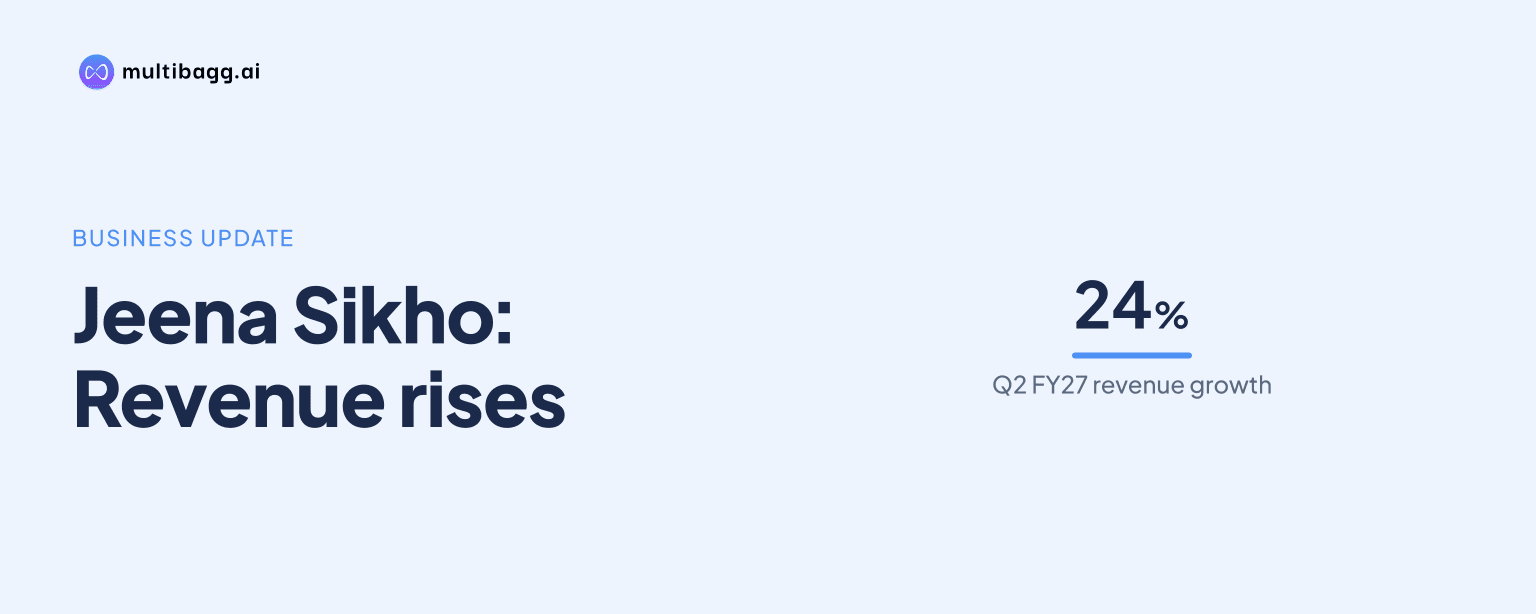
Jeena Sikho Lifecare Limited reported Q2FY27 revenue from operations of Rs 235.13 crore, up 24% year on year, but profit after tax fell 38% to Rs 36.34 crore as operating expenses increased 83% to Rs 135.17 crore, including brand-building, hiring and expected credit-loss provisions.
Know Jeena Sikho Lifecare inside out
Results, valuation, peers and who's buying, in one view.
Why did Jeena Sikho's Q2FY27 profit fall despite revenue growth?
Jeena Sikho's Q2FY27 profit fell because operating expenses grew faster than revenue, while other income moved into negative territory. Revenue from operations increased 24% year on year and 5% quarter on quarter to Rs 235.13 crore, whereas operating expenses rose 83% year on year to Rs 135.17 crore and 27% from Rs 106.62 crore in Q1FY27. Earnings before interest, tax, depreciation and amortisation, or EBITDA, fell 22% both year on year and quarter on quarter to Rs 72.02 crore.
Management said the expense increase included an additional Rs 13.4 crore in advertising and promotion for brand-building aimed at younger consumers. The company cited campaigns featuring Acharya Manish Grover on television platforms as part of this effort. Employee-benefit expense also increased by Rs 4.1 crore because of additional manpower, hiring ahead of planned expansion and performance-linked salary revisions.
Jeena Sikho also recorded a Rs 2.5 crore increase in expected credit loss, or ECL, provision, which management linked to recent collection experience and settlement patterns from government customers. Profit before tax fell 37% year on year to Rs 49.24 crore, while other income was negative Rs 2.31 crore, compared with positive Rs 1.44 crore in Q2FY26 and Rs 14.02 crore in Q1FY27. Finance cost was Rs 4.04 crore, down 7% year on year but up 16% sequentially.
How did Jeena Sikho's patient volumes and bed capacity change?
Jeena Sikho increased year-on-year patient volumes and operational beds in Q2FY27, although occupancy and in-patient volumes declined from Q1FY27. In-patient department, or IPD, volumes rose 14% year on year to 10,980 from 9,614, while outpatient department, or OPD, volumes increased 14% to 1.59 lakh from 1.40 lakh. Day-care volumes per day grew 24% to 21,200.
The presentation's combined OPD, COD and consultation-patient measure increased 174% year on year to 7.1 lakh in Q2FY27 from 2.59 lakh. Virtual OPD consultations rose 19% to 66,806 from 56,347. These volume measures show higher year-on-year patient activity alongside the revenue increase reported for the quarter.
Operational beds reached 2,424 in Q2FY27, compared with 2,220 in Q2FY26 and 2,400 in Q1FY27. Occupancy was 55%, down from 57% a year earlier and 59% in the preceding quarter. Sequentially, IPD volume declined from 11,500 in Q1FY27 to 10,980, while OPD volume increased from 1.5 lakh to 1.6 lakh.
Got a follow-up? Ask IRIS
What changed in Jeena Sikho's margins and revenue per bed?
Jeena Sikho's margins narrowed in Q2FY27 because its operating-cost growth exceeded gross-profit growth. Gross profit increased 25% year on year to Rs 207.19 crore, and gross profit margin was 88%, compared with 87% in Q2FY26. However, gross profit margin declined from 89% in Q1FY27, with the presentation reporting a 44-basis-point sequential reduction.
EBITDA margin fell to 31% in Q2FY27 from 48% in Q2FY26 and 41% in Q1FY27. Depreciation and amortisation increased 58% year on year to Rs 16.43 crore, reducing earnings before interest and tax, or EBIT, by 32% to Rs 55.59 crore. The combination of lower EBITDA, higher depreciation and negative other income reduced profit after tax, or PAT, margin to 15% from 31% a year earlier and 29% sequentially.
Average revenue per occupied bed, or ARPOB, was Rs 7,500 in Q2FY27, below Rs 8,324 in Q2FY26 and Rs 8,360 in Q1FY27. The decline occurred alongside the drop in occupancy to 55%, despite the rise in operational beds to 2,424. Basic earnings per share were Rs 2.92, down from Rs 4.73 a year earlier and Rs 5.28 in Q1FY27.
What expansion plans has Jeena Sikho disclosed?
Jeena Sikho plans to increase hospitals and clinics from 122 currently to 142 in two to five years and 172 in five to 10 years. Its stated total bed-capacity plan is 5,000 in two to five years and 10,000 in five to 10 years, compared with 3,031 currently. These are management plans rather than Q2FY27 operating results.
The company reported more than 440 stock-keeping units, or SKUs, and outlined planned Dr. DS, protein and joint-care launches. Its roadmap also includes pharmacy and retail roll-out, an own e-commerce platform and refill subscriptions. Jeena Sikho cited more than 200 research papers, 52 National Accreditation Board for Hospitals and Healthcare Providers, or NABH, accredited units, and 12 units in the pipeline.
Jeena Sikho also said it had signed its first wellness resort in Manali, Himachal Pradesh, marking its entry into the ultra-luxury wellness market. The disclosed project has 108 rooms, access to more than 20 acres of adjoining private forest, 22 upcoming villas and a planned helipad. The presentation describes a signed resort and planned features, rather than an operating asset or a disclosed financial contribution.
Conclusion
Q2FY27 combined higher revenue, patient activity and bed capacity with lower occupancy, ARPOB and profitability. Gross profit rose 25% to Rs 207.19 crore, but operating expenses rose 83% to Rs 135.17 crore, causing EBITDA margin to decline by 17 percentage points year on year to 31%.
The next reported indicators will include progress toward management's plan for 142 hospitals and clinics and 5,000 beds within two to five years. Occupancy, ARPOB and collection experience from government customers remain relevant because management linked the Rs 2.5 crore ECL provision to recent collection and settlement patterns.