










Jio Platforms Target Reaches Rs 1,515 After Q2 Growth
Key highlights
- JPL traded at Rs 1,424.10 at 4:00 pm IST on November 8, 2026.
- Motilal Oswal Financial Services retained a Buy rating and raised its JPL target to Rs 1,515 from Rs 1,350.
- JPL's September-quarter net profit rose 14% year-on-year.
- Motilal Oswal Financial Services cited about 9 million net subscriber additions and forecast Rs 1.68 trillion cumulative FCF over FY27-29.
powered by IRIS
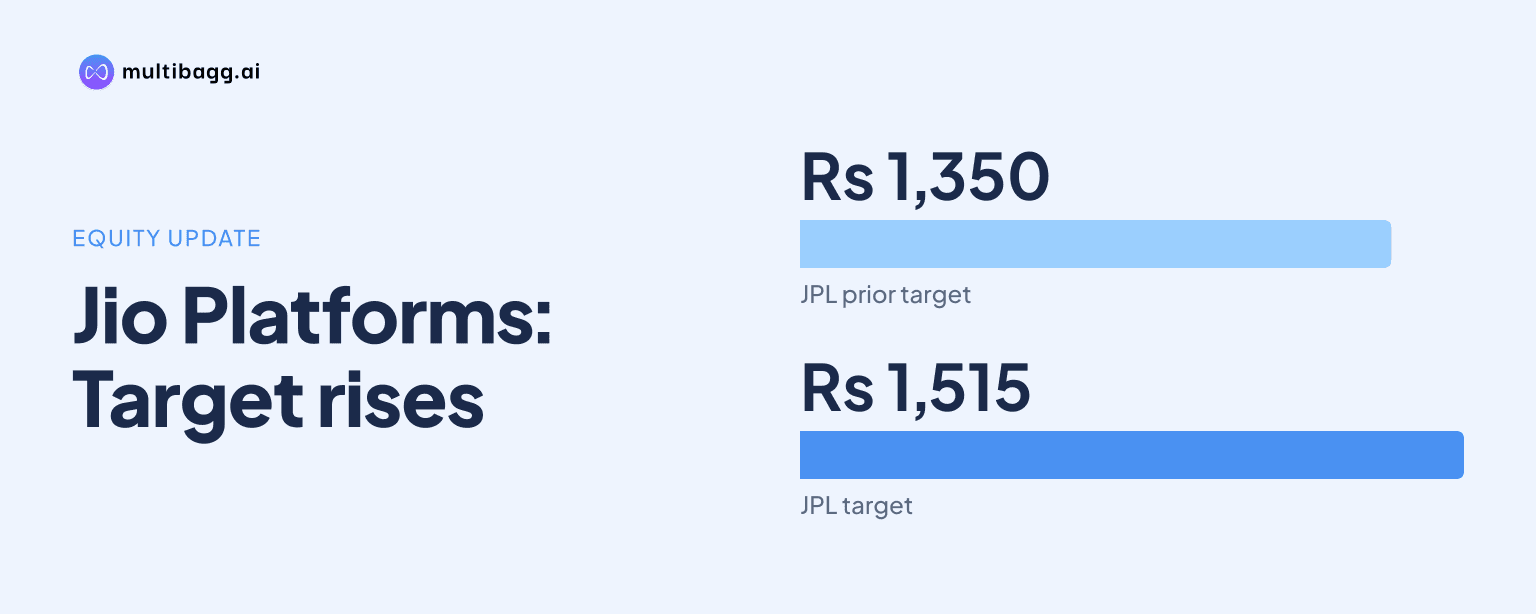
Jio Platforms' highest cited 12-month target is Rs 1,515 after its September-quarter net profit rose 14% year-on-year, while JPL traded at Rs 1,424.10 as of 4:00 pm IST on November 8, 2026. Motilal Oswal Financial Services retained a Buy view after reporting subscriber additions, higher ARPU and digital-services growth.
What is the latest JPL price target?
The latest highest target cited for JPL is Rs 1,515 from Motilal Oswal Financial Services, which maintained its Buy rating following the September-quarter results. The brokerage raised its target from Rs 1,350 and based its valuation on a discounted-cash-flow approach and about 12.2 times FY29 reported EBITDA.
The target range in the available analyst data is broad. Three analysts were cited with an average 12-month target of Rs 1,430, a high of Rs 1,515 and a low of Rs 1,340. At the reported market price of Rs 1,424.10, the Rs 1,430 average implied only 0.42% upside, showing that the aggregate estimate was close to the prevailing price.
How did JPL perform in the September quarter?
JPL reported a 14% year-on-year rise in September-quarter net profit in its first earnings announcement since listing. The reported operational drivers were subscriber additions, 5G adoption and digital services, which helped support the growth narrative cited in brokerage commentary.
Motilal Oswal Financial Services described revenue growth as broadly in line, with about 3% quarter-on-quarter growth and 11% year-on-year growth in 2QFY27. It cited a 1.5% sequential ARPU increase, partly linked to one additional day in the quarter, around 9 million net subscriber additions, and digital-services growth of 4% quarter-on-quarter and 16% year-on-year.
These figures matter because the broker's revised valuation rests on expectations of higher incremental EBITDA margins and a faster free-cash-flow inflection. The available discussion does not provide reported revenue, profit or EBITDA in rupee terms, so the operational growth rates and brokerage assumptions are the clearest disclosed reference points.
Why are brokerages positive on JPL?
Brokerages are positive because they see subscriber growth, tariff potential, digital-services scale and free-cash-flow generation supporting the business. Nomura had highlighted JPL's leadership in wireless subscribers, data traffic and home broadband, while arguing that listing could support steady tariff hikes and monetisation.
Motilal Oswal Financial Services expects a 15% smartphone tariff hike and said capital expenditure should remain range-bound. On that basis, it expects cumulative free cash flow of Rs 1.68 trillion over FY27-29 and net cash status by FY29. Its Rs 1,515 target reflects those longer-term assumptions rather than only the reported September-quarter performance.
Separately, commentary from DRChoksey Finserv said JPL generates free cash flow equivalent to a third of revenue and could become a significant contributor to Reliance Industries' profits. Reliance Industries was described as holding around 64-66% of JPL. These are external projections and commentary, not JPL guidance disclosed in the supplied material.
Got a follow-up? Ask IRIS
What are the main risks for JPL investors in November 2026?
The immediate risk is share-price volatility because JPL's free float is below 3%, according to Motilal Oswal Financial Services. A limited free float can amplify price moves, meaning the stock may not always move in line with the underlying quarterly trends or published valuation targets.
There is also clear variation across analysts. The Rs 1,430 average target is only marginally above the reported market price, even though the highest cited target is Rs 1,515 and New Street Research listed a Rs 1,700 target alongside a Hold rating. Investors should therefore distinguish between a target price, a rating and the assumptions behind each estimate.
The stock's history as a newly listed company is another factor raised in social-media discussion. JPL listed at Rs 1,359 on BSE and NSE, a 21% premium to its Rs 1,119 IPO price. The supplied commentary notes that stocks can post negative returns after major IPOs, despite the constructive early brokerage outlook.
What should investors watch in JPL's outlook?
Investors should watch subscriber additions, ARPU movement, 5G adoption, digital-services growth and free-cash-flow delivery. These were the specific operating factors tied to the September-quarter performance and to Motilal Oswal Financial Services' higher target.
A potential smartphone tariff increase is particularly relevant because it could affect ARPU and cash generation. Equally, the expected range-bound capex profile is central to the forecast of Rs 1.68 trillion cumulative free cash flow over FY27-29. Any divergence in either area could change the path towards the brokerage's FY29 net-cash expectation.
Market pricing also deserves attention. JPL was at Rs 1,424.10 on November 8, close to the Rs 1,430 average analyst target, while still below the Rs 1,515 target from Motilal Oswal Financial Services. That gap suggests the market will likely focus on subsequent earnings evidence rather than target revisions alone.
Conclusion
JPL's November 2026 outlook is supported by a 14% year-on-year increase in September-quarter net profit, approximately 9 million net subscriber additions and continued digital-services growth. The strongest published target in the supplied material is Rs 1,515, but the Rs 1,430 average target indicates a much narrower consensus upside from the reported Rs 1,424.10 price.
The next indicators to watch are any smartphone tariff action, quarterly ARPU and subscriber data, digital-services momentum and progress towards the FY27-29 free-cash-flow plan. Motilal Oswal Financial Services expects Rs 1.68 trillion of cumulative free cash flow and net cash by FY29, while limited free float remains an unresolved source of near-term volatility.