










Jyoti CNC Automation lifts H1 operating cash conversion from 6% to 47%
Key highlights
- Jyoti CNC reported H1FY27 operating-cash conversion of 47%, compared with 6% in H1FY26.
- Net cash from operating activities rose to Rs 111.7 crore in H1FY27 from Rs 13.2 crore a year earlier.
- Working-capital cash outflow narrowed to Rs 108.7 crore from Rs 184.1 crore in H1FY26.
- Investing activities used Rs 193.5 crore in H1FY27, and cash ended September 2026 at Rs 26.7 crore.
powered by IRIS
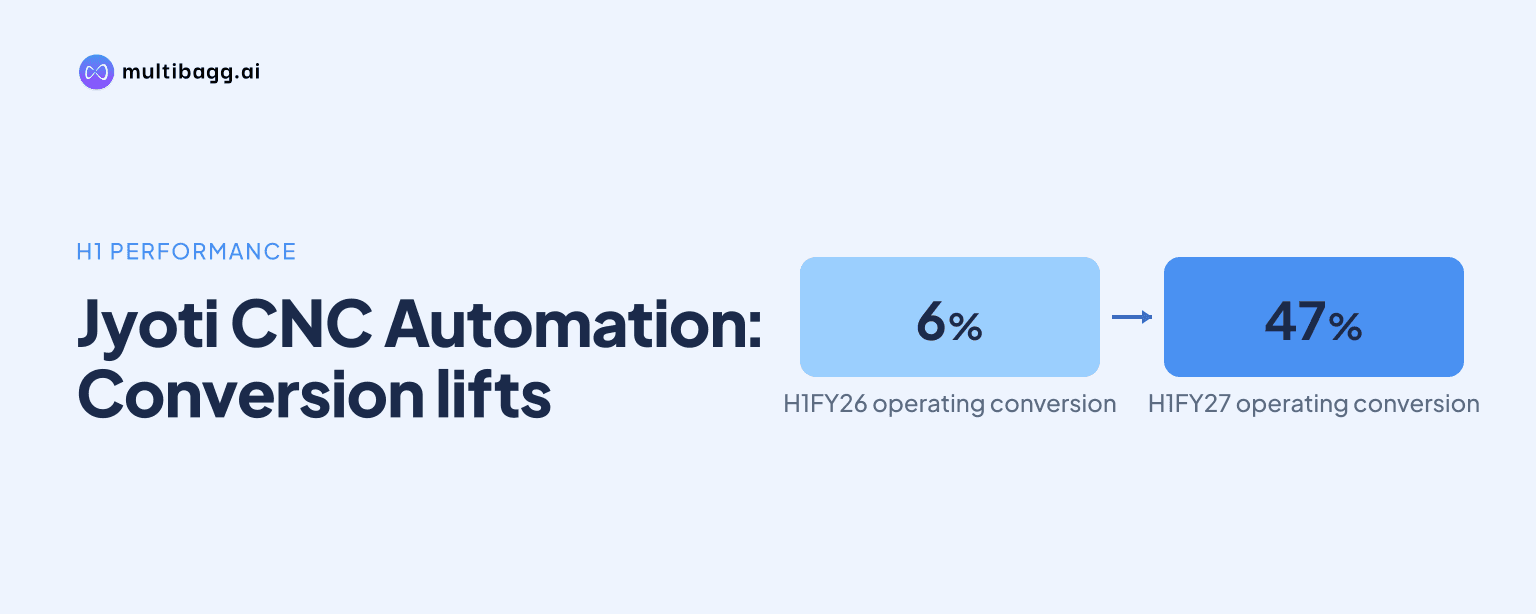
Jyoti CNC Automation raised consolidated operating-cash conversion to 47% in the first half of financial year 2027 (H1FY27) from 6% in the first half of financial year 2026 (H1FY26), as net cash from operating activities increased to Rs 111.7 crore from Rs 13.2 crore. The gain accompanied a narrower Rs 108.7 crore working-capital outflow, against Rs 184.1 crore a year earlier.
Know Jyoti CNC Automation inside out
Results, valuation, peers and who's buying, in one view.
What drove Jyoti CNC's H1FY27 cash conversion?
Jyoti CNC's reported operating-cash conversion rose because net cash from operating activities climbed by Rs 98.5 crore to Rs 111.7 crore in H1FY27, while consolidated earnings before interest, tax, depreciation and amortisation (EBITDA) increased by Rs 15.4 crore to Rs 240.2 crore. The presentation identifies the resulting operating-cash-flow-to-EBITDA conversion as 47%, compared with 6% in H1FY26.
Cash generated from operations before direct taxes reached Rs 149 crore in H1FY27, up from Rs 43.8 crore in H1FY26. This occurred even as consolidated profit before tax fell to Rs 177.1 crore from Rs 205.3 crore, showing that the improvement in operating cash came through adjustments and a smaller working-capital outflow rather than higher pre-tax profit.
Non-cash items and other investment or financial-item adjustments were Rs 80.5 crore, compared with Rs 22.6 crore a year earlier. Together with profit before tax, these adjustments lifted operating profit before working-capital changes to Rs 257.6 crore from Rs 227.9 crore; the presentation does not provide a line-by-line split of the Rs 80.5 crore adjustment.
How did working capital affect Jyoti CNC's cash flow?
Working capital used Rs 108.7 crore of cash in H1FY27, but this was Rs 75.4 crore less than the Rs 184.1 crore outflow in H1FY26. The lower outflow, combined with the Rs 29.7 crore increase in operating profit before working-capital changes, raised cash generated from operations by Rs 105.2 crore to Rs 149 crore.
Jyoti CNC's consolidated inventory stood at Rs 1,440.5 crore at September 2026, up Rs 274.5 crore from Rs 1,166 crore at March 2026. Trade receivables moved the other way, falling by Rs 93.1 crore to Rs 506 crore, while these balance-sheet movements provide context rather than a full reconciliation to the reported working-capital cash outflow.
Trade payables increased to Rs 566.9 crore at September 2026 from Rs 509.8 crore at March 2026, and other current liabilities rose to Rs 237.9 crore from Rs 191.7 crore. Current assets rose by Rs 208.3 crore to Rs 2,866.2 crore, while current liabilities rose by Rs 120.9 crore to Rs 1,299.3 crore over the same period.
Direct taxes paid, net of refunds, increased to Rs 37.3 crore in H1FY27 from Rs 30.6 crore in H1FY26. The Rs 6.7 crore increase reduced cash retained after operations, but net cash from operating activities still rose by Rs 98.5 crore year on year.
Got a follow-up? Ask IRIS
How did investing and financing affect Jyoti CNC's cash balance?
Investing activities used Rs 193.5 crore in H1FY27, compared with an outflow of Rs 144.7 crore in H1FY26. The abridged cash-flow statement does not identify the individual projects or asset categories behind the Rs 48.8 crore increase in investing outflow.
Property, plant and equipment was Rs 837.7 crore at September 2026, up Rs 147.3 crore from Rs 690.4 crore at March 2026. Capital work-in-progress declined by Rs 22 crore to Rs 67.3 crore, while intangible assets increased by Rs 11.2 crore to Rs 38 crore; these balance-sheet changes are not a direct reconciliation to investing cash flow.
Financing activities supplied Rs 55.5 crore in H1FY27, down from Rs 201.6 crore in H1FY26. Non-current borrowings increased by Rs 101.7 crore to Rs 511.9 crore between March and September 2026, while current borrowings declined by Rs 8.5 crore to Rs 431 crore.
Cash and cash equivalents decreased by Rs 26.3 crore during H1FY27, compared with an increase of Rs 70.1 crore in H1FY26. Cash started the period at Rs 53 crore and ended September 2026 at Rs 26.7 crore, after operating inflow of Rs 111.7 crore, investing outflow of Rs 193.5 crore and financing inflow of Rs 55.5 crore.
How did Jyoti CNC's cash flow compare with reported earnings and orders?
Jyoti CNC's consolidated revenue rose 21.0% year on year to Rs 1,110.5 crore in H1FY27, while EBITDA increased 6.8% to Rs 240.2 crore. EBITDA margin declined to 21.6% from 24.5%, and profit after tax declined 17.3% to Rs 129.7 crore, contrasting with the increase in net operating cash flow to Rs 111.7 crore.
The cash-flow statement is consolidated, so the presentation's 47% conversion measure aligns with consolidated EBITDA of Rs 240.2 crore rather than standalone EBITDA of Rs 302.5 crore. On a standalone basis, H1FY27 revenue was Rs 1,096.6 crore, up 33.6%, and profit after tax was Rs 202.3 crore, up 34.0%.
Jyoti CNC's order book was Rs 5,082 crore at 30 September 2026, compared with Rs 4,848 crore at 30 June 2026. The company reported Rs 809 crore of order intake and Rs 575 crore of order execution in the quarter, with aerospace and defence representing 36% of the closing order book and auto and auto components representing 22%.
Conclusion
Jyoti CNC converted a larger share of consolidated EBITDA into operating cash in H1FY27, with conversion rising to 47% from 6% as working-capital cash use narrowed to Rs 108.7 crore. The improvement did not prevent a cash decline because Rs 193.5 crore of investing outflow exceeded the Rs 111.7 crore operating inflow after accounting for Rs 55.5 crore of financing inflow.
The next disclosures to watch are working-capital movements, investment cash flow and the use of the additional 10,000-machine capacity that management says is being put to use. Management also said foundry operations are to commence in coming days, making subsequent updates on capital deployment, inventory and operating cash generation relevant.