










KBL sees inventory easing as long-lead orders lift margins
Key highlights
- KBL said capital-goods orders now in preparation have lead times of 8 to 12 months.
- An analyst estimated first-half working-capital growth at roughly Rs 225 crore standalone and Rs 250 crore consolidated.
- KBL said most current inventory is work in progress prepared for dispatch.
- KBL reported Q2FY27 international revenue growth of 24% year on year and an international EBITDA margin of 5.3%.
powered by IRIS
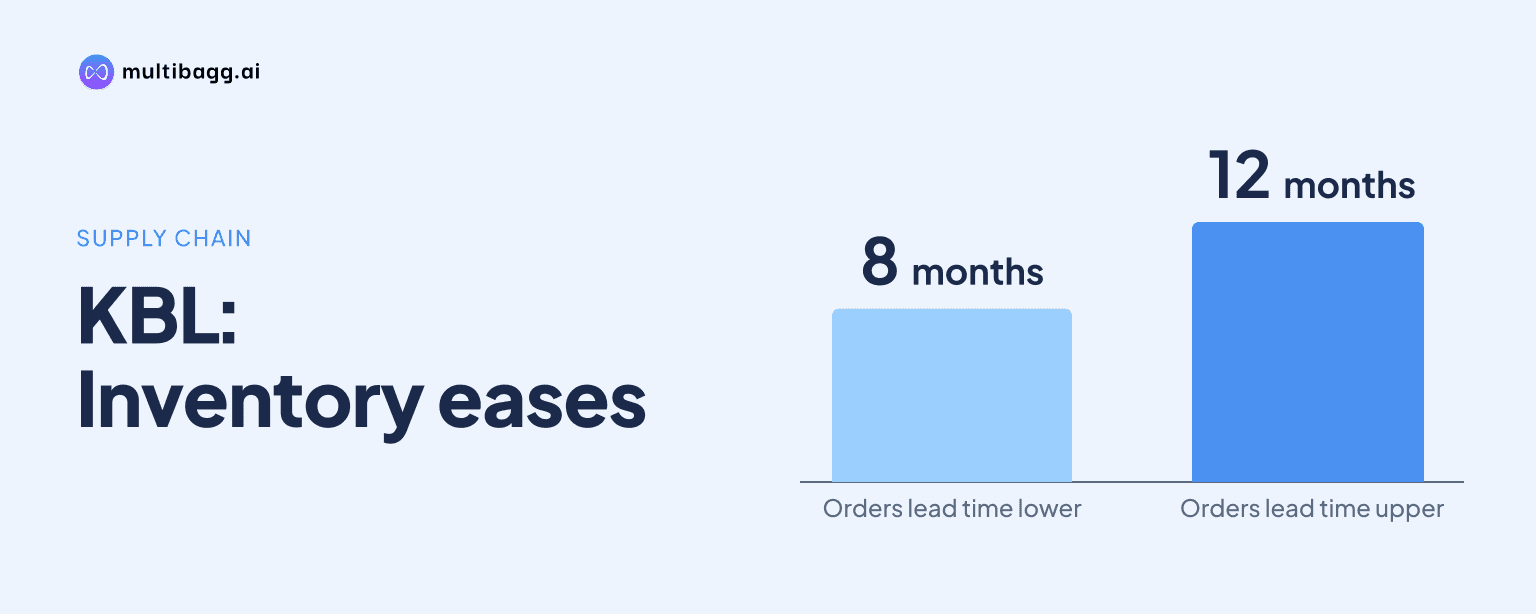
In Q2FY27, Kirloskar Brothers Limited said its higher inventory was largely work in progress for capital-goods orders with 8-to-12-month lead times, and management expects subsequent dispatches to reduce stock and contribute to higher margins. It said earlier orders delayed by foundry-modernisation spillovers had already been dispatched.
Know Kirloskar Brothers inside out
Results, valuation, peers and who's buying, in one view.
Why did KBL's working capital increase in the first half?
KBL's working capital increased because it bought raw materials, sourced bought-out components and began processing long-lead capital-goods orders before dispatch. An analyst estimated the first-half increase at roughly Rs 225 crore for the standalone business and Rs 250 crore for the consolidated business, while management said the relevant projects can have lead times of 8 to 12 months.
KBL said most of the inventory is now WIP, or work in progress, because it has been processed for shipment. This indicates that the higher stock is linked to execution of capital-goods orders rather than finished goods awaiting an uncertain sale, and it is separate from the 12% growth reported in small pumps.
Is KBL's inventory increase still related to foundry modernisation?
No. KBL said orders delayed by foundry-modernisation spillovers in the earlier period had already gone out, and the current inventory is primarily tied to newer large capital-goods projects. Management therefore distinguished the present working-capital build from the disruption discussed in the first quarter.
KBL also cited foundry shutdowns, an LPG shortage and changes in the wage code as supply constraints affecting some competitors in small pumps. It said both volume and value increased in its small-pumps business, with about 50% of the reported 12% growth coming from value and the balance from volume. These market conditions are distinct from KBL's WIP build for 8-to-12-month projects.
How could KBL's dispatches affect margins?
KBL expects large consignments to be dispatched over subsequent months, reducing inventory and increasing margins as the related sales value is recognised. Management gave this explanation after an analyst said margin had declined sequentially to 10% from 11.3%, despite stronger growth in customised pumps.
KBL did not present dispatches as an automatic margin target because sales value, product mix and input costs also affect profitability. Management said prices of copper, gun metal and steel had increased, though the company had passed on those increases to a large extent. The timing and mix of long-lead project shipments can therefore affect margin movement by quarter.
Which sectors are contributing to KBL's work in progress?
KBL identified oil and gas, fertiliser and power as sectors contributing to capital-goods order booking and higher processing activity. Management attributed the order flow to demand amid geopolitical uncertainty and said 8-to-12-month project lead times require procurement of raw materials and bought-out components before dispatch.
In power, an analyst referred to orders for 10 primary-circuit pumps and 57 canned-motor pumps. Management said its nuclear safety-package and canned-motor-moderator-pump orders were worth around Rs 60 crore to Rs 70 crore, without giving an exact figure. It also said it had met material requirements needed to participate in a primary-coolant-pump tender.
Got a follow-up? Ask IRIS
What does KBL's order mix mean for the next few quarters?
KBL's near-term execution will depend on converting WIP into deliveries while maintaining demand from both capital goods and retail pumps. Management said retail-pump demand could improve in the third quarter under drought-like conditions, but added that state-managed water projects take time because state governments typically place orders through engineering, procurement and construction contractors rather than directly with KBL.
International mix is also relevant to margin recovery. KBL reported 24% year-on-year international revenue growth in Q2FY27, while international earnings before interest, tax, depreciation and amortisation were Rs 23.3 crore and the margin was 5.3%. Management attributed the lower margin partly to a reduced contribution from services, which it said traditionally carry higher margins.
Why is KBL not treating higher revenue as sufficient for margin recovery?
KBL said the source of revenue matters as much as its scale. In the United Kingdom business, management said material costs had risen by 8%, services revenue had been lower in the first periods of KBL's financial year, and oil-and-gas projects involved lower-margin products and additional employee-related expenses.
Management expects more service contracts to begin in the current and following quarter after site evaluations are completed. It said these contracts typically run for three or five years and involve assessing customer assets, agreeing budgets and then undertaking refurbishment, repair or replacement work. That planned services mix could support margins, but management did not forecast a return to the United Kingdom margin level of FY2024-25.
KBL said international order activity was being supported by oil-and-gas projects in Qatar, Guyana and the United States, as well as data-centre opportunities. It described spares and service revenues as a later objective of these project wins, but said the initial oil-and-gas work does not carry margins comparable with services or water-related business.
Conclusion
KBL's explanation is that the roughly Rs 225 crore standalone and Rs 250 crore consolidated working-capital increases reflect preparation for long-lead capital-goods deliveries, not unresolved foundry-modernisation delays. If the WIP consignments are dispatched as management expects, inventory should decline and sales value should support margins, although input costs and product mix will remain relevant.
The next items to watch are the timing of dispatches from 8-to-12-month capital-goods projects and the start of service contracts in the current and following quarter. Management also said the primary-coolant-pump tender had been issued, although it did not know how long decisions would take because pre-bid meetings were expected.