










Kirloskar Brothers Limited clears hurdles for NPCIL coolant pump bid
Key highlights
- KBL says it met material requirements and secured capable foundries for the reported 32-pump NPCIL tender.
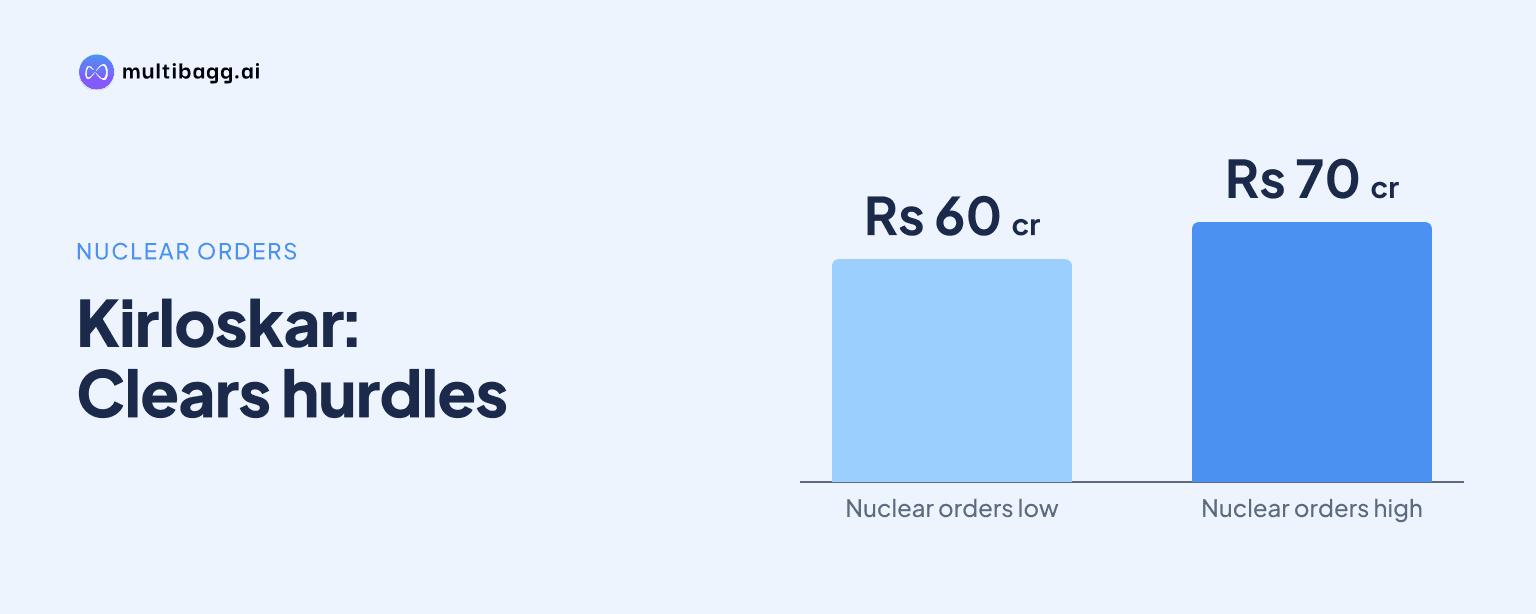
- KBL’s existing nuclear canned-motor and safety-package orders are valued at about Rs 60 crore to Rs 70 crore.
- Management said the NPCIL tender has been issued but did not provide an award date or expected order share.
- KBL said large capital-goods orders generally have lead times of 8 to 12 months.
powered by IRIS
Kirloskar Brothers Limited says it has met material requirements and secured capable foundries for NPCIL’s reported tender for 32 primary coolant pumps, enabling KBL to participate in the bid process. Management said the tender had been issued, while the order value, award timeline and KBL’s potential share remained undisclosed.
Know Kirloskar Brothers inside out
Results, valuation, peers and who's buying, in one view.
What has KBL cleared for the NPCIL primary coolant-pump tender?
KBL says it has cleared the material and large-casting requirements that management had identified as barriers to joining the primary coolant-pump tender. Sanjay Kirloskar said material compliance was the only requirement the company had not achieved earlier, but KBL had since proved that it met all material specifications. He said this should qualify KBL to participate in the tender.
KBL also said it had resolved the sourcing challenge for the large castings needed for these pumps. Asked whether access to a capable foundry remained a hurdle, Sanjay Kirloskar said the company had passed that test and found foundries able to make the castings. Management consequently expects no casting-related problem, though this was an expectation rather than confirmation of a production order.
The opportunity is separate from the nuclear products KBL has historically supplied. Management described its existing products as canned motor pumps and primary-side safety packages, including moderator-pump applications. The prospective tender is for primary coolant pumps, where materials qualification and large casting capability were specifically discussed as requirements for participation.
What nuclear pump orders does KBL already hold?
KBL already holds nuclear-related orders worth about Rs 60 crore to Rs 70 crore for canned motor pumps and primary-side safety packages, according to management. Sanjay Kirloskar said he did not have the exact value on the call and did not identify the project. He described the orders as safety-package and canned-motor moderator-pump products that KBL has supplied historically.
An analyst referred to disclosed power-sector orders for 10 primary-circuit pumps and 57 canned motor pumps. Management did not provide a separate value for those quantities, instead estimating the value of the two nuclear packages together at about Rs 60 crore to Rs 70 crore. The reported 32 primary coolant pumps are therefore a prospective tender opportunity, not part of the value management discussed for current nuclear packages.
Management said it was positive that pumps appeared to be starting to be ordered for nuclear power plants. However, KBL did not disclose the addressable value of the primary coolant-pump tender, its intended bid value or the number of pumps it expects to win. The call supports KBL’s stated readiness to compete, rather than any forecast of nuclear revenue.
When could the NPCIL bidding and delivery process progress?
The NPCIL tender has been issued, but KBL did not know how long the decision process would take. Sanjay Kirloskar said pre-bid meetings were likely under way because the tender was coming after a long interval. He also said he expected a technical process before financial bids, so participants could first be assessed on a comparable basis.
An analyst said tender documents indicated bids were due to open on 21 January 2027. Sanjay Kirloskar said he had not known of that date and did not confirm whether it concerned the technical or financial stage. His view was that the technical bid would normally be considered first, followed by the financial bid, leaving the timetable unresolved in KBL’s disclosure.
Management said the first bid would be at NPCIL or Tarapur, while declining to discuss the ordering method contained in the tender documents. Sanjay Kirloskar also said the first pump had not yet been tested and hoped that this would not affect the start of deliveries. KBL did not specify whose pump was awaiting testing, a test date or its own delivery schedule if it receives an award.
Got a follow-up? Ask IRIS
What could affect KBL's nuclear-pump order and margins?
KBL’s ability to win work will depend on technical evaluation, tender conditions, pricing and competition, not solely on its materials and casting readiness. Management said bidders would need to be brought to the same technical level before financial bids were opened. KBL did not disclose the number of qualified competitors or its expected allocation from the reported 32-pump opportunity.
Management also did not give a margin target for future nuclear orders. When an analyst suggested a 15% margin over one to three years, Sanjay Kirloskar said competitors would seek these orders because an installed base can generate spare-parts sales for many years. He said eventual margins would depend on operational execution, material costs and whether demand becomes concentrated enough to create capacity constraints.
The delivery cycle could affect working capital before revenue is recognised. Management said large capital-goods orders generally carry lead times of 8 to 12 months, requiring the purchase and processing of raw materials and bought-out components ahead of dispatch. KBL said much of its higher inventory was work in progress for large capital-goods orders, rather than evidence that the primary coolant-pump tender had converted into booked revenue.
How does nuclear fit into KBL's capital-goods outlook?
Management identified thermal power as the current domestic driver of KBL’s capital-goods business and said nuclear power could become a future driver alongside oil and gas. It also cited water infrastructure and the building boom as demand sources. The primary coolant-pump tender could add a new nuclear product category within that broader capital-goods mix if KBL receives an order.
KBL did not attribute its order inflow of about Rs 2,000 crore to a single large contract. Management said it comprised many smaller orders, with some potentially received in the prior quarter but recognised only after KBL was satisfied with commercial terms and pricing. The company does not provide sector-wise order-inflow detail, limiting direct measurement of nuclear’s contribution.
An analyst said the domestic power order book had risen sequentially from Rs 600 crore to Rs 700 crore while referring to the nuclear-package disclosures. Management did not establish that the Rs 100 crore movement resulted from nuclear orders, nor did it provide power-sector execution data. The disclosed evidence shows a possible expansion into primary coolant pumps, but not a quantified order-book addition from that tender.
Conclusion
KBL has moved beyond the two conditions management had previously identified for the NPCIL primary coolant-pump opportunity: compliance with material requirements and access to foundries capable of producing large castings. Its existing nuclear work, estimated at about Rs 60 crore to Rs 70 crore, concerns canned motor pumps and safety packages, while the reported 32-pump primary coolant tender remains unawarded.
The next event to watch is the technical evaluation and subsequent financial-bid process. Management confirmed that the tender had been issued and expected pre-bid activity, while an analyst cited 21 January 2027 as a possible bid-opening date that management did not confirm. Testing of the first pump, tender allocation mechanics and KBL’s possible order share remain undisclosed.