










Kirloskar Brothers Limited UK Growth Is Driven Overseas
Key highlights
- KBL said UK electricity prices of Rs 30 a unit have left domestic industrial demand effectively finished.
- KBL identified US Louisiana projects, Guyana fields and Qatar’s North Field as drivers of UK oil-and-gas growth.
- Management expects Guyana fields to be commissioned gradually over the next one to one-and-a-half years.
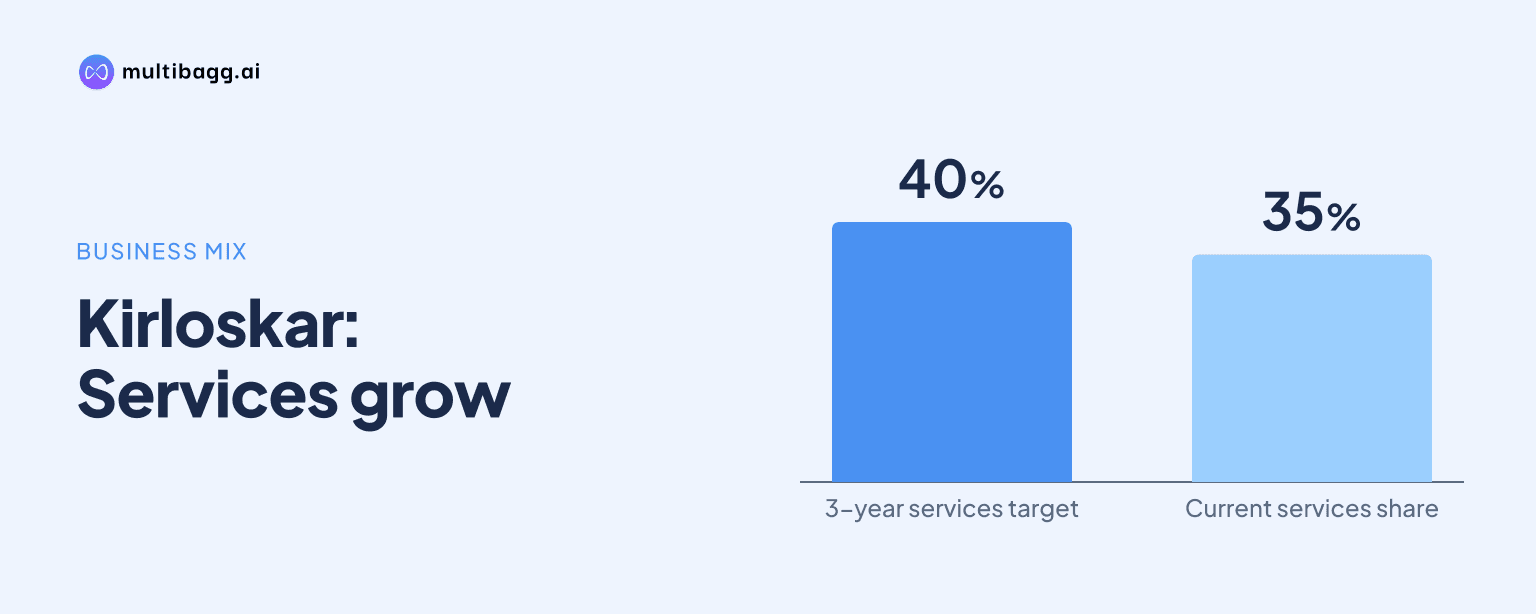
- KBL targets services at about 40% of total business over three years, versus about 35% currently at its UK operation.
powered by IRIS
Kirloskar Brothers Limited said on its earnings call that UK growth is being driven by overseas oil-and-gas projects in the US, Guyana and Qatar, while domestic industrial demand is “finished” at UK electricity prices of Rs 30 a unit. Management identified AMP8 water work and warehouse fire pumps as the principal remaining domestic opportunities.
Know Kirloskar Brothers inside out
Results, valuation, peers and who's buying, in one view.
What is driving KBL’s UK growth?
KBL said overseas oil-and-gas work is the main driver of UK top-line growth. Management cited gas-field projects in Louisiana in the US, including CP2 and Plaquemine, oil-and-gas developments in Guyana, and Qatar’s North Field as current sources of equipment orders and project execution.
Guyana fields are due to be commissioned gradually over the next one to one-and-a-half years, according to management. KBL also cited projects in Qatar’s North Field, including North Field Sustainability work, and Middle East opportunities with Abu Dhabi National Oil Company. These opportunities are export work from the UK business rather than evidence of renewed UK industrial demand.
Management acknowledged a currency contribution to reported growth but said underlying activity had also risen because the oil-and-gas division was executing large jobs. The strategic rationale extends beyond the initial supply contract: KBL said it wants the spare-parts and service revenue that may follow delivery of energy-sector pumps over later years.
KBL also identified data centres as an additional international growth area. Management cited the expansion of the Sines data centre in Portugal, which it described as Europe’s largest, and said data-centre activity had begun to emerge in Europe alongside the oil-and-gas order intake.
Why does KBL say UK industrial demand is finished?
KBL said domestic industrial growth is finished because UK electricity costs are Rs 30 a unit. Management said there is no domestic petrochemicals activity, no new drilling and little industrial activity left to support a local recovery in its traditional oil-and-gas and process-industry markets.
The company contrasted this domestic backdrop with its overseas project pipeline. It said Jackdaw had recently received approval in the North Sea, but characterised the related vessels as ready-made units being brought into the area, rather than a significant source of new local pump manufacturing or industrial production.
Management also referred to the wider cost challenge facing chemicals production in the UK and Europe, citing a public letter from INEOS owner Jim Ratcliffe. This was management’s view of the industrial environment, not a KBL revenue forecast, but it explains why the company is focusing its UK operation on export contracts and selected local infrastructure needs.
The distinction matters for the revenue mix. Management said the current growth is more export-led, with US, Guyana and Qatar projects providing the large equipment jobs, while the UK domestic market is expected to rely more on water, fire protection and service activity than on new industrial capital expenditure.
Got a follow-up? Ask IRIS
Which UK domestic markets can still support KBL?
KBL said Asset Management Programme 8, known as AMP8, is expected to be its main domestic UK opportunity. AMP8 is a five-year water-sector programme, but management said it had begun without yet contributing a noticeable amount to the growth reported during the quarter discussed on the call.
The company said water framework contracts take time to enter execution. Before annual work can start, KBL must inspect customers’ installed assets, many of which are not its products, decide whether they require repair, refurbishment or replacement, and agree a budget. Management said this work delayed the start, although contracts had begun in the quarter and could gather momentum in the following quarter.
Industrial fire pumps are the other substantial local opportunity identified by management. KBL said the decline of local production has increased imports and warehouse construction, and that new warehouses require fire-pump systems. This demand is tied to logistics infrastructure rather than to a recovery in UK petrochemicals or drilling.
KBL also sees water-supply opportunities beyond the UK. Management cited activity in the Middle East and Benelux, comprising Belgium, Luxembourg and the Netherlands, and said it had signed a service agreement with a water company in that region. It identified water, data centres and service contracts as areas where its overseas operations could build further traction.
How could the overseas project mix affect KBL’s margins?
KBL said oil-and-gas contracts are supporting UK revenue but do not offer margins comparable with its service and water activities. Management described margins on the projects as healthy, but said they were nowhere close to service margins and not close to water-business margins.
The lower-margin outcome reflects both the type of work and its execution requirements. Management said the oil-and-gas intake requires higher engineering, procurement and execution effort, even though it may create a later installed base for spares and service. This means higher top-line growth from large projects does not necessarily produce a matching improvement in profitability.
Management said absolute UK results in the next year could be comparable with calendar year 2024, or financial year 2024-25 for the UK operation, as its pipeline is built. However, it said margins might not recover in the next year and could improve more in the following year because of the oil-and-gas mix.
KBL’s service plan provides a measure of the intended change in mix. Management targets services at about 40% of total business over a three-year cycle, compared with about 35% currently at the UK operation, while noting that the two percentages apply at different business levels. It did not give a specific annual revenue target or a margin target for the programme.
Conclusion
KBL’s comments describe a UK business increasingly supported by exports rather than by domestic industrial production. US gas projects, Guyana developments and Qatar’s North Field are providing the current equipment opportunities, while AMP8 water contracts, warehouse fire pumps and data centres are the identified routes for UK and regional growth. The key trade-off is that oil-and-gas revenue carries lower margins than water and service work, according to management.
The next disclosures to watch are whether AMP8 framework contracts gain momentum in the following quarter and whether Guyana fields begin commissioning over the next one to one-and-a-half years as management expects. Management’s three-year aim to lift service activity to about 40% of total business, and its view that UK margins may recover only in the following year, will also indicate whether the mix is shifting toward recurring work.