










Kilburn combines three technologies to pursue larger projects
Key highlights
- Kilburn reported a more than Rs 4,000 crore opportunity pipeline for its integrated industrial technology platform.
- Kilburn's consolidated closing order book was Rs 470.96 crore on 30 September 2026.
- Kilburn plans a Rs 25 crore Pune expansion intended to support Rs 150 crore of annual precision-engineering revenue potential.
- AI data-centre orders were Rs 14.79 crore, or 10.8% of Q2FY27 orders received.
powered by IRIS
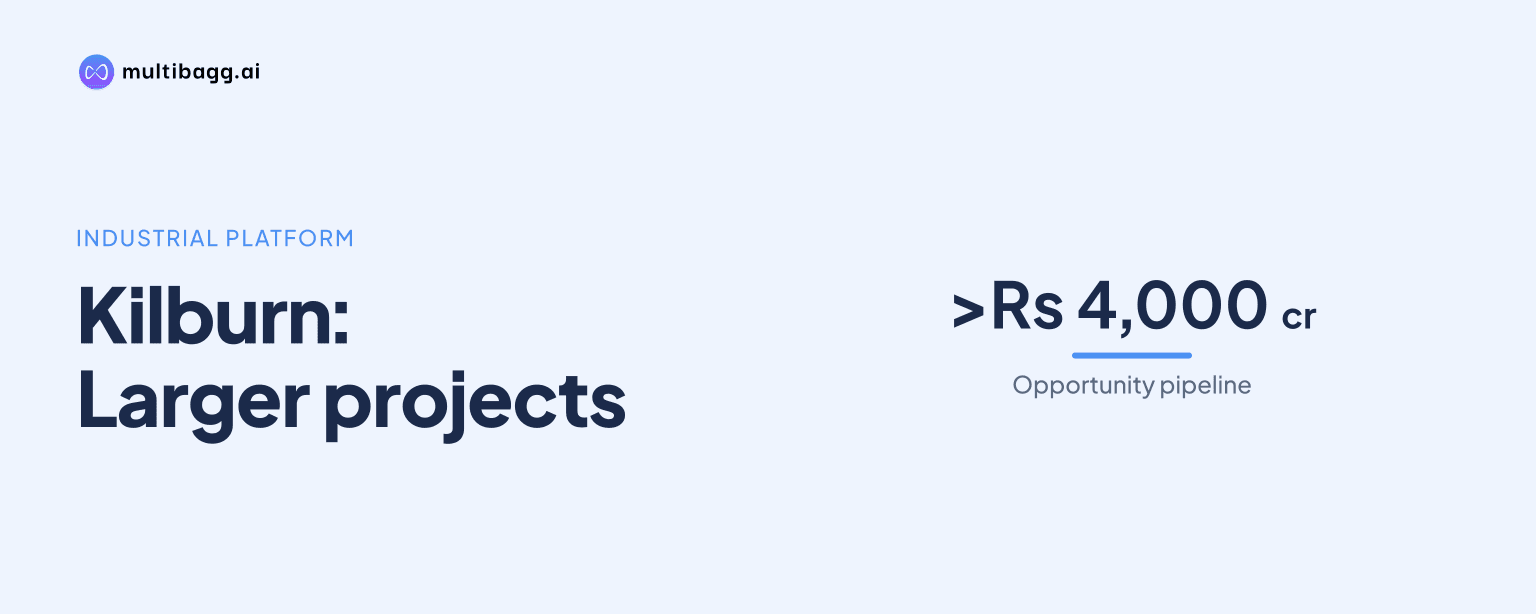
Kilburn Engineering Ltd is combining process drying, waste-heat recovery and radio frequency engineering to pursue larger integrated industrial projects, supported by an opportunity pipeline of more than Rs 4,000 crore. As at 30 September 2026, Kilburn had a consolidated order book of Rs 470.96 crore across sectors including fertiliser, carbon black, steel and data centres.
Know Kilburn Engineering inside out
Results, valuation, peers and who's buying, in one view.
What technologies does Kilburn combine?
Kilburn combines process drying and thermal systems, energy-efficiency engineering, and radio frequency, or RF, engineering in one industrial technology platform. Its stated technology range covers seven capabilities: process drying, heat transfer, thermal engineering, RF technology, waste-heat recovery, material handling and precision-engineered enclosures. The company reports more than 8,000 installations and machines globally, a skilled workforce of more than 500, and products and solutions serving more than 20 sectors.
Kilburn's process-drying and thermal systems are the foundation technology, built over more than 50 years of specialised process-engineering and critical-application experience. The offering includes rotary, fluid-bed, flash, paddle, spray and calciner drying systems; air, gas and liquid drying packages; solvent and vapour recovery; and equipment such as heat exchangers, pressure vessels, reactors, columns and silos. Its named end markets include chemicals, petrochemicals, fertilisers, carbon black, pharmaceuticals, oil and gas, nuclear power, tea and food.
How does Kilburn plan to create larger projects?
Kilburn plans to create larger projects by combining process lines and drying systems with heat recovery and multi-technology packages, rather than supplying a single equipment category. The presentation identifies this combination as the mechanism for cross-sector, higher-ticket projects. It also describes a one-customer, multiple-solutions model across three specialist companies that have been assembled into one integrated industrial technology business.
Kilburn's acquisition flywheel sets out an eight-step plan: acquire niche engineering or technology businesses, improve scale, cross-sell products, win larger projects, expand international reach, increase margins, generate cash and reinvest in another acquisition if an opportunity exists. These are management's intended steps, not reported results. The company says its balance sheet and manufacturing capacity can scale the platform and cites a more than Rs 4,000 crore opportunity pipeline for the next stage of growth.
Which markets currently support Kilburn's platform?
Kilburn's order book shows exposure across several markets where its technologies can potentially be combined. Its consolidated closing order book was Rs 470.96 crore on 30 September 2026, led by fertilisers at Rs 81.81 crore, carbon black at Rs 73.49 crore, iron and steel at Rs 67.18 crore, and nuclear power at Rs 56.51 crore. Petrochemicals accounted for Rs 35.85 crore and oil and gas for Rs 31.00 crore.
The mix of orders received in Q2FY27 differed from the closing book, particularly in data centres. Artificial-intelligence data-centre orders were Rs 14.79 crore, or 10.8% of Rs 136.94 crore in quarterly order intake, compared with Rs 12.08 crore, or 2.5%, of the closing order book. Fertiliser represented 22.3% of quarterly intake, versus 17.4% of the closing book, showing that both sectors had a larger share of new Q2FY27 orders than of the backlog.
Kilburn's consolidated order book declined by Rs 14.25 crore in Q2FY27, from Rs 485.21 crore on 1 July 2026 to Rs 470.96 crore on 30 September 2026. It received Rs 136.94 crore of orders and executed Rs 151.21 crore during the quarter, so execution exceeded intake by Rs 14.27 crore before rounding. The movement provides a near-term measure of whether new orders replenish work being executed across the platform's sectors.
Got a follow-up? Ask IRIS
How is Kilburn expanding RF engineering for data centres?
Kilburn is expanding its RF engineering presence in data-centre infrastructure through Monga Strayfield's precision sheet-metal enclosures, cabinets and assemblies. Monga Strayfield has operated an enclosure-manufacturing business since 1982 and serves data-centre, uninterruptible power supply, power-infrastructure and industrial applications. The presentation says its relationship with Vertiv predates Kilburn's acquisition of Monga Strayfield, while its US-market products include NEMA 4, 4X and Type 3R enclosures.
Kilburn also identifies the possibility of combining Monga Strayfield's precision fabrication and enclosures with M.E. Energy's thermal management and Kilburn's engineering and manufacturing. Its enclosure designs include UL and cUL certified products, including UL 508A Type 1 and Type 3R, as well as IP65 and IP66 sealed products. This technical base is presented alongside opportunities in critical power, transformers, thermal management and data centres, rather than as evidence of booked revenue from those additional solutions.
What targets and milestones should investors track?
Kilburn has planned a Rs 25 crore capital investment to expand precision-engineering capacity at Monga Strayfield's Pune facility, with implementation expected in six to nine months. The project is intended to add capacity for enclosures, cabinets and engineered assemblies through a combination of in-house production and selective outsourcing. Management says the facility expansion is aimed at data-centre infrastructure, transformer and critical-power applications.
Management expects current precision-engineering capacity to generate Rs 50 crore to Rs 60 crore of revenue in FY27, while a key data-centre customer's indicated 2027 requirement from Monga Strayfield is Rs 90 crore. The planned expansion is intended to support Rs 150 crore of annual revenue potential, or about 2.5 to 3.0 times the current expected annual revenue at scale. The source does not state when the indicated customer requirement would convert into revenue or orders.
Conclusion
Kilburn's strategy joins a process-engineering base with waste-heat recovery and RF-linked precision engineering to seek broader packages and larger projects. The Rs 470.96 crore order book at 30 September 2026 provides sector exposure across established industrial markets, while Q2FY27 data-centre orders of Rs 14.79 crore exceeded the Rs 12.08 crore data-centre backlog at that date.
The next disclosed milestone is the six-to-nine-month implementation of the Rs 25 crore Pune expansion and its stated Rs 150 crore annual revenue potential. Investors can also watch whether Kilburn converts its more than Rs 4,000 crore opportunity pipeline in global fertiliser projects and data-centre infrastructure into orders, while monitoring whether quarterly order intake keeps pace with execution.