










Krsnaa says Rajasthan's Rs 250 crore potential mainly next year
Key highlights
- Krsnaa said 75%-80% of the Rajasthan project had been implemented in Q2 FY '27.
- Management expects Rajasthan's Rs 250 crore annualised revenue potential mainly in the next financial year.
- Krsnaa reported Q2 FY '27 revenue of Rs 271 crore, up 32% from Rs 206 crore a year earlier.
- Q2 FY '27 EBITDA margin before CSR and ESOP expenses was 27%, compared with 29% in Q2 FY '26.
powered by IRIS
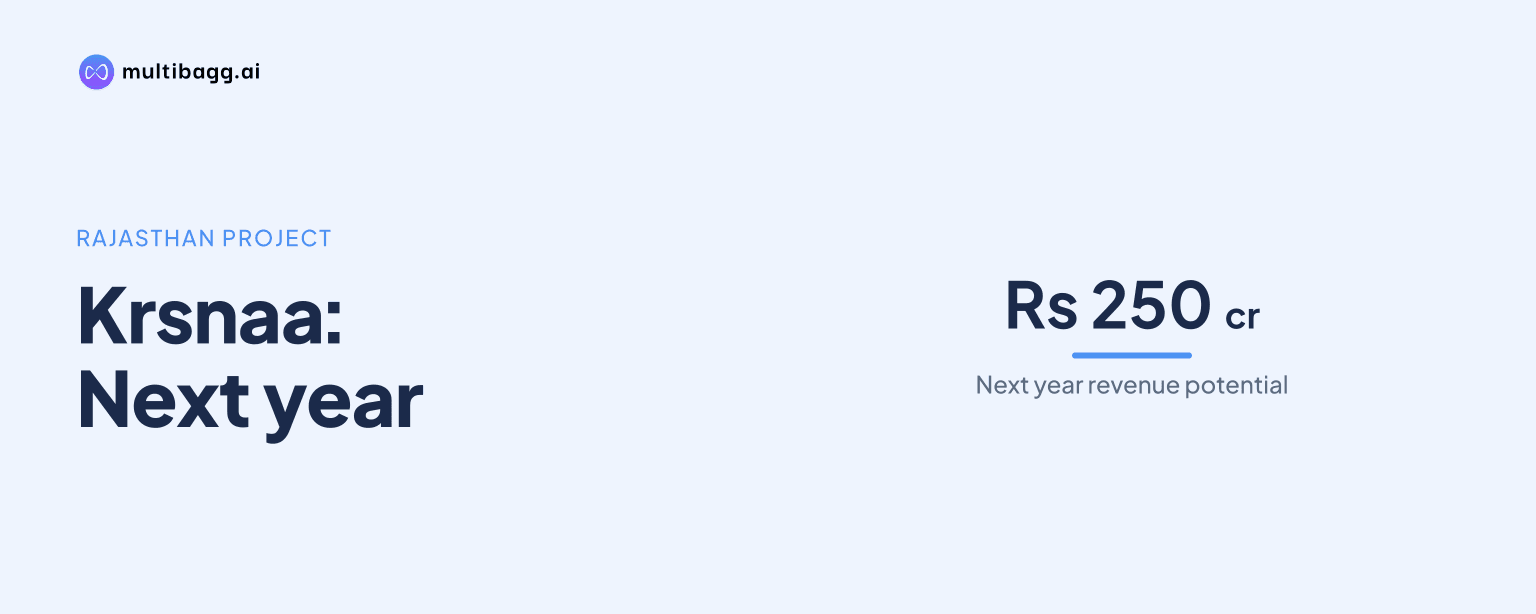
In Q2 FY '27, Krsnaa Diagnostics Limited said 75%-80% of its Rajasthan project was implemented, but most of its Rs 250 crore annualised revenue potential should come in the next financial year. Krsnaa said the majority of operating costs and depreciation had already entered its accounts as the project continues to ramp up.
Know Krsnaa Diagnostics inside out
Results, valuation, peers and who's buying, in one view.
How much of Krsnaa's Rajasthan project has been implemented?
Krsnaa said 75%-80% of the Rajasthan project had been implemented as of the Q2 FY '27 earnings call. Management said that, under the tender conditions, the majority of laboratories had been deployed, while additional laboratories requested by the Rajasthan government were still being implemented.
The rollout began during the current financial year, and management said most Rajasthan revenue started coming from Q1. The project therefore remains in a ramp-up phase rather than a mature operating phase. Krsnaa did not disclose Rajasthan’s specific quarterly revenue on the call, saying it would share project-level revenue details separately.
The remaining work is relevant because incomplete laboratory deployments and collection centres can defer the full revenue contribution. Management also said that some sites were yet to be completed, which had led to additional depreciation, although it sought to align the timing of revenue growth and expenses.
Krsnaa’s wider network had 259 pathology laboratories, 196 computed tomography, or CT, and magnetic resonance imaging, or MRI, centres, and more than 8,400 patient touch points at the end of Q2 FY '27. The company operated across 334 districts, with about 75% of its centres in rural areas. Rajasthan is being added to an existing public-private partnership, or PPP, diagnostic network.
When does Krsnaa expect Rajasthan to reach Rs 250 crore annual revenue?
Krsnaa expects the Rajasthan project’s Rs 250 crore annualised revenue potential to come mainly in the next financial year. Management confirmed that Rajasthan has the potential to deliver Rs 250 crore on an annualised basis, but said the majority of that number would be realised during the full next financial year rather than by Q4 of the current year.
Management said it would seek to achieve as much revenue as possible during the current year, following a Q1 start to revenue generation. However, the timing distinction matters: a partial-year rollout can add revenue in FY '27 without representing the Rs 250 crore annual run rate that management associates with a fully ramped operation.
Krsnaa’s consolidated revenue from operations was Rs 271 crore in Q2 FY '27, up 32% from Rs 206 crore in Q2 FY '26. For H1 FY '27, revenue was Rs 507 crore, compared with Rs 399 crore a year earlier, a 27% increase. Management attributed growth to newly operationalised projects, the existing business and retail expansion, rather than quantifying Rajasthan’s individual contribution.
Rajasthan is also part of the explanation for higher diagnostic volumes and a lower blended revenue per test. Management said volume growth reflected both retail initiatives and Rajasthan’s ramp-up, while the lower blended price reflected PPP pricing on the large Rajasthan project. It expects revenue per test to increase as Rajasthan matures and radiology projects move into a more stable phase.
Got a follow-up? Ask IRIS
Why are Rajasthan costs ahead of its full revenue ramp-up?
Krsnaa said the majority of Rajasthan’s operating costs and depreciation had already been recorded in its profit and loss account. The remaining operating costs are expected to be incremental manpower and consumables costs as revenue rises, while most depreciation has already entered the books.
This sequence reflects the project’s deployment stage: laboratories, collection centres and related infrastructure have to be established before patient volumes and billings reach a mature level. Management said some unfinished sites had created additional depreciation, but stated that it was trying to bring revenue growth and expenses into line with each other and did not expect a major additional effect on profit and loss or margins in coming quarters.
The financial effect is visible in consolidated margins. Earnings before interest, tax, depreciation and amortisation, or EBITDA, before corporate social responsibility and employee stock option expenses, rose to Rs 72 crore in Q2 FY '27 from Rs 60 crore a year earlier. Yet the corresponding EBITDA margin declined to 27% from 29%, as recently implemented projects carried upfront operating costs alongside higher depreciation and finance costs.
The same pattern appeared in the first half. H1 FY '27 EBITDA before those expenses increased to Rs 131 crore from Rs 113 crore, but the margin moved to 26% from 28%. Profit after tax fell to Rs 41 crore from Rs 45 crore despite the 27% revenue increase, which management attributed primarily to the cost structure of the expanded network.
How could Rajasthan affect Krsnaa's margins and cost mix?
Krsnaa expects margins to rise as Rajasthan revenue ramps up faster than the remaining incremental cost base. When asked whether the 27% Q2 EBITDA margin could improve as revenue grows without proportionate cost growth, management agreed that it was looking for an uptick in margins going forward.
That expectation is management’s outlook, not a reported margin target. It depends on the pace of Rajasthan utilisation, completion of outstanding locations and the stabilisation of newer radiology projects. In Q2 FY '27, profit after tax was Rs 25 crore versus Rs 24 crore in Q2 FY '26, while the profit-after-tax margin was 9%, showing that revenue growth had not yet flowed through proportionately to net profit.
Rajasthan also changes where expenses appear. Management said fees paid to hospitals and channel partners have risen because large PPP projects such as Rajasthan use channel partners for parts of their operations. It said those expenses should increase alongside Rajasthan revenue, while consumable, reagent and employee-cost optimisation measures are intended to preserve profitability at the overall EBITDA level.
The project’s PPP pricing can dilute blended revenue per test while raising volumes. By contrast, management said retail volumes and prices had increased through local activations and channel expansion. Retail generated about Rs 23.5 crore in Q2 FY '27, up about 35% year on year, and represented about 9% of group revenue, providing a separate source of growth alongside Rajasthan.
Conclusion
Rajasthan is substantially built but not yet financially mature: Krsnaa had implemented 75%-80% of the project, recorded most setup costs and depreciation, and begun collecting revenue from Q1. The contrast between 32% Q2 revenue growth and the EBITDA-margin decline to 27% illustrates management’s central point that infrastructure spending and operating costs have preceded the project’s full revenue contribution.
The next items to watch are the completion of additional laboratories requested by the Rajasthan government, the pace at which the project approaches its Rs 250 crore annualised potential in the next financial year, and whether utilisation converts into the margin uptick management expects. Management also said it aims to bring working-capital days back to about 90-100 days through collections and a growing cash-based PPP mix.