








Mitsu Chem Plast Limited provides no H1FY27 Furnastra sales data
MAX Plan at ₹4,999/yr

Find your next multibaggerBe a Pro Investor
Research stocks and track your picks on the go. Download the app.
Key highlights
- Mitsu lists hospital-furniture-parts presence in 18 named countries across five regions.
- Jivan 2 is a four-fold spine board with a stated 159kg maximum payload.
- Saudi healthcare plans cited by Mitsu include 21 health clusters and targeted privatisation of 290 hospitals and 2,300 primary health centres.
- The supplied presentation provides no H1FY27 Furnastra revenue, growth or sales-mix figure.
powered by IRIS
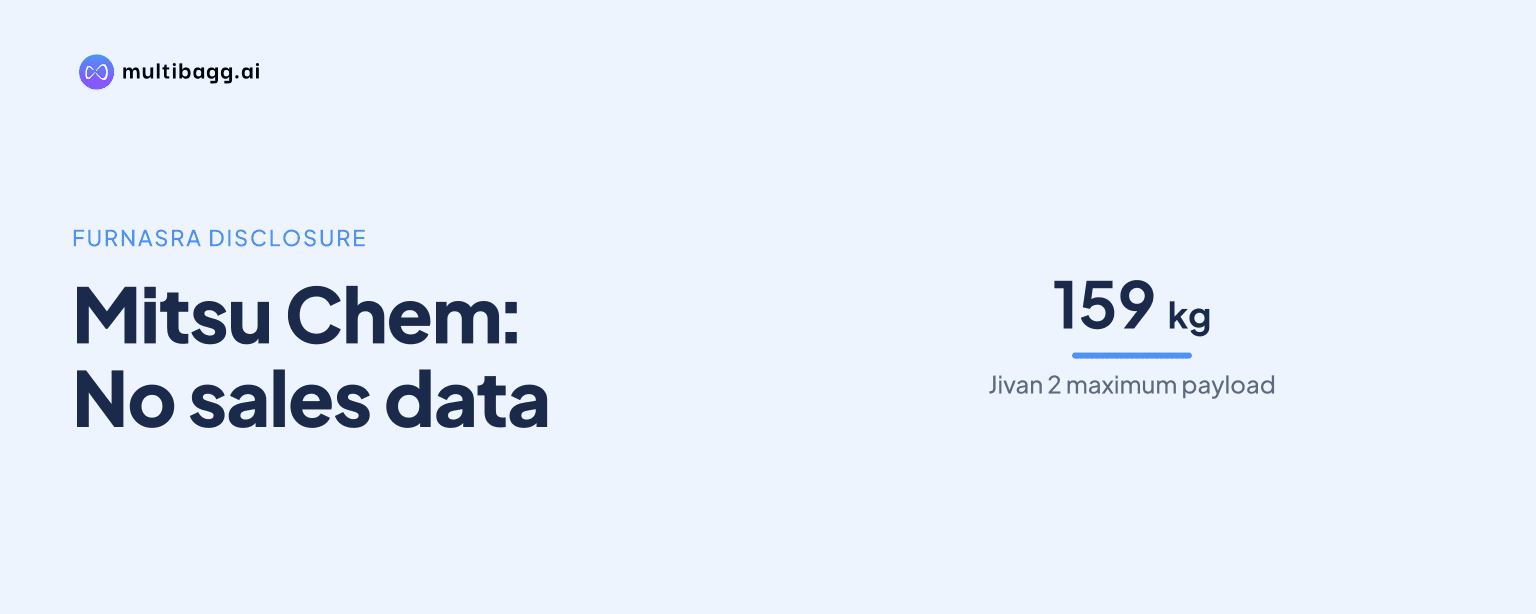
Mitsu Chem Plast Limited’s supplied presentation provides no H1FY27 Furnastra revenue or sales-mix figure, although it lists hospital-furniture-parts exports across 18 named countries and describes a Jivan 2 spine board with a 159kg maximum payload. The pages therefore do not substantiate claims of 30% revenue growth or a 16% sales share.
Know Mitsu Chem Plast inside out
Results, valuation, peers and who's buying, in one view.
Does Mitsu report H1FY27 hospital furniture revenue?
No, Mitsu does not report H1FY27 revenue, year-on-year growth or total-sales share for its hospital furniture business in the supplied pages. The healthcare material identifies Furnastra as an independent brand within Mitsu’s portfolio, but it contains no segment financial table, reporting-period revenue or sales-mix disclosure.
The distinction is material because the presentation makes a product and market case rather than providing quantified evidence of a business-mix shift. Mitsu says Furnastra is intended to give hospital furniture parts a distinct identity and market presence, while the Jivan 2 product page gives a 159kg maximum payload. Neither disclosure allows hospital-furniture revenue to be calculated or compared with industrial packaging sales.
Mitsu’s stated company-wide objective is to achieve Rs 1,000 crore in annual revenue through organic and inorganic growth opportunities. However, the presentation assigns no Furnastra-specific revenue target, capital allocation, margin target or timetable, leaving the healthcare vertical’s contribution to that wider objective undisclosed.
What products does Mitsu sell through Furnastra?
Mitsu presents Furnastra as its dedicated healthcare product identity, centred on hospital-bed parts, related furniture components and rescue equipment. Its hospital-bed-parts list includes head bows, foot bows, bed liners, side railings and bracket mechanisms, while a second page adds over-bed table tops, bedside-locker parts, mattress platforms, bed-board planks and bed-board liners.
A stated product differentiator is an inbuilt cardiopulmonary resuscitation, or CPR, profile on the backside of a bed bow. Mitsu calls this a patented solution for CPR emergencies and illustrates the feature with a 180° label. The supplied material does not state the patent number, jurisdiction, commercial launch date or revenue associated with the CPR-profiled bow.
Mitsu also introduces Jivan 2, a four-fold spine board intended for rescue operations, natural calamities, hospitals and ambulances. The presentation says its polyethylene construction supports a maximum payload of 159kg, its four-fold design is compact and space-saving, and it works with head immobilizers. This places the stated range beyond fixed hospital furniture and into rescue and safety equipment.
Where does Mitsu list hospital furniture parts exports?
Mitsu lists hospital-furniture-parts export presence in 18 named countries across five regions. Europe has six listed markets, compared with five in the Middle East, four in Asia Pacific, two in the Americas and one in Africa. The 18-country total is calculated from the countries named in the presentation, rather than disclosed as a separate Mitsu operating metric.
The export slide establishes geographic presence, but not commercial scale. Mitsu does not disclose export revenue, shipment volumes, customer count, country-level sales or whether products in the 18 markets are sold directly, through distributors or by another channel. Saudi Arabia and the UAE are included in the five Middle Eastern markets, while the USA and Canada are the two listed Americas markets.
Got a follow-up? Ask IRIS
What healthcare-market opportunities does Mitsu identify?
Mitsu identifies Saudi Arabia’s Vision 2030 healthcare programme as a potential source of demand for modern hospital facilities and furniture. The presentation cites 21 health clusters, targeted privatisation of 290 hospitals and 2,300 primary health centres, and a targeted increase in private-sector participation from 40% to 65%.
For the UAE, Mitsu points to healthcare infrastructure development serving a population of more than 11 million and names Cleveland Clinic and Mayo Clinic in describing the country’s healthcare environment. The presentation does not give Furnastra’s UAE revenue, a local production plan, an addressable-market figure or a target share of demand linked to the population.
Mitsu describes Europe as a market with hospital revenues forecast to grow at a 2.2% compound annual growth rate, or CAGR, amid ageing populations, low fertility and migration. For the USA, it identifies hospital mergers, partnerships and a shift toward outpatient care as factors behind spending on efficient infrastructure. These are market observations in the presentation, not forecasts of Mitsu’s own sales.
How does Furnastra fit Mitsu’s growth plan?
Mitsu places healthcare furniture among four areas for scaling core capabilities and entering adjacent verticals. Its stated healthcare plan is to scale Furnastra as a dedicated brand and expand advanced, design-focused hospital furniture solutions; the other three areas are packaging, exports and product innovation through research and development, or R&D.
The group’s four stated operating pillars are operational excellence, data-driven marketing, scientific innovation and empowered teams. For packaging, Mitsu plans to increase production of pails, containers and jerrycans and focus on specialised caps and closures. The presentation does not quantify how much of the Rs 1,000 crore annual-revenue target is expected from healthcare versus packaging.
A separate emerging vertical is intermediate bulk containers, or IBCs, for chemicals, pharmaceuticals, food and beverages, and agrochemicals. Mitsu says its fully automated IBC facility at Khalapur is to be operational by Q3FY27 and will use existing blow-moulding and industrial-packaging capabilities. That commissioning relates to a different vertical from Furnastra and cannot be used to measure healthcare revenue.
Conclusion
The supplied presentation shows that Mitsu is building Furnastra around hospital-bed components, a CPR-profile bow, a 159kg-payload rescue board and a presence in 18 named export markets. It also outlines external demand themes, including 21 Saudi health clusters and a 2.2% European hospital-revenue CAGR, but it does not provide the financial data needed to verify a 30% H1FY27 revenue increase or a 16% sales contribution.
The next disclosed milestone is the planned Q3FY27 start of the fully automated IBC facility at Khalapur. Investors can also watch for future disclosures that separate Furnastra revenue, healthcare exports or segment sales mix, because Mitsu’s Rs 1,000 crore annual-revenue target covers both organic and inorganic growth while Furnastra’s individual contribution remains unresolved.

