










Osel Devices Limited Reports 31.8% H1 FY27 Revenue Growth
Key highlights
- Osel Devices Limited reported H1 FY27 revenue of ₹193.6 crore, up 31.8% year on year.
- H1 FY27 EBITDA was ₹32.5 crore and the EBITDA margin remained flat at 16.8%.
- H1 FY27 PAT rose 19.1% to ₹18.1 crore, while PAT margin declined to 9.3%.
- Finance cost doubled to ₹7.6 crore and operating cash flow was negative ₹7.6 crore.
powered by IRIS
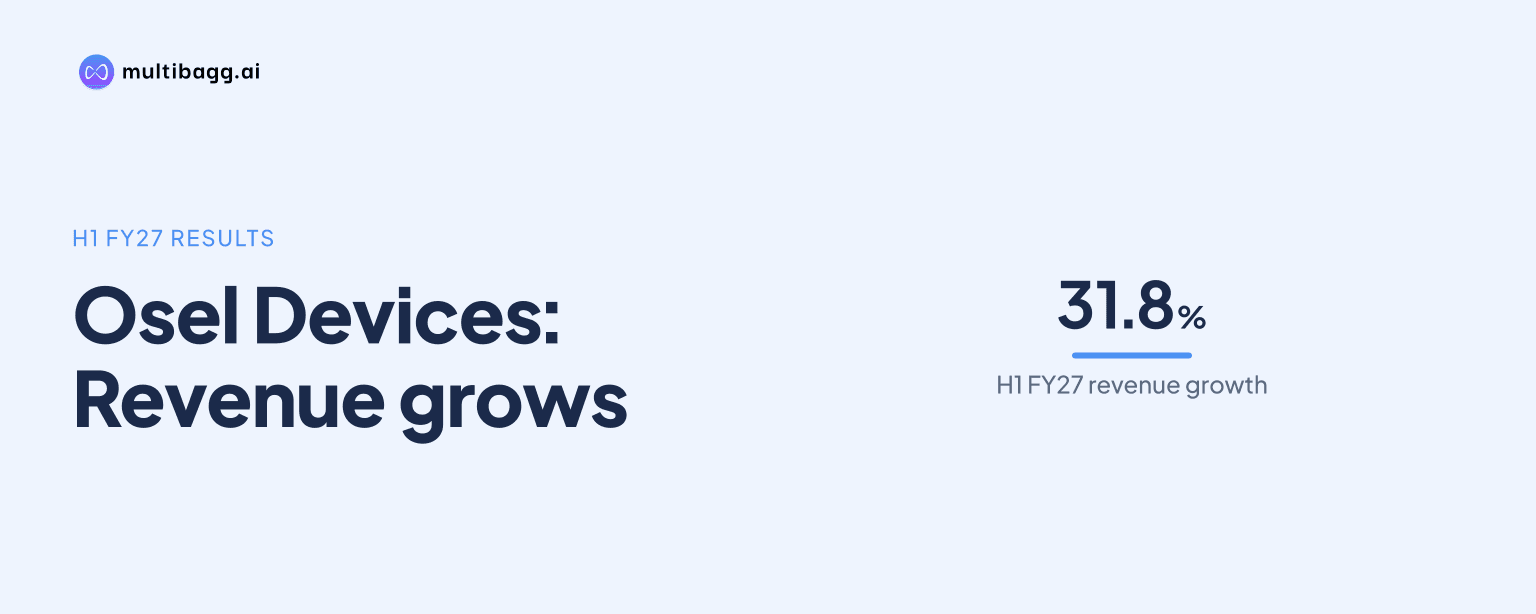
Osel Devices Limited reported H1 FY27 revenue of ₹193.6 crore, up 31.8% year on year, while profit after tax rose 19.1% to ₹18.1 crore. The growth was accompanied by stable EBITDA margin but a lower PAT margin, highlighting the effect of higher finance costs and negative operating cash flow.
Know OSEL Devices inside out
Results, valuation, peers and who's buying, in one view.
What did Osel Devices report for H1 FY27?
Osel Devices reported revenue from operations of ₹193.6 crore for H1 FY27, representing year-on-year growth of 31.8%, according to its investor presentation filed with the NSE on November 16, 2026. EBITDA stood at ₹32.5 crore, translating into an EBITDA margin of 16.8%.
Profit after tax was ₹18.1 crore, up 19.1% year on year. However, the PAT margin declined to 9.3%, even as the company maintained its EBITDA margin. This difference indicates that expenses below the operating-profit level, particularly finance costs, affected the conversion of operating earnings into net profit.
Why did margins and cash flow remain key investor focus areas?
The investor presentation identified finance cost, operating cash flow and receivables as important risk areas. Finance cost doubled to ₹7.6 crore, while the PAT margin fell to 9.3%. These figures are relevant because net-profit growth of 19.1% lagged the 31.8% increase in revenue.
Operating cash flow was negative ₹7.6 crore during H1 FY27. The company also reported an approximately 29% increase in receivables. A rise in receivables can affect the timing of cash collection from customers, making working-capital management a key consideration alongside reported revenue and profit growth.
The presentation does not change the reported EBITDA margin of 16.8%, which remained flat. But the combination of unchanged operating margin, higher finance cost and negative cash flow shows that the quality of earnings will be assessed not only through sales growth, but also through collections, funding costs and conversion of profits into cash.
How is Osel Devices changing its business strategy?
Osel Devices said its strategy is shifting towards end-customers through clinics, concessions and its own brand. The stated direction places more focus on direct customer-facing channels rather than relying only on the company’s existing operating approach.
The company operates across LED displays, hearing aids and Philips-branded mobile devices. Its LED display systems serve commercial applications including advertising media, billboards, meeting rooms, presentations, promotions, command-control centres and signboards. Its hearing-aid portfolio includes behind-the-ear and in-the-ear products.
The presentation also outlined demand-visibility indicators for two business areas. The mobile-phone business had more than 13,800 touchpoints, while the CMS business had more than 1,000 displays. These are operating reach indicators rather than financial guidance, but they provide context on the company’s distribution and deployment footprint.
Got a follow-up? Ask IRIS
What is Osel Devices' outlook for exports and the JNPA SEZ?
Osel Devices has targeted FY27 growth in line with FY26 and expects exports of about ₹50 crore, compared with ₹23 crore cited in the presentation. The export target is a stated objective and should be viewed separately from the H1 FY27 financial results already reported.
The company also expects commercialisation of its JNPA SEZ facility from April 2027. This gives investors a specific future operational milestone to track. The presentation did not provide revenue or profit projections linked to the commercialisation date in the information disclosed.
The target to increase exports and the planned SEZ commercialisation are significant because they sit alongside the company’s effort to expand customer access through clinics, concessions and own-brand channels. Execution will depend on the progress of these stated plans, alongside the company’s ability to manage receivables, operating cash flow and finance costs.
How does the presentation affect investors and industry observers?
For investors, the presentation presents a mixed financial picture. Revenue and PAT increased year on year, and EBITDA margin held at 16.8%. At the same time, the lower PAT margin, doubled finance cost, negative operating cash flow and higher receivables add measurable balance-sheet and working-capital considerations.
For the broader electronics and medtech operations of Osel Devices, the stated move towards end-customers could make clinics, concessions and own-brand distribution more central to its commercial model. The company has also linked its outlook to export expansion and an April 2027 SEZ commercialisation milestone, both of which are relevant to its future operating plans.
Conclusion
Osel Devices delivered H1 FY27 revenue growth of 31.8% to ₹193.6 crore and PAT growth of 19.1% to ₹18.1 crore, supported by a stable 16.8% EBITDA margin. However, the results also show that higher finance costs and working-capital pressures reduced net-margin performance and resulted in negative operating cash flow.
The next disclosed milestones are the approximately ₹50 crore export target and commercialisation of the JNPA SEZ from April 2027. Investors will also watch whether receivables and operating cash flow improve while the company expands through clinics, concessions and its own brand.