










Popular Vehicles shifts acquisitions to workshop utilisation
Key highlights
- Popular Vehicles reported Q2 FY27 revenue from operations of Rs 2,088 crore, up 36% year on year.
- Popular Vehicles said its Punjab BharatBenz and Telangana Maruti Suzuki acquisitions have largely completed initial integration after about one year.
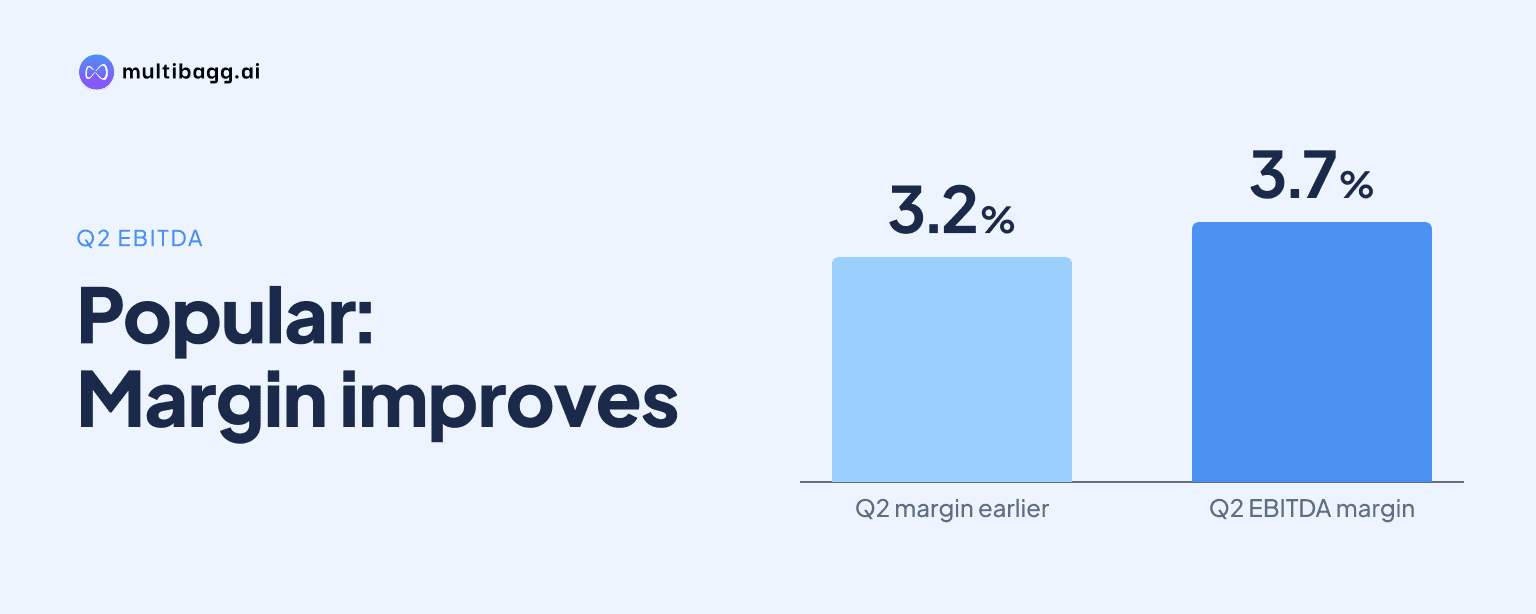
- Popular Vehicles’ Q2 FY27 EBITDA increased 57% year on year to Rs 77.7 crore, with margin improving to 3.7% from 3.2%.
- Popular Vehicles’ new-vehicle inventory was about 41 days in Q2 FY27, compared with 44 days a year earlier.
powered by IRIS
Popular Vehicles and Services Limited says its Punjab BharatBenz and Telangana Maruti Suzuki acquisitions have largely completed initial integration about a year after purchase, shifting management’s focus to workshop utilisation and service throughput; second-quarter financial year 2027, or Q2 FY27, EBITDA rose 57% year on year to Rs 77.7 crore.
Know Popular Vehicles & Services inside out
Results, valuation, peers and who's buying, in one view.
What stage are Popular Vehicles’ Punjab and Telangana acquisitions at?
Popular Vehicles says the initial integration of its BharatBenz dealership operations in Punjab and Maruti Suzuki dealership operations in Telangana is largely complete. On the November 12, 2026 earnings call, management said it was approximately a year into both acquisitions and had initially focused on stabilising operations, integrating systems and processes, strengthening teams and improving customer engagement.
The acquired dealerships are now delivering healthy growth as their operations scale, according to management. New-vehicle sales have expanded relatively faster than service operations, while service activity is making encouraging progress. Management identified the difference between sales growth and workshop activity as evidence that the acquired platforms retain service-led growth potential.
The wider business reported revenue from operations of Rs 2,088 crore in Q2 FY27, up 36% from Rs 1,535.7 crore a year earlier. In the first half, or H1 FY27, revenue rose 40% to Rs 3,983.9 crore from Rs 2,851.2 crore in H1 FY26, with management citing contributions from existing operations, acquisitions and network expansion.
Why is workshop utilisation now Popular Vehicles’ priority?
Workshop utilisation is Popular Vehicles’ next priority because management expects more service throughput to convert the acquisitions’ larger scale into sustainable profitability. Its stated plan for the Punjab and Telangana operations is to improve dealership productivity, raise workshop traffic and realise their full operating potential.
Management said repairs, spare parts and accessories provide recurring revenue opportunities with higher margins than vehicle sales. As the installed vehicle base returns to its workshops, management expects greater utilisation to support operating leverage and overall profitability. This is a management expectation rather than a reported acquisition-specific profit result.
Commercial vehicles make that focus particularly relevant. Management said commercial-vehicle operations generally have a lower earnings before interest, tax, depreciation and amortisation, or EBITDA, margin than certain other business lines. Consequently, an increasing commercial-vehicle share can moderate consolidated margin even as it adds to absolute EBITDA, making service intensity and operating efficiency important to the expanded platform.
How did service activity compare with vehicle sales in Q2 FY27?
Service activity improved in Q2 FY27, but Popular Vehicles said new-vehicle sales at the acquired dealerships grew faster than workshop operations. Overall reported service volume increased 8% year on year after the transcript corrected an initially stated 88% figure, while management said comparable service growth improved from the preceding quarter.
In passenger vehicles, including luxury, new-vehicle volume rose 39% to 11,818 units and income increased 48% to Rs 987 crore. Passenger-vehicle service volume grew 5% to 196,652 units, while service income rose 22% to Rs 181 crore. The faster income increase reflected better realisation and a greater contribution from high-value service jobs, management said.
Commercial-vehicle new-vehicle volume rose 27% to 3,549 units in Q2 FY27 and income increased 29% to Rs 581 crore. Commercial-vehicle service volume rose 9% to 54,906 units, while service income gained 15% to Rs 100 crore. This contrast showed service income outpacing workshop volume in both passenger and commercial operations.
Electric-vehicle new-vehicle volume increased 115% to 3,685 units and income grew 124% to Rs 63 crore. Electric-vehicle service volume rose 59% to 15,792 units, while service income rose about 64% to about Rs 4 crore. Management said the growing Ather vehicle base was generating more workshop visits and after-sales opportunities.
Got a follow-up? Ask IRIS
What do Q2 FY27 results show about acquisition profitability?
Q2 FY27 shows higher operating earnings alongside the acquired businesses’ expansion, but Popular Vehicles did not disclose separate revenue, utilisation, profit or payback data for Punjab and Telangana. Consolidated EBITDA increased 57% to Rs 77.7 crore from Rs 49.5 crore, and EBITDA margin improved to 3.7% from 3.2% a year earlier.
For H1 FY27, EBITDA increased 70% to Rs 149.8 crore from Rs 87.9 crore, with margin reaching 3.7% from 3.1%. Management noted that Q1 FY27 EBITDA included a one-off Rs 5.4 crore benefit from a lease modification relating to Telangana operations. Excluding that item, it put Q1 FY27 EBITDA at Rs 66.7 crore, implying an underlying sequential improvement of about 16% in Q2.
Profit before tax before exceptional items was Rs 4.3 crore in Q2 FY27, compared with a loss of Rs 3.6 crore in Q2 FY26. Management said depreciation and finance costs associated with acquired operations still affect profitability below EBITDA. It nevertheless expects better service volumes and utilisation to improve operating leverage over coming quarters.
What is Popular Vehicles planning for the rest of FY27?
Popular Vehicles retained management’s FY27 revenue-growth guidance of 20% to 25% over FY26 and said it expects to end the year financially profitable. The plan centres on raising service throughput and workshop utilisation at acquired businesses while building after-sales and spare-parts revenue across the network.
The company opened a Maruti Service Center at Karukachal and a Tata Motors Commercial Vehicle Center at Kayamkulam during Q2 FY27, both in Kerala. Management also began full-scale commercial operations of Yanik, its business-to-business automotive spare-parts marketplace, which lists more than 13,000 verified parts for dealers and independent garages.
Yanik had onboarded about three to four sellers and about 600 workshops and mechanics by the November 12 call. Management said it did not expect Yanik or the newly launched BKT tyre distribution activity to contribute profit in FY27, although it expects both initiatives to scale over time.
Vehicle inventory stood at about 41 days at the end of Q2 FY27, compared with 44 days a year earlier. Management said festive-season stock building had increased borrowing sequentially, but expected inventory to normalise gradually after the festival period. That working-capital trend remains relevant as the company seeks to raise utilisation across a broader dealership network.
Conclusion
Popular Vehicles has moved its Punjab BharatBenz and Telangana Maruti Suzuki purchases from an initial integration phase to a productivity phase. Q2 FY27 revenue of Rs 2,088 crore and EBITDA of Rs 77.7 crore show growth across the broader platform, but management’s emphasis on workshop throughput indicates that service activity has yet to match the faster expansion of new-vehicle sales.
The next development to watch is whether service volumes and service income continue to outpace workshop growth as management pursues better utilisation through the remainder of FY27. Management has retained its 20% to 25% FY27 revenue-growth target and expectation of financial profitability, while separate acquisition-level service and profitability data remain undisclosed.