










Prime Sets 50:50 Profit Split With Wahi Sons Before Production
Key highlights
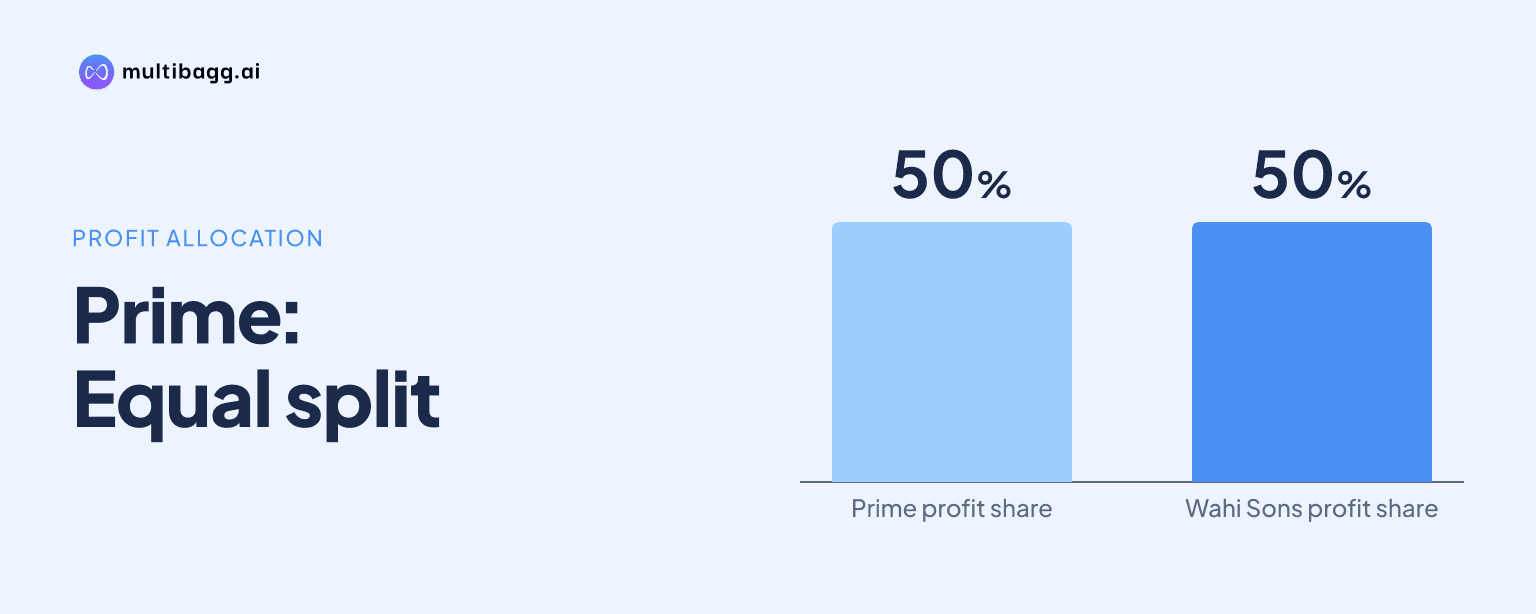
- Prime and Wahi Sons are allocated 50% each of Net Distributable Profit from the Product.
- Commercial production requires a separate schedule covering costs, accounting, payment terms and settlement procedures.
- Prime may require Wahi Sons to buy the machinery one year after the Installation and Commissioning Date.
- The MOU has an initial term of three years, with 60 days' notice for ordinary termination.
powered by IRIS
Prime Industries Limited has agreed to share 50% of Net Distributable Profit with Wahi Sons from a confidential Product, but commercial production cannot commence until the parties execute a separate schedule covering cost allocation, accounting, payment terms and settlement procedures. The Memorandum of Understanding has an initial term of three years.
Know Prime Industries inside out
Results, valuation, peers and who's buying, in one view.
What profit split did Prime agree with Wahi Sons?
Prime and Wahi Sons agreed that each party will receive 50% of Net Distributable Profit from manufacturing and selling the Product. Clause 8.3 records Prime at 50% and Wahi Sons at 50%, with the ratio to be incorporated in a definitive commercial agreement or a duly executed schedule to the MOU.
The 50:50 ratio concerns a specialised and confidential component whose technical identity and specifications are not disclosed in the MOU. Prime is assigned technical and product-development responsibilities, including proprietary know-how, technical supervision and setup coordination, while Wahi Sons is designated as the manufacturing and industrial-execution partner at its factory premises.
How will Prime and Wahi Sons calculate distributable profit?
Net Distributable Profit will be revenue actually realised from Product sales after mutually approved and documented direct costs, applicable taxes and other agreed collaboration expenses are deducted. The 50:50 division therefore applies to profit after those deductions, rather than to gross invoice revenue or orders received.
Permitted deductions may include raw materials, consumables, direct manufacturing and production expenses, approved employee and operational costs, mutually agreed utilities and facility costs, logistics, packaging, transportation, taxes, duties and levies. The MOU prevents either party from deducting unrelated expenditure or unilaterally allocated general overheads without the other party's written approval.
Prime and Wahi Sons must maintain accounts, production records, invoices, cost statements and other financial documentation for the collaboration. Each party has reasonable access to relevant records to verify profit-sharing calculations, although the MOU does not set a reporting cycle, audit frequency or minimum sales volume.
What must happen before commercial production starts?
Commercial production cannot commence until Prime and Wahi Sons execute the relevant definitive agreements, technical documentation and commercial schedule. Clause 8.8 requires that schedule to specify the 50:50 ratio, cost allocation, accounting methodology, payment terms, production-related expenses and settlement procedures before commercial production begins.
The frequency, method and timeline for profit settlement and distribution remain to be mutually agreed. Customer introductions, order procurement, pricing, quotations, contractual negotiations and execution responsibilities also require mutual agreement, rather than being conclusively allocated under the MOU.
Manufacturing is to be located exclusively within Wahi Sons' factory premises, in a segregated area with restricted access as mutually agreed. The Product may fall within defence, firearms, weapons-related or other regulated categories, meaning manufacturing, possession and supply remain subject to required licences, approvals, end-use requirements and applicable legal conditions.
Got a follow-up? Ask IRIS
Who owns the machinery in the Prime arrangement?
Prime retains initial ownership of machinery, tools, equipment and related assets that it procures and provides for the dedicated Product setup, despite installation at Wahi Sons' premises. Wahi Sons may use the assets only for authorised MOU activities and receives no title, lien, charge or other proprietary interest while Prime owns them.
The MOU contains two descriptions of the initial procurement arrangement. Clause 2.4 states that machinery and equipment are to be purchased by Wahi Sons based on Prime's technical recommendations, while Clause 5.1 states that Prime bears procurement and establishment costs unless otherwise agreed in writing and retains ownership of assets it procures and provides.
One year after the Installation and Commissioning Date, Prime may issue written notice requiring Wahi Sons to purchase the entire setup at prevailing Fair Market Value. Purchase is not automatic after one year: Wahi Sons' obligation arises only if Prime exercises that right, and payment is due within 30 days after consideration is finalised unless the parties agree another written period.
How long does the Prime MOU last and what remains binding?
The MOU has an initial three-year term from its Effective Date and may be extended by mutual written consent. Either party may terminate with 60 days' prior written notice, while immediate termination is available for events including an uncured material breach, loss of a material regulatory approval, or insolvency, winding-up or cessation of business.
The document distinguishes its proposed commercial framework from provisions expressly stated to be binding. Machinery ownership, installation, use, maintenance, purchase, transfer and removal under Clause 5 are legally binding from the Effective Date, including Prime's right after one year to require a machinery purchase.
Confidentiality obligations survive expiry or termination for five years, while trade secrets and information protected by law remain protected for as long as that legal protection subsists. Pre-existing intellectual property remains with the originating party, and jointly developed intellectual property requires a separate written agreement covering ownership, licensing, use and commercial exploitation.
Conclusion
The MOU gives Prime and Wahi Sons an equal 50:50 economic allocation for the confidential Product, while assigning technical leadership and proprietary know-how to Prime and factory-based manufacturing support to Wahi Sons. The revenue base, permitted deductions and verification rights form a framework, but the commercial schedule must establish the detailed operating terms before production begins.
The next points to watch are execution of the separate commercial schedule, completion of the dedicated setup and any required regulatory permissions before production. One year after the Installation and Commissioning Date, Prime may require Wahi Sons to buy the machinery at Fair Market Value, while the MOU otherwise runs for its initial three-year term.