










Prudent targets April PMS launch with two revenue streams
Key highlights
- Prudent said its PMS mutual-fund offering would most likely begin from 1 April, although the call excerpt did not state the year.
- Management cited a PMS mutual-fund fee ceiling of up to 1%, versus Prudent’s mutual-fund yield of about 80 to 90 basis points.
- Prudent expects PMS revenue from back-end services for portfolio managers and from direct or advisory fees.
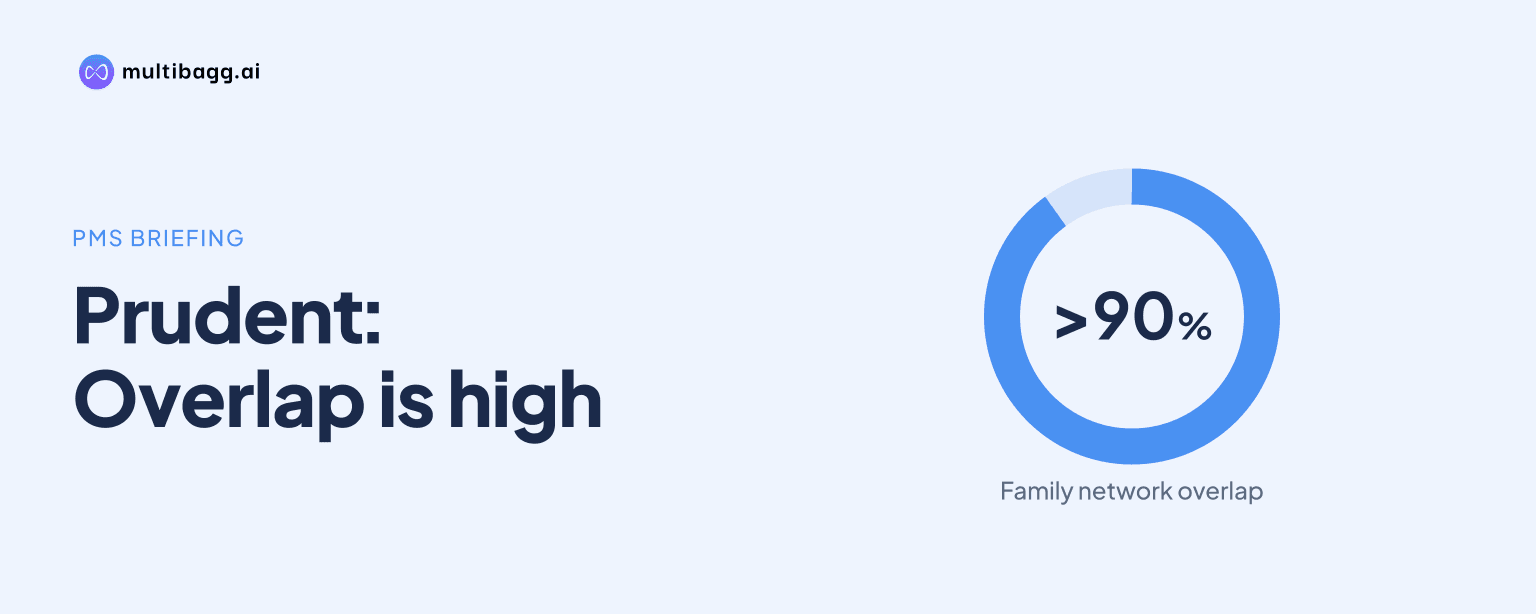
- More than 90% of Prudent’s mutual-fund distributor and POSP networks overlap at the family level, management said.
powered by IRIS
Prudent is targeting a 1 April launch of a PMS mutual-fund offering that management says could generate two revenue streams, with fees permitted up to 1% versus its existing mutual-fund yield of about 80 to 90 basis points. The supplied call excerpt does not specify the year of the proposed launch.
Know Prudent Corporate Advisory Services inside out
Results, valuation, peers and who's buying, in one view.
What is Prudent planning to launch from 1 April?
Prudent is planning a PMS mutual-fund offering that management said would most likely begin from 1 April. The proposed product is intended to supplement Prudent’s mutual-fund platform through a portfolio-management proposition for clients and wealth managers, rather than being described solely as a conventional distribution product.
Management has not presented the offering as a completed launch or disclosed a final commercial design. Sanjay Shah said a variable-fee arrangement could be considered for high-net-worth individuals, or HNIs, with larger portfolios, but added that Prudent still had to determine how that structure would work.
The 1 April timing is therefore a management target rather than a confirmed operating outcome. The call did not disclose expected PMS assets under management, the number of portfolio managers or wealth managers expected to join, or a revenue contribution for the initial period.
How would Prudent earn from the PMS mutual-fund offering?
Prudent expects two revenue lines from the PMS mutual-fund model: providing back-end infrastructure to PMS manufacturers and earning direct or advisory fees through its own manufacturer-side positioning. Shah said the first line would involve creating the operational back end that allows fund managers to work on the Prudent platform while managing customer portfolios themselves.
Under this infrastructure model, Prudent would handle the “entire back end” while portfolio managers retain the investment-management role. This creates a service mechanism for fund managers separate from the client-facing fee opportunity, although management did not disclose a pricing schedule for the back-end service.
The second revenue line would arise from direct fees, advisory fees and the addition of high-quality wealth managers to the platform. Management said the product could help Prudent attract more distributors and wealth managers, particularly where their clients require a portfolio-management structure rather than the standard mutual-fund distribution arrangement.
Would the PMS model change Prudent’s mutual-fund economics?
Management does not expect the PMS model to reduce Prudent’s mutual-fund economics, because the permitted fee of up to 1% is close to its current mutual-fund yield of about 80 to 90 basis points. A basis point is one-hundredth of a percentage point, so 100 basis points equal 1%.
Shah said he did not expect a drop in margin from the proposed PMS line, but this remains management’s expectation before launch and before the variable-fee structure is finalised. The 1% figure is a regulatory fee ceiling cited by management, not a disclosed fee that Prudent has decided to charge every client.
Management framed the variable-fee option around larger HNI portfolios. Shah said some clients may not want to pay the same fee on a large portfolio, and that a variable structure could address this issue, but Prudent gave no indication of the proportion of its existing mutual-fund clients or assets that could move into the PMS arrangement.
The call also distinguished the proposed PMS economics from a quarter-specific movement in mutual-fund revenue. Shah said revenue rose slightly relative to average assets under management because there was one additional working day, while margin was otherwise more or less static. That explanation does not establish an outcome for the PMS business.
Got a follow-up? Ask IRIS
Why does Prudent see a wealth-platform opportunity?
Prudent sees the opportunity in combining portfolio managers’ investment activity with its own operating infrastructure and client platform. The company said fund managers could manage portfolios on Prudent’s platform while Prudent takes care of back-end functions, making the offering relevant to both PMS manufacturers and client-facing wealth managers.
Management also linked the PMS plan to distributor recruitment. Shah said the product could be a strong line for attracting high-quality distributors to Prudent, which suggests the proposed offering is intended to expand the platform’s addressable relationships rather than merely redirect existing mutual-fund transactions.
Prudent’s existing network has substantial overlap between mutual-fund distributors and point-of-sale persons, or POSPs, in insurance. Shirish Patel said the overlap exceeds 90% at the family level because Prudent generally seeks to bring people into mutual funds first and then insurance. That figure describes the present network, not an announced PMS distribution target.
The company’s mutual-fund sales mix also provides context for the platform plan. Patel said systematic investment plans, or SIPs, historically account for around 50% of Prudent’s gross sales, with fresh sales accounting for around the other 50%. He said the industry’s SIP share of gross sales is lower than Prudent’s, while the PMS proposal is aimed at larger portfolios and different fee arrangements.
What other call data provides context for the launch?
Prudent said its net sales in the quarter were its highest ever, although the call excerpt did not disclose the monetary amount or the period label. Patel attributed part of the resilience to lower redemption pressure, while noting that SIP cancellations had increased and that fresh gross flows had reduced relative to SIP flows.
Management said investor concerns had risen where two-year returns were not in double digits or were negative in some cases. Even so, Patel said growth continued and net sales reached a record, while management was working to provide confidence to distributors and customers investing with a roughly five-year horizon.
The call also disclosed an increase in partner-commission provisioning unrelated to the PMS proposal. Shah said Prudent made provisioning of Rs 2.5 crore for an annual additional trail after revising its outlook for gross and net sales, with about Rs 1.75 crore booked in the quarter. He said the regular payout structure had not changed.
That commission item illustrates that current-period costs can move with sales expectations and partner incentives. It does not provide an estimate of PMS costs, profitability or timing, because management disclosed no launch-period expense plan or expected volume for the proposed business.
Conclusion
Prudent’s proposed PMS mutual-fund offering is designed to add two lines of activity: infrastructure for portfolio managers and direct or advisory fee opportunities involving HNIs and wealth managers. Management’s comparison of the permitted fee of up to 1% with its mutual-fund yield of about 80 to 90 basis points is the central rationale for expecting similar economics, but it is not a disclosed result.
What to watch next is whether Prudent meets its stated 1 April launch target and finalises the variable-fee model and back-end operating arrangement. Management has not disclosed planned PMS assets, participating fund managers, client pricing, revenue or costs, leaving these measures unresolved ahead of the proposed launch.