










RBA plans Indonesia upgrades, defers Burger King openings
Key highlights
- RBA plans to allocate up to Rs 130 crore to Indonesian upgrades, working capital and loss support in tranches.
- Burger King Indonesia has recorded positive restaurant-level EBITDA for three consecutive quarters through Q2 FY27.
- Super Hemat added about 35 to 40 daily transactions per Burger King Indonesia restaurant after its late-September launch.
- Indonesia generated Rs 139 crore of revenue and a Rs 12 crore company-level loss in Q2 FY27.
powered by IRIS
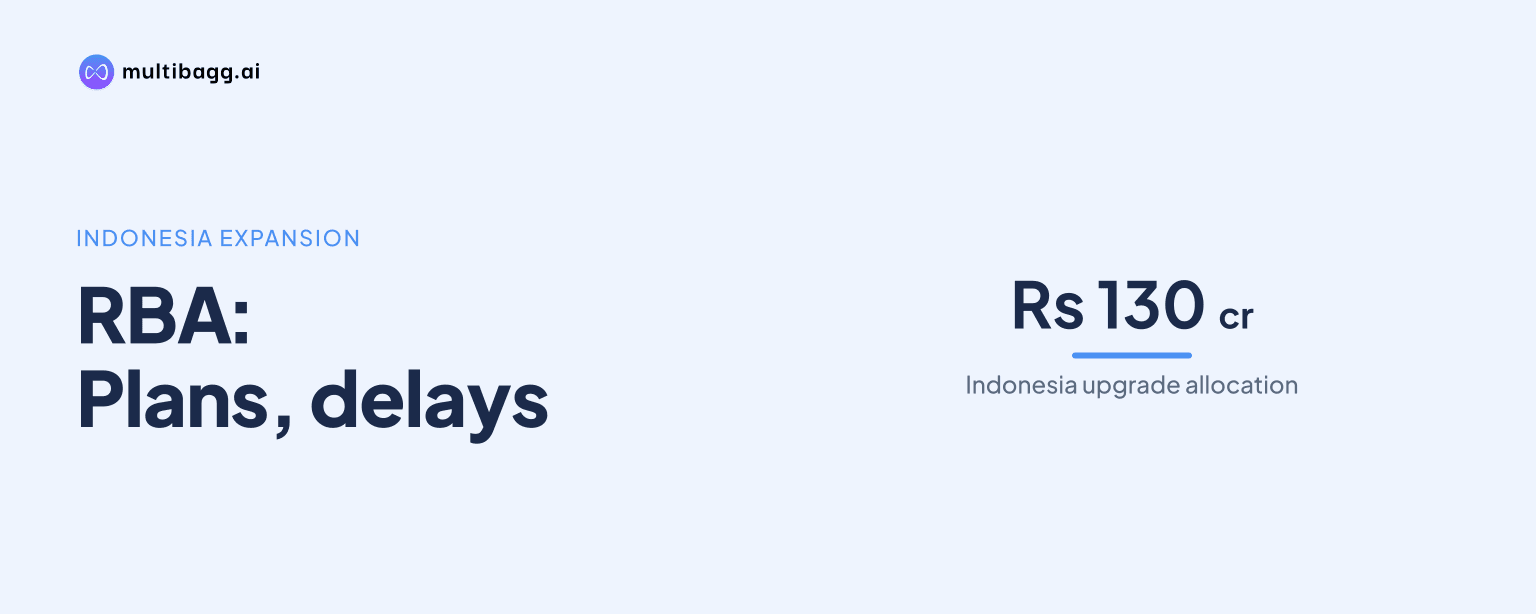
Restaurant Brands Asia Limited said on October 29, 2026, that it plans to put up to Rs 130 crore into Indonesian asset upgrades in tranches while deferring new Burger King Indonesia openings, after the brand recorded positive restaurant-level EBITDA for three consecutive quarters through Q2 FY27.
Know Restaurant Brands Asia inside out
Results, valuation, peers and who's buying, in one view.
Why is RBA funding Indonesia asset upgrades now?
RBA is funding upgrades because management sees early operating improvement at Burger King Indonesia, led by a value offer that added about 35 to 40 daily transactions per restaurant. The Super Hemat promotion launched in late September, and management said its early results support investment in the existing restaurant base rather than additional outlets. Management described the programme as a potential platform for bringing back customers lost in earlier periods.
The up-to-Rs 130 crore allocation was planned at the start of the year, management said, and is not intended as a single immediate transfer. RBA plans to remit funds in tranches according to business needs, milestones and Burger King Indonesia’s performance. The funds are also intended to support losses and working-capital improvement alongside refurbishment spending, meaning the announced amount is a ceiling rather than a statement that all capital has already been deployed.
How is Burger King Indonesia performing?
Burger King Indonesia is showing improvement, but RBA’s overall Indonesian business remained loss-making at company level in Q2 FY27. Indonesia generated Rs 139 crore of revenue in the quarter and reported restaurant-level EBITDA of Rs 80 lakh, compared with a negative restaurant-level result in the same quarter a year earlier. The Indonesia company-level loss was Rs 12 crore, an improvement of Rs 5 crore from the prior-year quarter.
The recovery is concentrated in Burger King Indonesia, which management said has generated positive restaurant-level EBITDA for three consecutive quarters. The Indonesian portfolio had 162 restaurants, comprising 137 Burger King restaurants and 25 Popeyes restaurants. RBA said the portfolio’s average daily sales were Rs 96,000, while identifying Burger King as the immediate strategic focus because of Super Hemat’s transaction response and the scope to improve the established estate.
Management also cited improving average daily transaction trends in October without disclosing the figures. It said the earlier period had been affected by boycott-related disruption in Indonesia’s Western quick-service restaurant sector. RBA’s operating plan nevertheless relies on measures within its control, including Super Hemat, the Boss Whopper premium range, digital upgrades and efficiency work, rather than attributing the turnaround solely to changes in market conditions.
Got a follow-up? Ask IRIS
Which Indonesian assets will RBA upgrade?
RBA plans to upgrade equipment, energy systems and customer-facing areas across its Indonesian restaurant base over the next six months or slightly longer. The programme includes replacing older air-conditioning systems with energy-efficient heating, ventilation and air-conditioning equipment, upgrading kitchen equipment, and refreshing lighting, signage and washrooms. Management said the work is intended to improve customer experience and operating costs at current restaurants.
The company is transferring practices used in India to Indonesia, including energy-efficient equipment, solar-related initiatives and broader utility controls. Management expects significant progress on profitability work by the end of November, with most of the changes completed in the January-to-March quarter. It said prior asset investment had been limited because earlier value promotions had not delivered sufficient traffic improvement.
Digital spending is another component of the programme. RBA began installing self-ordering kiosks in Indonesia a few months before the October 29 call and expects to complete the project by March, including additional kiosks. It also plans to introduce the customer-journey software used in India and align Indonesia’s customer relationship management and app capabilities with the Indian business to support convenience and repeat visits.
Will RBA open new Burger King Indonesia restaurants?
RBA will not treat new Burger King Indonesia openings as an immediate priority, and management said it has no plans to add stores this year or next year. The focus is to strengthen the current estate, improve asset quality and establish whether higher sales and margins can be sustained. One Indonesian restaurant added in the quarter was a relocation within a mall rather than an expansion of the network.
Management’s recovery framework is to increase sales and restaurant profitability at current outlets before reconsidering unit growth. It referred to pre-COVID performance, when the business delivered restaurant-level EBITDA of 15% and average daily sales of Indonesian rupiah 27 million per restaurant, as context rather than a forecast. Management’s immediate target is to lift daily sales by Indonesian rupiah 5 million per restaurant from roughly Indonesian rupiah 19 million to Indonesian rupiah 20 million toward about Indonesian rupiah 25 million.
Popeyes remains the unresolved part of the Indonesian portfolio. Popeyes average daily sales had fallen to Rs 64,000 in the prior quarter, while revenue was about Rs 15 crore, and management said the brand continued to drag the Indonesia result. RBA is in active discussions with Popeyes brand owners to find a suitable resolution, but gave no outcome, timing or separate capital plan.
Conclusion
RBA’s Indonesia plan makes existing-restaurant productivity, rather than store-count growth, the test of its turnaround. Burger King Indonesia’s three quarters of positive restaurant-level EBITDA and the 35 to 40 additional daily transactions attributed to Super Hemat give management grounds to refurbish the 137-store Burger King estate, while the Rs 12 crore Indonesia company-level loss shows that the wider operation has not yet reached profitability.
The next disclosed milestones are significant progress on profitability work by the end of November, completion of most asset changes in the January-to-March quarter, and completion of self-ordering-kiosk installation by March. Investors will also watch whether the Indonesian rupiah 5 million daily-sales target gains traction and whether discussions with Popeyes brand owners produce a disclosed resolution.