










RBIC revenue rises 28% as cost pressure constrains EBITDA
Key highlights
- RBIC July-September 2026 revenue rose 27.9% to Rs 1,506.2 crore.
- RBIC July-September 2026 EBITDA increased 4.7% to Rs 234.4 crore.
- RBIC April-September 2026 EBITDA fell 5.1% to Rs 392 crore from Rs 413.1 crore.
- RBIC’s Chakan facility crossed 20 million cumulative active-safety units in July-September 2026.
powered by IRIS
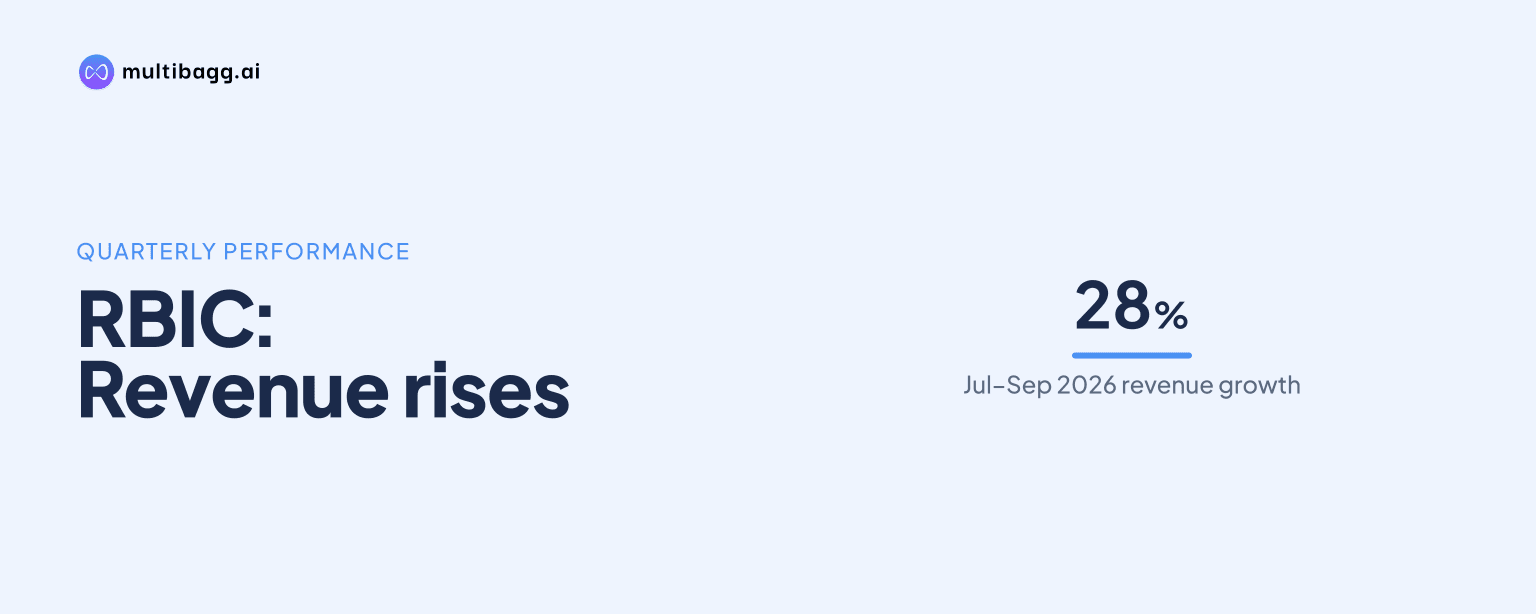
Bosch Chassis Systems India Private Limited, or RBIC, increased July-September 2026 revenue from operations 27.9% year on year to Rs 1,506.2 crore, but EBITDA rose only 4.7% to Rs 234.4 crore as higher aluminium and imported electronic control unit costs, plus rupee depreciation against the euro, increased material expenses.
Know Bosch inside out
Results, valuation, peers and who's buying, in one view.
How fast did RBIC revenue grow in July-September 2026?
RBIC’s revenue grew 27.9% in July-September 2026, led by higher sales in its Vehicle Motion and Two-Wheeler & Powersports segments. Management said passenger-car and two-wheeler demand supported the quarterly result, while revenue for April-September 2026 increased by about 24.5% from the prior-year six-month period.
The July-September performance followed FY25-26 revenue of Rs 4,893.5 crore, EBITDA of Rs 904.5 crore and profit after tax of Rs 589.1 crore. RBIC manufactures active-safety and vehicle-motion products at Chakan in Maharashtra, Sanand in Gujarat and Manesar in Haryana, including anti-lock braking systems, electronic stability programmes and airbag electronic control units.
The difference between sales and earnings growth widened during the quarter: revenue rose 27.9%, while EBITDA increased 4.7%. In the April-September 2026 period, EBITDA declined to Rs 392 crore from Rs 413.1 crore a year earlier despite about 24.5% revenue growth, indicating that higher costs and launch spending outweighed the benefit of volume growth.
Why did RBIC EBITDA trail revenue growth?
RBIC’s EBITDA trailed revenue because aluminium and electronic control units, or ECUs, raised material costs, while rupee depreciation against the euro increased the cost of imported components. Management also cited one-time costs for starting production of ESP10 electronic stability programmes and commissioning an additional ABS10M anti-lock braking system line for two-wheelers.
The Rs 234.4 crore EBITDA reported for July-September 2026 therefore reflected higher input prices as well as costs associated with new production capacity. RBIC said its Chakan facility crossed 20 million cumulative active-safety units during the quarter across four-wheeler electronic stability programme, four-wheeler anti-lock braking system and two-wheeler anti-lock braking system platforms.
A prior-period depreciation change also affects the comparison of first-half profit after tax. In April-September 2025, RBIC changed its depreciation method from straight-line to written-down value and recorded a cumulative Rs 77.5 crore charge to profit and loss. That charge contributed to April-September 2026 profit after tax rising 18.9% to Rs 272.1 crore even as first-half EBITDA fell 5.1%.
Can RBIC recover higher aluminium, ECU and forex costs?
RBIC is seeking recovery of higher costs from customers where contracts allow it, but management said reimbursement occurs with a time lag and may not cover the entire amount. The lag is between the point at which material costs rise and the contractually agreed date for customer recomposition or reimbursement.
Management said RBIC’s contractual methodology is broadly similar to that of Bosch Limited, though individual customer agreements can differ. Some expenses may not be contractually covered, and management said customer discussions are continuing because customers are also facing higher material prices.
In discussing the July-September 2026 margin movement, management identified forex effects, raw-material inflation, capacity investment and depreciation-method effects as short-term factors. It said these pressures could remain for perhaps one more quarter and that recoverable costs should appear in subsequent periods, but it did not provide a numerical EBITDA margin target or guarantee full recovery.
Got a follow-up? Ask IRIS
How is RBIC managing sourcing and capacity costs?
RBIC will continue sourcing ECUs from Bosch Automotive Electronics while pursuing greater localisation for other inputs. Management said Bosch Automotive Electronics is a specialist sister plant and its electronic supply role will continue, while local-content efforts at RBIC are increasing over coming years.
An analyst noted that group entities accounted for close to 60% of RBIC purchases and that about 25% of overall purchases were in foreign currency. Management did not dispute those figures, but did not disclose a localisation target, the current local-content percentage, or a timetable for savings from reducing imported-component exposure.
RBIC is also expanding capacity through the ABS10M two-wheeler line and the start of ESP10 production, both of which created first-half costs. Management said RBIC production is modular and can reuse equipment from elsewhere in the Bosch network, which differentiates its capital-expenditure model, although it gave no RBIC-specific capital-expenditure amount for FY26-27.
What is RBIC’s demand and margin outlook?
RBIC faces a more modest second-half demand environment, according to management, after a record July-September 2026 quarter. Management cited inflation, weak monsoons, tighter interest rates and a high prior-year base, and said tractors had already recorded modest growth while other vehicle segments could move similarly.
That outlook matters because passenger cars and two-wheelers drove RBIC’s 27.9% quarterly revenue increase. Management did not quantify the expected effect on RBIC revenue, but said normal cyclicality following the July-September quarter could result in a slightly more modest period for tractors, passenger vehicles, commercial vehicles and two-wheelers.
Regulatory requirements can support safety-system demand, but management said not every rule increases content per vehicle. It said autonomous emergency braking system implementation from 1 October 2030 is already covered by RBIC’s new-generation electronic stability programme systems, so that feature alone would not add content per vehicle. Management also did not provide a numerical estimate for the effect of Corporate Average Fuel Economy Phase 3, effective April 2027.
Conclusion
RBIC’s July-September 2026 result shows that sales growth of 27.9% to Rs 1,506.2 crore did not translate proportionately into earnings, with EBITDA rising 4.7% to Rs 234.4 crore. Aluminium, imported ECUs, euro-linked component costs and new-production start-up expenditure weighed on profitability, while the prior-year Rs 77.5 crore depreciation charge affected the comparison for first-half profit after tax.
The next quarters will show whether contractual customer recoveries offset the cost increases after the stated timing lag and whether ESP10 and ABS10M start-up costs ease. Management’s expectation that the cost effects could persist for perhaps one more quarter, its continuing localisation work outside ECU sourcing, and its more modest second-half demand outlook are the disclosed factors to watch.