










SAFE Says NFLO 2026 Reached 1 Lakh+, Not Paid Enrolments
Key highlights
- SAFE reported more than 1 lakh students reached through NFLO 2026 social-media and outreach activity.
- NFLO 2026 included more than 1,500 on-ground school and college visits.
- SAFE explicitly states that NFLO reach figures are not paid enrolments.
- SAFE’s first placement-linked BFSI batch had about 20 students, with about 150 vacancies in hand.
powered by IRIS
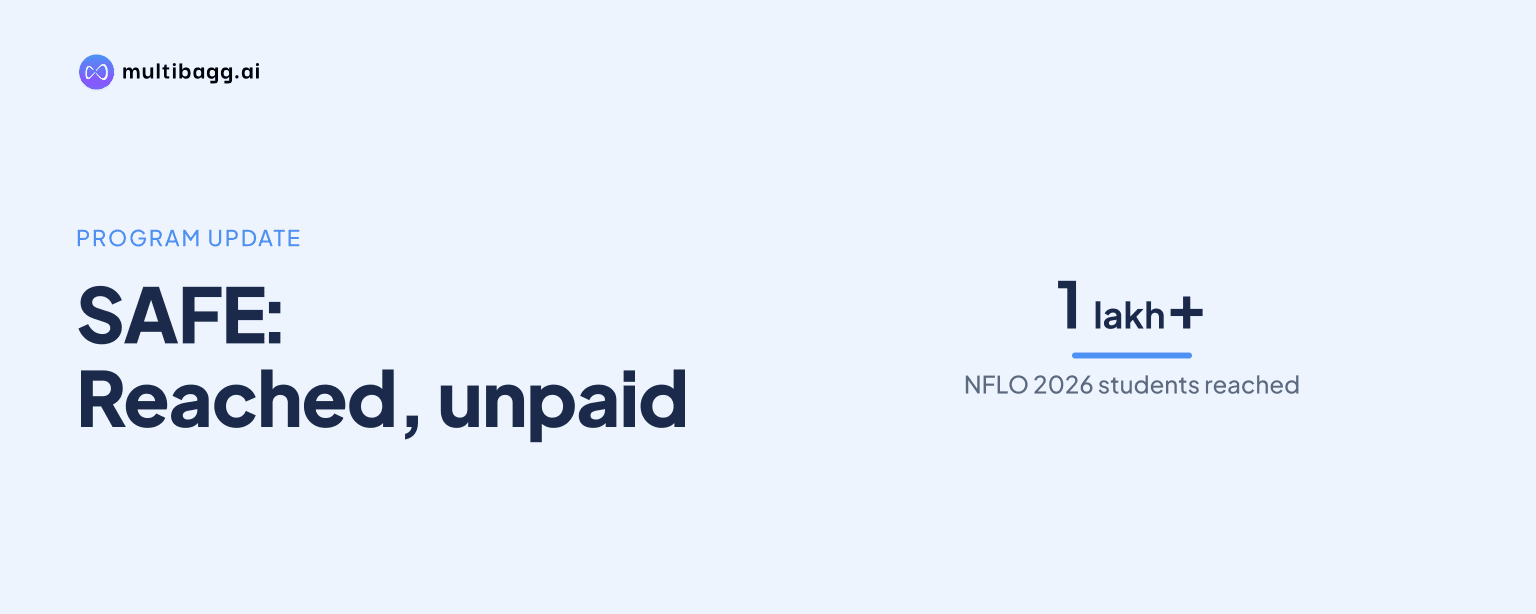
SAFE reported that NFLO 2026 reached more than 1 lakh students through social media and outreach, but it explicitly says this figure is brand-building reach rather than paid enrolment. SAFE’s stated model uses financial-literacy engagement from Class 6 onward to create a longer-term pipeline for training courses.
Know Sodhani Academy of Fintech Enablers inside out
Results, valuation, peers and who's buying, in one view.
What did SAFE report for NFLO 2026 reach?
SAFE reported that NFLO 2026, its second edition, reached more than 1 lakh students through social media and outreach. The platform also visited more than 1,500 schools and colleges on the ground and targeted learners from Class 6 through college, according to the presentation.
The 2026 edition followed NFLO 2025, which SAFE describes as the first edition. The presentation characterises NFLO as its flagship financial-awareness platform and a way to put the SAFE brand before students, schools and colleges nationally, rather than as a count of students purchasing courses.
SAFE separately reported reaching more than 90,000 learners through its Financial Literacy & NFLO vertical and conducting more than 700 training programmes. Because the presentation places these figures on a broader financial-literacy page while assigning the more-than-1-lakh figure specifically to NFLO outreach, the metrics describe related but not necessarily identical audiences or activities.
How does SAFE distinguish NFLO reach from paid enrolments?
SAFE plainly states that NFLO reach numbers are not paid enrolments. Its investor note says NFLO builds the brand and engages students, while another slide says that not every student reached through NFLO becomes a paying learner.
The distinction matters because SAFE’s operating path has six stages: reach school students through literacy programmes and NFLO, build awareness among students, parents, schools and colleges, enrol interested college students and graduates into paid courses, build skills, help candidates get jobs, and earn revenue. The more-than-1-lakh NFLO figure belongs to the reach stage rather than the paid-course stage.
SAFE’s literacy content covers saving, investing basics, markets and fraud awareness. It says these programmes are delivered in schools and colleges to students in Classes 6 to 12 as well as undergraduate and other higher-education learners, making the awareness audience broader than the college-student and graduate audience identified for paid courses.
The presentation identifies Training & Skill Development as SAFE’s key income engine, not Financial Literacy & NFLO. It says training includes share-market, banking, financial services and insurance, known as BFSI, and practical work-skills courses, while NFLO’s intended contribution is reach, brand recognition and a possible path into later paid offerings.
Got a follow-up? Ask IRIS
How does SAFE plan to turn financial awareness into revenue?
SAFE plans to convert a portion of its financial-literacy audience through paid courses, placement-linked fees, institutional projects and corporate social responsibility projects. Its stated model connects financial-literacy reach to training, college partnerships, employer partnerships and eventually job placement.
For training, SAFE identifies share-market courses as a major income source. Its listed products include Share Market Me Pehla Kadam, a basic market course; Zero to Hero, covering basic to advanced market skills; Technical Analysis; and Fundamental Analysis. SAFE says it is also exploring new share-market course types and is expanding reach in Rajasthan with support from RKCL, a Government of Rajasthan organisation.
SAFE’s placement-linked BFSI model sets a total course fee of Rs 20,000, subject to final contract terms. Students pay Rs 1,000 upfront, undertake a structured programme lasting 15 to 30 days, and pay the Rs 19,000 balance after placement. That structure differs from NFLO because it is a defined fee arrangement tied to a job-search and placement process.
SAFE also identifies college partnerships as a lower-cost way to access students and BFSI employer partnerships as the mechanism that turns training into jobs. Its employer-focused offering covers banks, non-banking financial companies and mutual fund companies that require trained freshers, according to SAFE’s description of the hiring gap it seeks to address.
What evidence shows the conversion funnel is still developing?
SAFE’s disclosed paid-training base is far smaller than its NFLO outreach audience: the first placement-linked batch had about 20 students, versus more than 1 lakh students reached through NFLO 2026. The comparison supports SAFE’s own warning that awareness reach should not be read as course enrolment or fee-paying participation.
SAFE reported about 150 BFSI vacancies in hand, mainly with non-banking financial companies, alongside the first batch of approximately 20 students. It also said several batches were planned for upcoming months, but the presentation does not disclose how many of the more-than-1-lakh NFLO-reached students applied for training, enrolled in paid courses, completed them or obtained placements.
SAFE has signed six arrangements with colleges and universities and said another 10 to 15 were in the pipeline. These arrangements may extend on-campus access, but the presentation does not give student volumes per arrangement, revenue per institution or a conversion rate from college awareness sessions to paid training.
NFLO 2026 also used awards and certificates to support engagement. The presentation names Rank 1 winners from Mumbai, Jaipur and Jhalawar, with a scooty awarded in the Class 11, 12 and college category and laptops in the Class 9-10 and Class 6-8 categories; it also lists tablets, mobile phones, scholarships and certificates among rewards. These features illustrate outreach activity, not paid-course intake.
Conclusion
SAFE’s presentation draws a clear line between the scale of awareness and monetisation. More than 1 lakh students reached through NFLO 2026 and more than 1,500 school and college visits indicate broad outreach, while the approximately 20-student first placement-linked batch shows that the disclosed monetisable training activity is at a much earlier stage.
The next disclosed milestones are several planned training batches, 10 to 15 additional college arrangements in the pipeline, and a target to launch SAFE’s training app by 31 December 2026. Readers should watch for later disclosure of paid enrolments, placement outcomes, course-fee collection and conversion from NFLO or college audiences into training participants.