










Satin Creditcare Board Meeting Set for Q2 FY27 Results
Key highlights
- Satin Creditcare’s board will meet on October 28, 2026, to consider unaudited Q2 and H1 FY27 results.
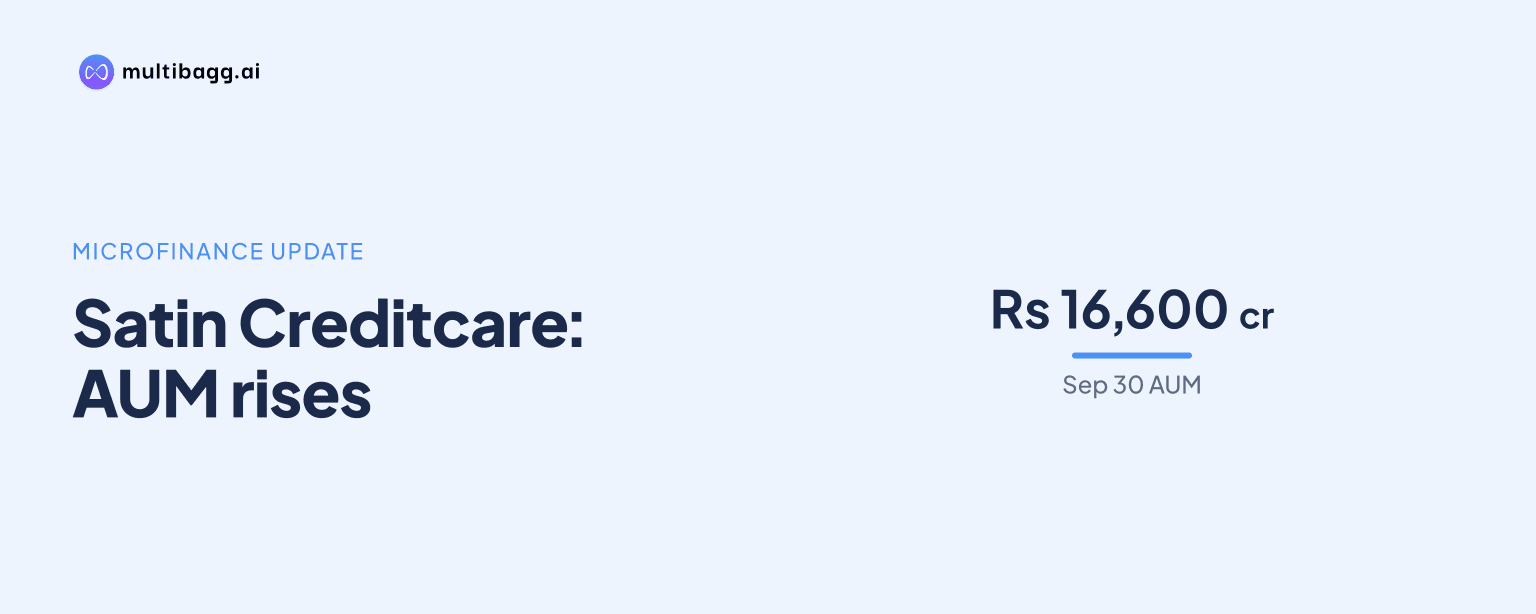
- Provisional consolidated AUM rose 31% year-on-year to about ₹16,600 crore as of September 30, 2026.
- Consolidated H1 FY27 disbursements increased 48% year-on-year to ₹7,192 crore.
- Standalone GNPA improved to 1.9% from 3.5% a year earlier, while marginal borrowing cost fell 55 basis points to 10.28%.
powered by IRIS
Board to consider September quarter financials
Satin Creditcare Network Ltd has informed the stock exchanges that its board will meet on October 28, 2026. The board is scheduled to consider and approve the company’s unaudited standalone and consolidated financial results for the quarter and half year ended September 30, 2026. The meeting is significant because it will provide the formal financial outcome for the second quarter of FY27 after the company released provisional operating data earlier this month. Investors will be able to assess whether the reported expansion in assets under management, disbursements and asset quality has translated into earnings growth. The company’s shares had gained 3.74% on October 7 after its Q2 business update.
Know Satin Creditcare Network inside out
Results, valuation, peers and who's buying, in one view.
Provisional AUM rose 31% year-on-year
Satin Creditcare reported provisional consolidated assets under management of about ₹16,600 crore as of September 30, 2026. This represented year-on-year growth of about 31% from ₹12,687 crore a year earlier and an increase from ₹15,935 crore at the end of June 2026. Standalone AUM stood at about ₹13,600 crore, compared with ₹11,044 crore a year earlier and ₹13,312 crore at June-end. The operating update indicated that the company continued to grow despite the seasonal softness generally associated with the second quarter. The figures remain provisional and are subject to statutory audit review and approval by the audit committee and board.
Disbursements increased during the first half
Consolidated disbursements reached ₹7,192 crore in the first half of FY27, up 48% year-on-year, according to the company’s business update. Higher disbursements indicate continued lending activity across the group during the six months ended September. The final Q2 and H1 results will clarify the quarter-wise contribution, income recognition and profitability associated with this loan growth. Satin had reported consolidated disbursements of ₹3,008 crore in Q1 FY27, a 46% year-on-year increase. Its standalone AUM at the end of that quarter was ₹13,312 crore.
Asset quality indicators showed improvement
The company said standalone gross non-performing assets improved to 1.9% in Q2 FY27 from 3.5% a year earlier. The update described the improvement as a 158-basis-point reduction in GNPA. Asset quality is a key indicator for microfinance lenders because changes in borrower repayment behaviour can influence credit costs and profitability. Satin also reported that collections remained strong during the quarter. The board-approved financial statements will provide the detailed loan-loss provisioning and credit-cost position for Q2 and the first half.
Borrowing costs declined in the quarter
Satin said its marginal cost of borrowing declined by 55 basis points year-on-year to 10.28% in Q2 FY27. It raised ₹2,628 crore during the quarter through diversified debt instruments, according to the provisional presentation. For a lender, a lower borrowing cost can support net interest margins if lending yields and operating costs remain stable. The company had reported a net interest margin of 14.36% in Q1 FY27, up more than 120 basis points year-on-year. Final Q2 disclosures will show whether this margin trend continued through September.
Got a follow-up? Ask IRIS
Non-MFI portfolio share continued to expand
The non-microfinance institution share of consolidated AUM increased to 20% as of September 30, 2026, from 15% a year earlier. It was 19% at June 30, 2026. This data indicates a gradual increase in the contribution of businesses outside the core MFI portfolio. Satin’s investor communications have referred to diversification through housing finance, MSME finance and technology-enabled solutions. The disclosed figures do not provide a detailed segment-level earnings split, so investors will need to rely on the approved results and accompanying presentation for further detail.
Q1 performance provides the latest approved benchmark
In Q1 FY27, Satin reported revenue of ₹734 crore, up 21% year-on-year, and profit after tax of ₹120 crore, up 182% year-on-year. Credit cost for that quarter was 3.06%, including a management overlay buffer of ₹36 crore. Excluding the management overlay, credit cost was 1.97%. Return on assets was 3.55%, while return on equity was 15.10%, both including the overlay. These approved Q1 metrics form the latest financial reference point ahead of the September-quarter announcement.
Key operating and financial data
What investors will watch in the results
The September-quarter statement is expected to provide audited-review-level detail on revenue, net interest income, expenses, provisions and profit for the standalone company and consolidated group. Investors will also watch whether the reported improvement in GNPA is reflected in lower credit costs. Funding costs, margins and the pace of non-MFI portfolio growth will be relevant alongside disbursement data. The company’s provisional presentation clearly states that the operating numbers are unaudited and subject to review by statutory auditors and approval by the audit committee and board. Accordingly, the October 28 board outcome will be the key formal disclosure for the quarter.
Next disclosure follows the board meeting
Satin Creditcare’s board meeting on October 28 will determine the approval of unaudited Q2 and H1 FY27 financial results. The company has already indicated higher AUM, stronger disbursements, improved asset quality and a lower marginal borrowing cost in its provisional update. The final standalone and consolidated results will confirm the financial impact of these operating trends. Investors can also look for any accompanying investor presentation or exchange filing after the board’s decision.