










Sheel positions 50 FPOs to support its blueberry expansion
Key highlights
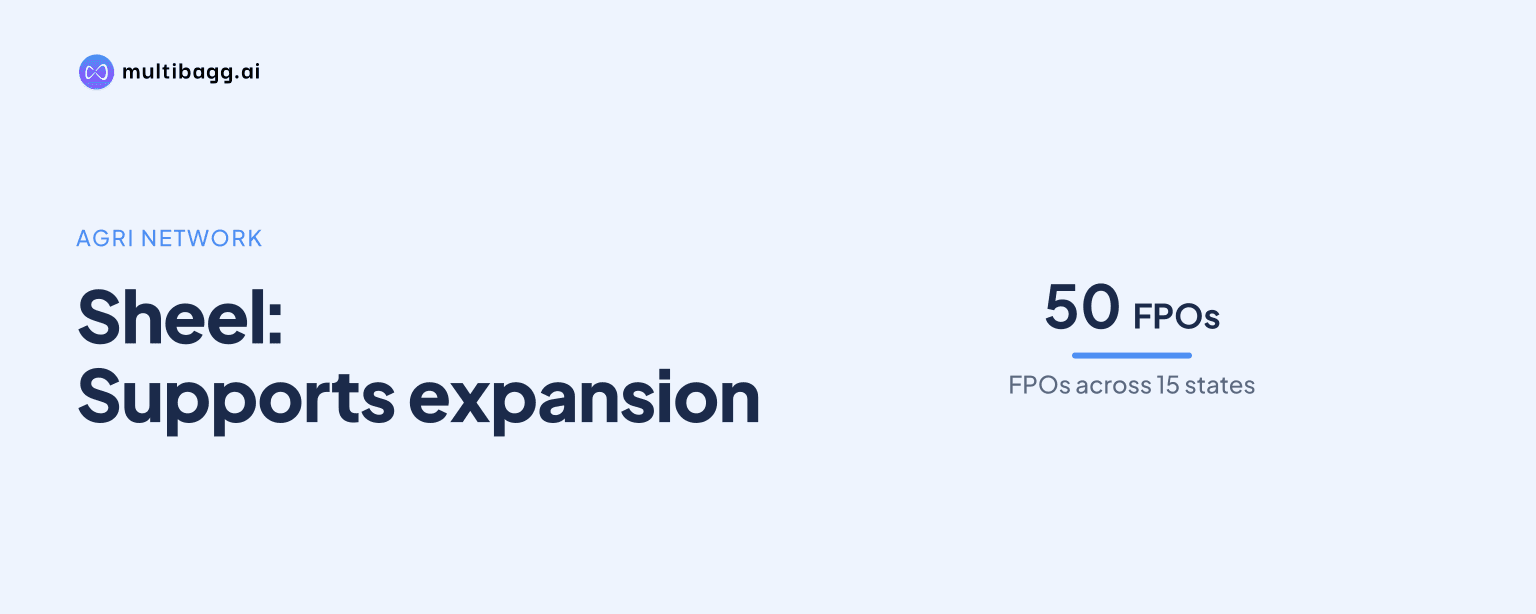
- Sheel reports 50 FPOs representing 1,98,502 farmers across 15 states.
- Sheel says annual tissue-culture capacity of 1.5 crore plants can be reoriented to berries.
- The presentation estimates India produced about 2,000–3,000 metric tons of blueberries in 2024.
- Sheel reports 59 completed greenhouse or polyhouse projects nationally.
powered by IRIS
Sheel Biotech is positioning 50 farmer producer organisations, 1.5 crore plants of annual tissue-culture capacity and 59 completed greenhouse or polyhouse projects for blueberry expansion, targeting a market where its presentation estimates domestic output at 2,000–3,000 metric tons in 2024 and imports were 10 times 2020 levels.
Know Sheel Biotech inside out
Results, valuation, peers and who's buying, in one view.
How is Sheel entering blueberry farming?
Sheel is entering blueberry farming through an integrated cultivation and supply-chain model rather than fruit sales alone. Its presentation describes a package of premium planting material, protected cultivation, agronomy support, post-harvest handling and market linkage to business-to-business buyers including hotels, retailers, exporters and nutraceutical brands. It identifies a live blueberry demonstration farm at Pilkhuwa, Uttar Pradesh, as an existing site for the new vertical.
Sheel’s stated focus is on large berries measuring 18 millimetres to 25 millimetres, which the presentation calls the premium commercial standard. It says it works with patented breeder genetics, including a collaboration with Cuna de Platero in Spain, and can apply more than 30 years of tissue-culture experience across banana, strawberry and floriculture. Sheel also says it has commenced securing institutional orders for blueberry cultivation projects in Jammu and Kashmir and Himachal Pradesh.
Why does Sheel expect Indian blueberry demand to grow?
Sheel expects Indian blueberry demand to grow because its presentation estimates domestic 2024 production at about 2,000–3,000 metric tons while imports had risen 10 times from 2020. The presentation says import duty was reduced to 10% from 33%, which it identifies as improving market accessibility. It cites estimated Indian demand growth of 18% compound annual growth rate through 2028, attributing the figure to the International Blueberry Organization, or IBO, Report 2025.
The presentation identifies modern retail, quick commerce, hotels, restaurants and catering, direct-to-consumer health brands, nutraceuticals, bakery, dairy and individually quick-frozen processing as demand channels. It specifically cites Mumbai, Delhi, Bengaluru and other Tier-1 cities for accelerating retail penetration. These channels align with Sheel’s proposed services because its offer extends from cultivation inputs to handling and market linkage after harvest.
Sheel’s retail-price comparison puts blueberry at Rs 2,500 per kilogram, versus Rs 400 for strawberry and Rs 25 for watermelon. That equals six times the cited strawberry price and 100 times the watermelon price. The comparison is a retail illustration and does not disclose a farm-gate price, crop yield, revenue forecast or profitability estimate for Sheel’s blueberry activity.
Which existing assets support Sheel’s blueberry plan?
Sheel’s main propagation asset is annual tissue-culture capacity of 1.5 crore plants, which the presentation says can be reoriented to berries as demand scales. Its proposed blueberry planting material includes zero-chill and low-chill varieties suited to differing climate zones. Sheel says this variety approach can support cultivation from the southern plains to the Himalayan foothills, but it does not disclose a blueberry-specific plant-production target.
Protected cultivation is the second component of the plan. Sheel reports 59 completed greenhouse or polyhouse projects nationally and says it offers greenhouse, aeroponic, hydroponic and packhouse capabilities under one roof. For blueberries, it proposes pairing those capabilities with irrigation, fertigation and agronomy support, while the presentation does not state how many of the 59 completed projects involve blueberries.
Sheel also says it has cold storage, packhouses, controlled-atmosphere systems, grading, sorting and processing lines built for other crops. Its stated mechanism is to shift this infrastructure to blueberry handling, from harvest through storage and distribution. Controlled-atmosphere, or CA, storage is included in the proposed chain alongside business-to-business retail and export routes.
Got a follow-up? Ask IRIS
How can Sheel use its FPO network for blueberries?
Sheel can use its farmer producer organisation, or FPO, network as a mobilisation platform for contract blueberry farming. The presentation lists 50 FPOs, 1,98,502 farmers and operations across 15 states. It describes support covering FPO formation, training, certification, market linkage and post-harvest-management infrastructure, extending the network beyond crop production alone.
Sheel also cites relationships with NAFED, NERAMAC, SFAC, NCDC, ICAR, DRDO and Amul. It describes these organisations as institutional buyers or programme-executing agencies and says the relationships provide access to policy-backed agricultural finance for expansion. The presentation does not disclose committed blueberry acreage, FPO-level blueberry contracts, capital commitments or financing approvals.
The proposed commercial offer covers land identification, polyhouse setup, premium planting material, agronomy support, post-harvest handling and market linkage. This places the FPO network in a model that includes cultivation support and buyer access rather than plant sales alone. Sheel identifies hotels, retailers, exporters and nutraceutical brands as the intended premium business-to-business buyer channels.
What international backdrop is Sheel using for its blueberry strategy?
Sheel is using global production growth as part of the backdrop for its domestic blueberry plan. Its presentation says global blueberry production exceeded 2 million metric tons in 2024 for the first time, while the IBO projects production of 3.2 million tons by 2028. Those figures provide the context for Sheel’s plan to apply breeder genetics, propagation and protected cultivation in India.
The presentation also cites annual expansion in global planted area of 7% to 10%. Sheel’s disclosed role remains centred on domestic expansion through tissue-cultured plants, farm setup, crop management and post-harvest handling. Export is included as a potential distribution channel, but the presentation discloses no export orders, export revenue or timetable for commercial exports.
Conclusion
Sheel’s blueberry strategy is based on adapting existing agricultural infrastructure to a new crop vertical. The presentation combines annual tissue-culture capacity of 1.5 crore plants, 59 completed greenhouse or polyhouse projects, cold-chain and packhouse capabilities, and 50 FPOs covering 1,98,502 farmers across 15 states with a domestic market estimated to produce only 2,000–3,000 metric tons in 2024.
The next disclosed milestone is the FY27–28 plan to expand contracted farm acreage, scale domestic blueberry plant production, strengthen berry-specific cold-chain and post-harvest capacity, and deepen FPO deployment for contract farming. Sheel’s FY29-and-beyond plan includes exploring exports as Indian production reaches scale and consistency, alongside potential domestic breeder tie-ups and proprietary variety development.