










QMS patient-support engine conducted 26,208 camps in H1FY27
Key highlights
- QMS reported 26,208 pharma-backed B2B camps in H1FY27, above the 24,823 camps recorded in FY24.
- QMS reported 32,380 B2B camps in FY26, compared with 30,393 in FY25.
- QMS says its network includes a tele-counselling centre with more than 150 seats and more than 2,000 on-ground personnel.
- QMS says its CRM platform supports more than 100 programmes, more than 1 million patients and more than 350,000 healthcare professionals.
powered by IRIS
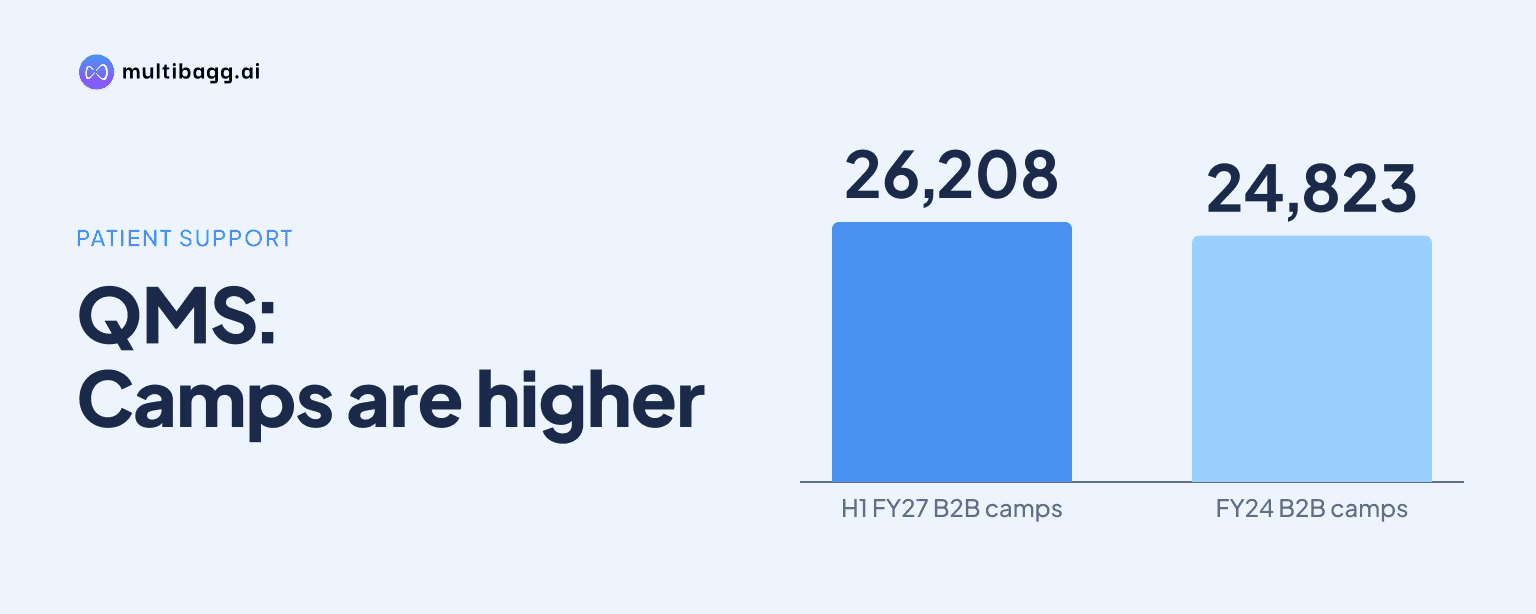
QMS Medical Allied Services conducted 26,208 pharma-backed camps in H1FY27, the first half of fiscal year 2027, exceeding 24,823 camps in full-year FY24, while its patient-support engine combined a 150-plus-seat tele-counselling centre, more than 2,000 on-ground personnel and more than 4,000 camps a month.
Know QMS Medical Allied Services inside out
Results, valuation, peers and who's buying, in one view.
How does QMS run pharma-backed patient-support camps?
QMS acts as the backend service provider for pharma-backed, business-to-business (B2B), short-duration health camps at doctors’ clinics. Pharma companies use their medical representatives to engage doctors and mobilise patients, while QMS manages camp infrastructure including diagnostics, reporting, logistics, tracking and feedback. QMS says it collaborates with more than 50 pharmaceutical companies, including the top 10, providing a B2B route to patient engagement.
The camps are one component of QMS’s Patient Support Program (PSP) model for chronic conditions including ophthalmology, orthopaedics, diabetes, hypertension, cardiology and obesity. QMS describes the patient pathway as screening, early diagnosis, therapy initiation, device integration, regular follow-up reminders and lifestyle coaching. Its field-support structure includes physios, phlebos, nutritionists, programme-based nurses and healthcare associates or coaches, including a dedicated 120-person camp team.
QMS also provides strips and consumables during doctor-clinic camps for on-site testing through point-of-care devices. It states that it is a Central Drugs Standard Control Organisation licence holder and separately lists more than 15 point-of-care devices deployed in its PSP network. The model therefore combines diagnostics and device use with consultations, follow-ups and reminders rather than treating camps as stand-alone events.
How has QMS camp activity changed by period?
QMS increased reported pharma-backed B2B camp activity from 24,823 camps in fiscal year 2024 (FY24) to 30,393 in FY25 and 32,380 in FY26. The FY25 total was 5,570 camps above FY24, while FY26 added a further 1,987 camps. H1FY27 reached 26,208 camps, exceeding the FY24 full-year total by 1,385 camps before the second half.
QMS also describes its wider operating model as conducting more than 4,000 camps per month and more than 100 preventive camps daily. These are operational statements alongside the specifically labelled pharma-backed B2B camp series, rather than a reconciled single measure. The FY26 B2B total of 32,380 is below an annualised pace of more than 4,000 monthly camps, indicating that the disclosures may cover different camp categories or scopes; the presentation does not reconcile them.
Got a follow-up? Ask IRIS
What resources support QMS patient programs?
QMS says its phygital model, combining physical and digital delivery, has a presence in more than 35 cities and an on-ground team of more than 2,000 people. Its detailed PSP disclosure separately lists more than 1,800 field officers, more than 1,000 dieticians and 135 certified DMLTs. These roles support activities ranging from screening and diagnostics to diet guidance and follow-up.
The central component is a tele-counselling centre with more than 150 seats, staffed by tele-counsellors, nurses and dieticians, with doctors available on a need basis. QMS also lists more than 220 online or offline dietician sessions and more than 150 counselling sessions, although it does not specify the measurement period for either activity. This structure gives QMS a mechanism for patient contact between field interventions through reminders and tele-consults.
QMS says it acquired 100% of Saarathi Healthcare, which it describes as a pioneer in disease management and PSPs in India. The presentation places Saarathi within QMS’s end-to-end patient-management capability, including reminders, consultations and technology-led follow-ups. The acquisition is relevant to the roadmap because management proposes to consolidate QMS and HCAH PSP operations under Saarathi Healthcare and HCAH.
How does QMS connect field care and data?
QMS connects field and tele-intervention activity through an in-house integrated digital-health application and a centralised customer relationship management (CRM) platform. The CRM integrates PSPs for real-time patient tracking, analytics and engagement insights, according to the presentation. QMS says the platform supports more than 100 programmes, more than 1 million patients and more than 350,000 healthcare professionals.
QMS says its platform is hosted on Amazon Web Services (AWS) for scalability and security, and uses artificial intelligence and data-driven care to monitor and identify at-risk patients for personalised interventions. Its tele-counselling operation is described as meeting data-security and privacy compliance requirements labelled ISO 27001 and SOC2. The technology presentation also describes AWS-hosted operations as ISO 9001-compliant.
For clients, QMS says its CRM and analytics provide secure dashboards and customised reports on enrolment, engagement, drop-offs, programme reach, treatment adherence and health parameters. This is the mechanism through which QMS presents camps, laboratory tests, coaching and tele-consults as measurable programme activity. It distinguishes the service model from product distribution, where QMS reported FY26 revenue of Rs 119 crore including Q-Devices and a portfolio of more than 900 stock-keeping units.
Conclusion
QMS’s disclosed operating model combines clinic-based camps, diagnostics, field staff, tele-counselling and CRM-led reporting into a PSP delivery system for pharmaceutical, medical-device and consumer-health clients. Its clearest activity measure is 26,208 B2B camps in H1FY27, compared with 32,380 in FY26 and 24,823 in FY24, supported by more than 2,000 on-ground personnel and a tele-counselling centre with more than 150 seats.
The next development to watch is management’s proposed consolidation of QMS and HCAH PSP operations under Saarathi Healthcare and HCAH, alongside a proposed separate National Stock Exchange listing for the healthcare-services platform. The presentation also identifies expansion into point-of-care screening, diagnostics and technology, including the 100% acquisition of BeamOptics, but does not provide a timetable for the proposed listing or consolidation.