










Shivalik Bimetal Controls Limited Pune Phase I consent to 2032
Key highlights
- SBCL’s Pune Phase I Consent to Operate is valid until June 30, 2032.
- SBCL reported the Pune Phase I consent status in its Q2FY27 update.
- The three Solan plants have combined post-expansion revenue capacity of Rs 1,600 crore.
- SBCL has not disclosed Pune-specific capacity, revenue, order intake or utilisation.
powered by IRIS
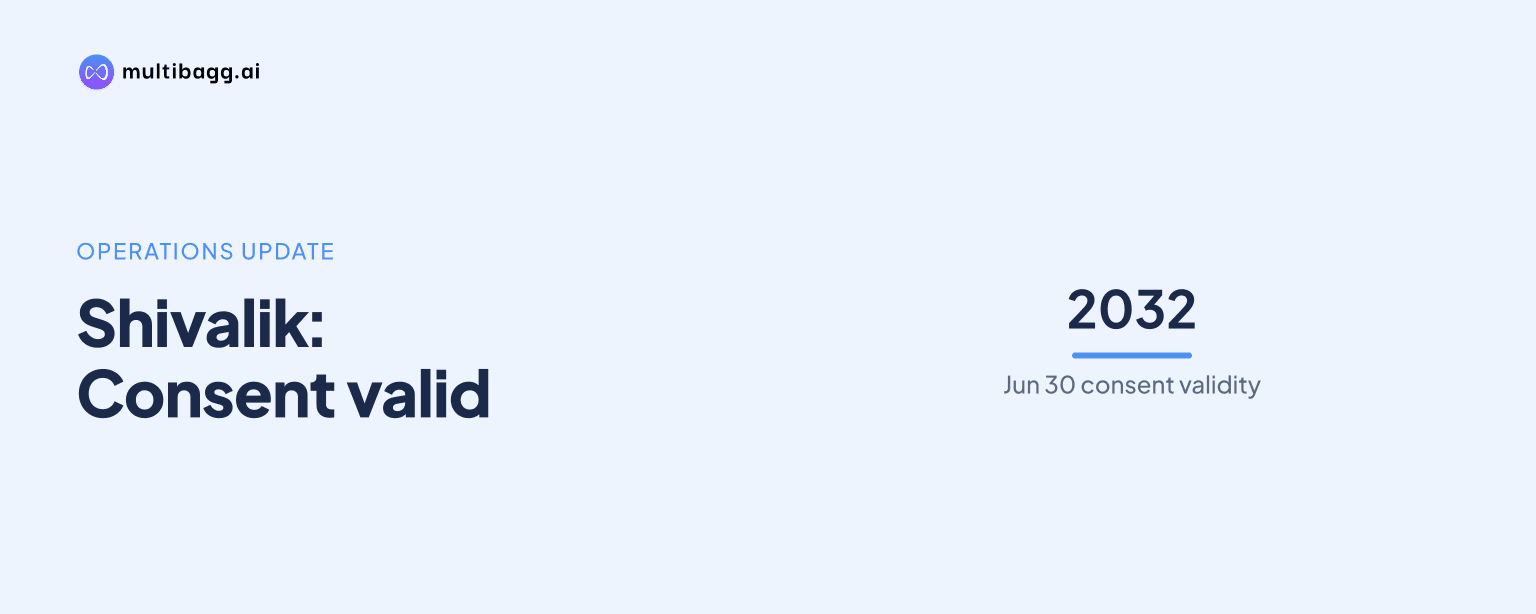
In Q2FY27, Shivalik Bimetal Controls Limited said Phase I of its Pune R&D and CCS project held Maharashtra Pollution Control Board Consent to Operate until June 30, 2032, providing an operating foundation for printed circuit board assembly, or PCBA, and busbar connector assemblies aimed at automotive and electrification customers.
Know Shivalik Bimetal Controls inside out
Results, valuation, peers and who's buying, in one view.
What does SBCL’s Pune Phase I consent cover?
SBCL’s disclosed consent is a Consent to Operate for Phase I of the Pune facility, valid through June 30, 2032. The company reported this status in its Q2FY27 update for the Pune R&D and CCS project, which is identified as estimated for 2026. The consent applies to Phase I rather than the entire proposed Pune development.
SBCL is separately obtaining approvals and permissions to set up Phase II. This distinction means the presentation discloses an operating-consent status for Phase I, while Phase II remains in the approval process. SBCL does not disclose Phase II capacity, capital expenditure, commissioning timing or revenue contribution in the supplied material.
Pune is identified as an R&D and CCS project alongside SBCL’s Solan manufacturing plants and Innovative Clad Solutions Private Limited, an associate in Indore. SBCL identifies New Delhi as its corporate-office location and reports a workforce of 1,000 people. The Pune project is not listed among the three established Solan production plants.
How is Pune intended to change SBCL’s product offering?
SBCL says Pune is designed to extend its role beyond precision materials and individual components into integrated sub-assemblies. Its stated focus is PCBAs and busbar connector solutions, combining power distribution, control and sensing functions for original equipment manufacturers, or OEMs, and Tier-1 customers.
Busbars carry and distribute electrical power, while PCBAs are populated boards that help systems switch, monitor and communicate. SBCL describes the intended offering as busbars, connectors and PCBAs assembled into ready-to-use solutions, rather than only the precision component that may sit within a larger customer assembly.
The presentation identifies electric-vehicle battery packs, cell connecting systems, integrated PCBs on shunts, smart-shunt centres and battery-management-system applications as uses for these assemblies. It also names power distribution units, inverters, converters and energy-management applications. In each case, the platform is intended to combine current sensing, switching, power routing and system-level integration in a customer sub-assembly.
Which end markets is SBCL targeting from Pune?
SBCL is targeting automotive and electrification-led applications through Pune, particularly uses requiring high-current connections and electronic controls. The company lists EV battery systems, charging infrastructure, smart metering, automotive electronics and energy-management applications among the intended markets for PCBA and busbar assemblies.
For EV battery packs, SBCL describes the role as high-current interconnection and control for battery modules and battery-management systems. In charging infrastructure, the stated application is power delivery for EV charging systems. For smart metering, SBCL identifies accurate sensing and intelligent control, linking the Pune platform to its current-sensing products without disclosing a specific customer programme.
Pune’s location is intended to support automotive and industrial customers through faster collaboration, qualification and delivery, according to SBCL. Management’s stated objective is deeper participation in OEM and Tier-1 programmes through ready-to-use sub-assemblies. The presentation does not name a Pune customer, signed order, production volume or programme-launch date.
Got a follow-up? Ask IRIS
How does Pune compare with SBCL’s existing manufacturing base?
SBCL’s existing Solan plants are organised by core component category, while Pune is intended for integrated assemblies. Plant 1 makes electron-beam-welded shunt resistors, Plant 2 makes thermostatic bimetals, and Plant 3 makes electrical contacts. Pune is intended to add PCBA and busbar assembly capability to this component base.
The three Solan plants disclose combined post-expansion revenue capacity of Rs 1,600 crore, with shunt resistors at Rs 700 crore, thermostatic bimetals at Rs 600 crore and electrical contacts at Rs 300 crore. SBCL provides no equivalent revenue-capacity figure for Pune, so the planned assembly platform cannot be compared numerically with the established plants.
The existing component technologies include electron-beam welding for ultra-low-ohmic shunt resistors, high-pressure diffusion bonding for thermostatic bimetals, and brazing, welding and cladding for electrical contacts. Electrical contacts already include ready-to-use sub-assemblies joined to complex sheet-metal stampings. Pune is intended to extend this integration approach to busbars, connectors and PCBAs for power and control applications.
What will determine the Pune project’s next stage?
The next disclosed project milestone is securing the necessary approvals and permissions for Phase II, because only Phase I has Consent to Operate through June 30, 2032. The presentation does not specify when Phase II approvals may be completed, whether construction has started, or how Phase II would alter the project’s production scope.
Management frames the Pune facility as part of a strategy to supply more integrated components and assemblies and increase SBCL’s role in customer programmes. For the remainder of FY27, Managing Director Kabir Ghumman said execution would focus on sustaining core profitability, improving cash conversion after inventory build-up, and directing capital to programmes with credible customer adoption and good returns.
That plan sets the disclosed execution measures for the assembly strategy: operating consent does not itself establish customer adoption or financial output. The presentation supports the Phase I operating status and the intended PCBA and busbar applications, but does not disclose Pune revenue, margin, utilisation, order intake or capital deployed.
Conclusion
SBCL’s Phase I consent through June 30, 2032 gives the Pune R&D and CCS project a disclosed operating foundation for PCBA and busbar connector assemblies. The project is intended to move beyond the three Solan component platforms, which have combined post-expansion revenue capacity of Rs 1,600 crore, into integrated power, sensing and control sub-assemblies for OEM and Tier-1 programmes.
The next item to watch is Phase II, for which SBCL says approvals and permissions are still being obtained. Management’s FY27 plan also identifies customer adoption, cash conversion following inventory build-up and capital allocation to programmes with credible returns as execution priorities; no Pune-specific capacity, revenue or launch timing has been disclosed.