










Shivalik runs one EV CCS programme, with more in validation
Key highlights
- Shivalik has one CCS programme in mass production and two or three more in advanced prototype or testing stages.
- Management said battery-pack assembly and component sourcing are gradually moving to India from imported packs.
- Shivalik discussed an assembly opportunity of Rs 100 crore to Rs 200 crore for FY27 and FY28, subject to programme conversion.
- Management expects assembly EBITDA margins of about 15% to 16%, compared with roughly 26% to 27% for some established product lines.
powered by IRIS
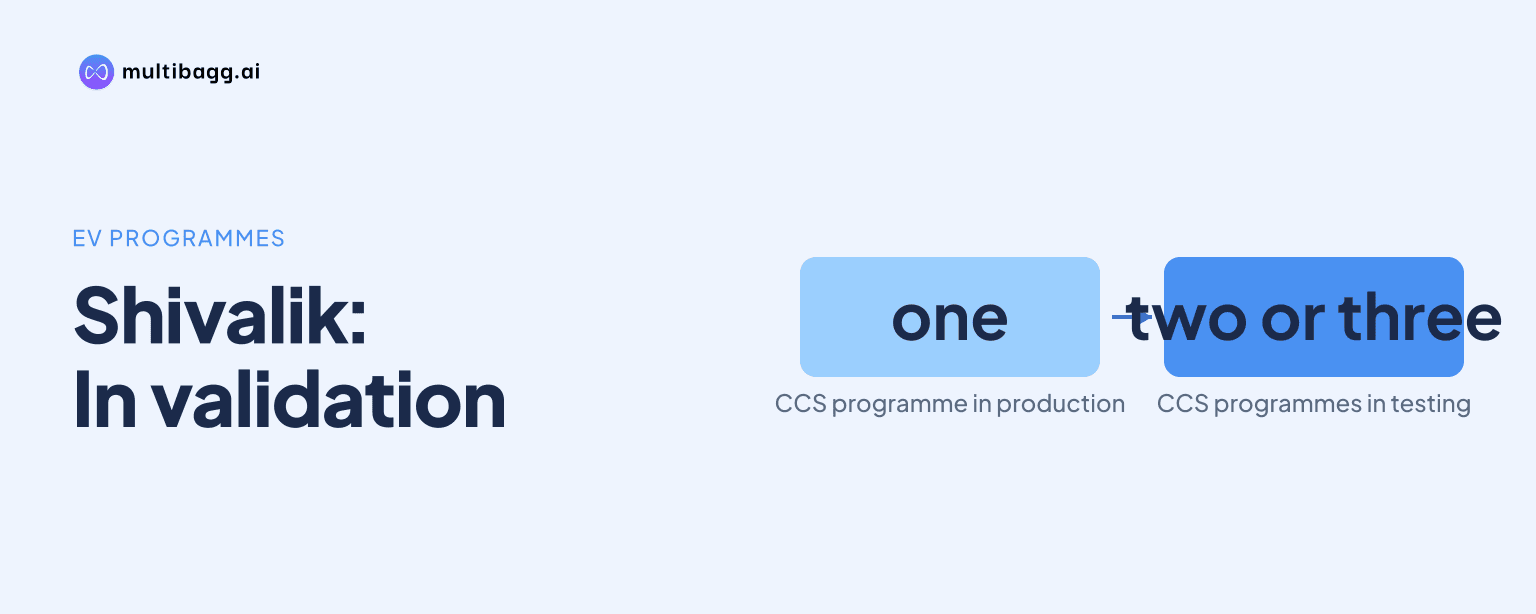
Shivalik Bimetal Controls Limited said one current collector system, or CCS, programme was in mass production, while two or three others were at advanced prototype or testing stages, as management described battery-pack assembly and component sourcing as gradually moving to India from imported packs.
Know Shivalik Bimetal Controls inside out
Results, valuation, peers and who's buying, in one view.
How far have Shivalik’s EV current-collector programmes progressed?
Shivalik has one CCS programme in mass production and at least two, possibly three, more in advanced stages. Managing Director Kabir Ghumman said initial prototyping had been completed for the additional programmes, with some undergoing testing. These programmes remain in validation, rather than confirmed commercial supply arrangements, and Shivalik did not name customers or disclose programme values.
The company said CCS is linked to busbar and assembly opportunities, while discussions continue with other potential customers. Management explained that automotive component changes at board level require complete validation cycles and a strong reason for a customer to replace a qualified part. It therefore described a finished component or assembly that secures a programme as effectively locked in for that programme’s life, which is management’s assessment rather than a disclosed contractual term.
Why does Indian battery-pack localisation matter for Shivalik?
Indian localisation matters because management said complete battery packs, battery-management-system assemblies and related products had previously been imported, while assembly is now gradually moving to India. A battery management system, or BMS, monitors and manages a battery pack. Shivalik sees the developing local supply chain as an opportunity for higher-value shunt-resistor components, CCS and busbar applications.
Kabir Ghumman said much CCS material had earlier been imported directly from China, leaving relatively little original equipment manufacturer, or OEM, design and research-and-development activity in India. He said validation and fine-tuning therefore take longer today than they may take in about a year. Management now sees domestic demand as an addition to export projects with existing and new customers, rather than a replacement for export-led opportunities.
When could Shivalik’s CCS validation programmes generate revenue?
Shivalik did not give a commercial-supply date for the two or three advanced CCS programmes. An analyst asked whether higher electric two-wheeler volumes could lead to supply in the fourth quarter or first quarter, but management responded only with the prototype and testing status. The disclosed position supports progress through validation, not a scheduled production ramp.
Management said the first running programme had begun contributing only recently. During the quarter under discussion, Sumer Ghumman said CCS and printed circuit board assembly, or PCBA, made only a small contribution to growth, although quantities had increased in perhaps one or two months of the prior quarter. He said volumes were becoming larger in the current and coming quarters, without providing revenue or unit-volume figures.
Got a follow-up? Ask IRIS
How does CCS support Shivalik’s finished-component strategy?
CCS supports Shivalik’s move from supplying material to making finished components and assemblies with more processing. Management said shunt volume had fallen by about 16% while shunt revenue increased by about 36% in the quarter discussed, because customers bought less wide, thick strip material and Shivalik shipped more finished resistors. Output measured in kilograms therefore does not fully reflect value added under the changed product mix.
Management said material pricing is generally passed through, limiting the direct profit effect of copper and silver movements. It estimated that, with commodity values held constant, component shipments would still have grown by about 25% to 26% in the relevant quarterly or half-year comparison. Shivalik expects the assembly business to become a separate fourth vertical within its core business when substantial, rather than a standalone subsidiary.
What does management expect from Shivalik’s assembly business?
Management said the assembly opportunity could amount to Rs 100 crore to Rs 200 crore when discussing FY27 and FY28, depending on which developments convert into business. Sumer Ghumman said this was conditional on several factors and should not be treated as a revenue forecast for Shivalik’s total operations. The range refers only to assembly business, which includes forward integration of resistor activities.
Management expects assembly EBITDA, or earnings before interest, tax, depreciation and amortisation, margins of about 15% to 16%, compared with roughly 26% to 27% for some established product lines. It said contacts also carry margins of about 15% to 16%. A larger assembly contribution could reduce the overall margin percentage by about 1.5 to 2.5 percentage points even if total profit rises; management also described 30% to 40% revenue growth as possible if developments materialise.
Conclusion
Shivalik has moved beyond a single CCS development, with one programme in mass production and two or three more at advanced prototype or testing stages. The opportunity is tied to management’s view that Indian battery-pack assembly and component sourcing are developing faster than expected, allowing domestic projects to complement export work. The company has not disclosed customers, programme values or production dates for the validation-stage programmes.
The next milestone is conversion of testing programmes into serial supply and eventual disclosure of assembly as Shivalik’s fourth business vertical. Management’s Rs 100 crore to Rs 200 crore assembly opportunity and expected 15% to 16% EBITDA margin provide a planning framework, but outcomes depend on validation completion, customer adoption and the pace of battery-pack localisation in India.