










TBO sees AI shift simple bookings toward complex luxury travel
Key highlights
- TBO said AI could shift point-to-point and flight-plus-hotel bookings to bot channels over a five-to-seven-year horizon.
- Management contrasted a US$2,000 booking with complex luxury trips valued at US$10,000, US$15,000 and US$20,000.
- TBO said multi-destination itineraries can include several flights, train tickets and experiences, creating more post-booking support needs.
- TBO called Q2 Classic Vacations' weakest quarter and said Q3 should be better than Q2.
powered by IRIS
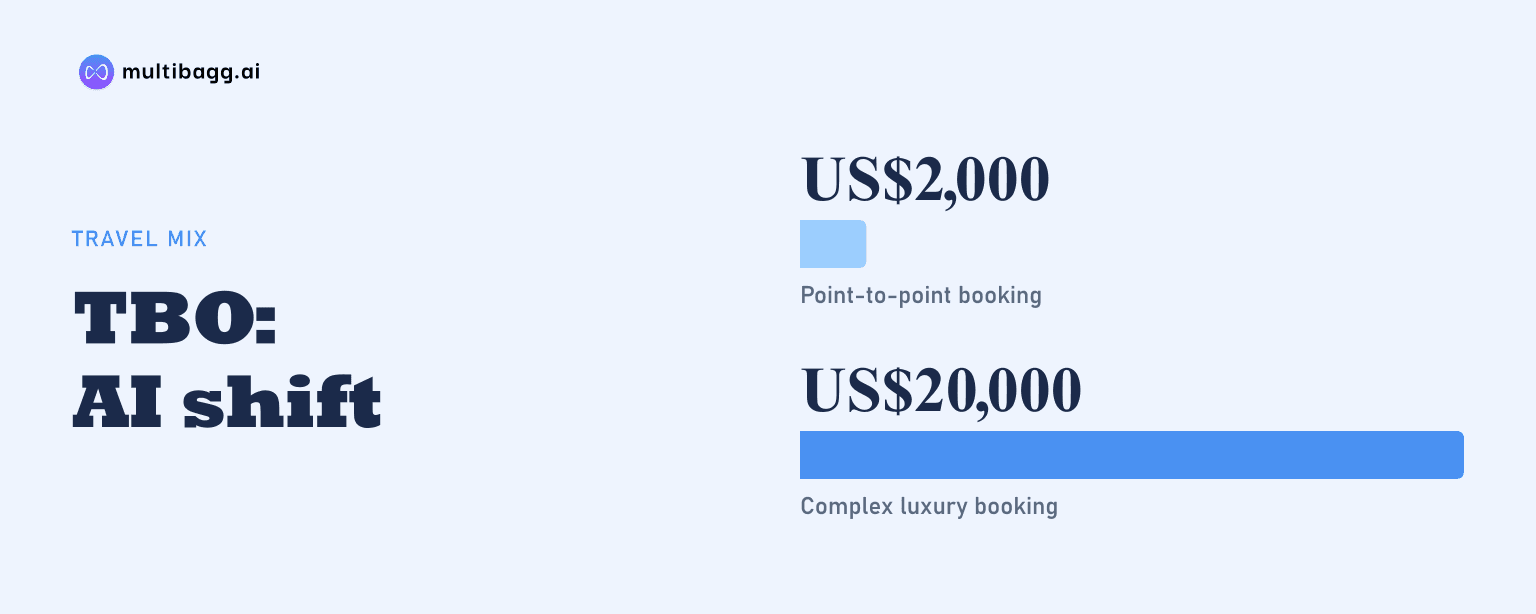
TBO Tek said AI could move point-to-point and flight-plus-hotel bookings to bot channels, so it is steering advisers towards complex luxury trips valued at US$10,000 to US$20,000. Management said multi-destination itineraries require destination knowledge and post-booking support that simple transactions need less often.
Know TBO Tek inside out
Results, valuation, peers and who's buying, in one view.
How could AI change TBO's booking channels?
TBO expects AI to redistribute simpler bookings across channels rather than remove travel demand altogether. Management said a point-to-point transaction that previously moved from a travel agent to an online travel agency, or OTA, could move from an OTA to a bot such as Muse or Instinct, either through direct supplier access or an OTA operating in a bot ecosystem.
TBO said this is a forward-looking assessment, not a disclosed forecast for booking volumes or revenue at risk. Gaurav Bhatnagar framed the discussion around a five-to-seven-year horizon, while saying that consumer spending on travel may rise as developed-market populations age and have more time to travel.
Which bookings does TBO think AI can handle?
TBO sees transactional point-to-point and budget bookings as the first travel segments likely to shift to bots. These are bookings with a limited number of components, such as a single flight reservation, where the customer historically may have used a travel agent before moving to a web or mobile OTA channel.
TBO also said a flight-plus-hotel request, or a flight plus an airport transfer, may be sufficiently straightforward for a bot to complete. That is a wider potential shift than single-flight bookings because such combinations were previously more likely to involve a travel adviser, but management said their complexity could simplify within an AI interface.
The company distinguished those products from connected travel, which combines multiple destinations, experiences and forms of transport. The difference is operational: several flights, train tickets and experiences create more possible changes after the original booking than a point-to-point itinerary or a flight-and-hotel package.
Why is TBO pushing advisers towards complex luxury travel?
TBO's stated response is to move travel advisers up the value chain towards true complexity and true luxury. Management contrasted a US$2,000 booking with US$10,000, US$15,000 and US$20,000 trips, saying higher-value itineraries can require a human adviser who has visited the destination and understands the travel experience personally.
TBO believes post-booking friction is a key difference between simple and complex trips. A flight and hotel may have fewer points of failure, while an itinerary spanning several flights, train tickets, destinations and experiences may need intervention when one part changes or does not operate as planned.
Management linked this strategy to consumer preferences for longer trips, multiple destinations and luxury experiences. Those observations were management's strategic view rather than disclosed market-share data, a luxury booking target or evidence that AI has already displaced a specified part of TBO's booking base.
Got a follow-up? Ask IRIS
How does Classic support TBO's luxury plan?
TBO views Classic Vacations as an investment and topline-growth platform for its luxury strategy, rather than principally a cost-efficiency programme. Management said the business provides learning on acquiring luxury supply, selling to luxury travel advisers and engaging with luxury consortia including Virtuoso and Travel Leaders.
TBO has added to the supply team and integrated some finance processes into India, supply work and technology work into the broader TBO Tek team. Management acknowledged that these actions can create operating efficiencies, but said the central objective is to build luxury tools and playbooks over the short, medium and long term.
The company expects those capabilities to support organic growth in Classic Vacations' North American business and potentially transfer to other markets. Management said a single synergy number would be difficult to disclose because a supplier contract may sit within Classic Vacations while the resulting availability, agent relationship or talent benefit appears elsewhere in TBO.
What operating milestones does TBO identify for the strategy?
TBO has not disclosed a target for luxury gross transaction value, adviser additions or revenue protected from AI. Management instead pointed to new-agent additions, agent engagement, double-digit growth in some markets and triple-digit growth in smaller markets, without identifying the markets, reporting period or absolute base for those growth rates.
Classic Vacations also has a different seasonal pattern and booking-recognition mechanism from TBO's organic business. TBO records its organic business when bookings are made, while Classic Vacations records business on check-ins during the quarter; management called Q2 Classic Vacations' weakest quarter and said Q3 should be better than Q2.
Conclusion
TBO's strategy accepts that AI could redirect simple point-to-point, flight-and-hotel and airport-transfer bookings towards bots, while seeking to deepen its position in complex luxury travel. The company is relying on human destination expertise and post-booking problem-solving for itineraries with several transport, destination and experience components, including trips valued from US$10,000 to US$20,000.
The next item to watch is management's budgeting exercise, which it said would begin in a few weeks. If conditions do not normalise, TBO said it could increase investment in the North America-to-Europe corridor or the Far East; management also said it hoped enterprise-level growth initiatives could show results by the next summer season, or Q2 of next year, if the macroeconomic climate clears.