










TechD says DPDP demand could span three revenue streams
Key highlights
- TechD says 27 professionals trained in 27701 and DPDP requirements can support privacy work.
- Management expects the largest DPDP revenue contribution in March, April and May ahead of the May 2027 timetable.
- TechD reported about Rs 39 crore of H1 revenue from roughly 650 customers.
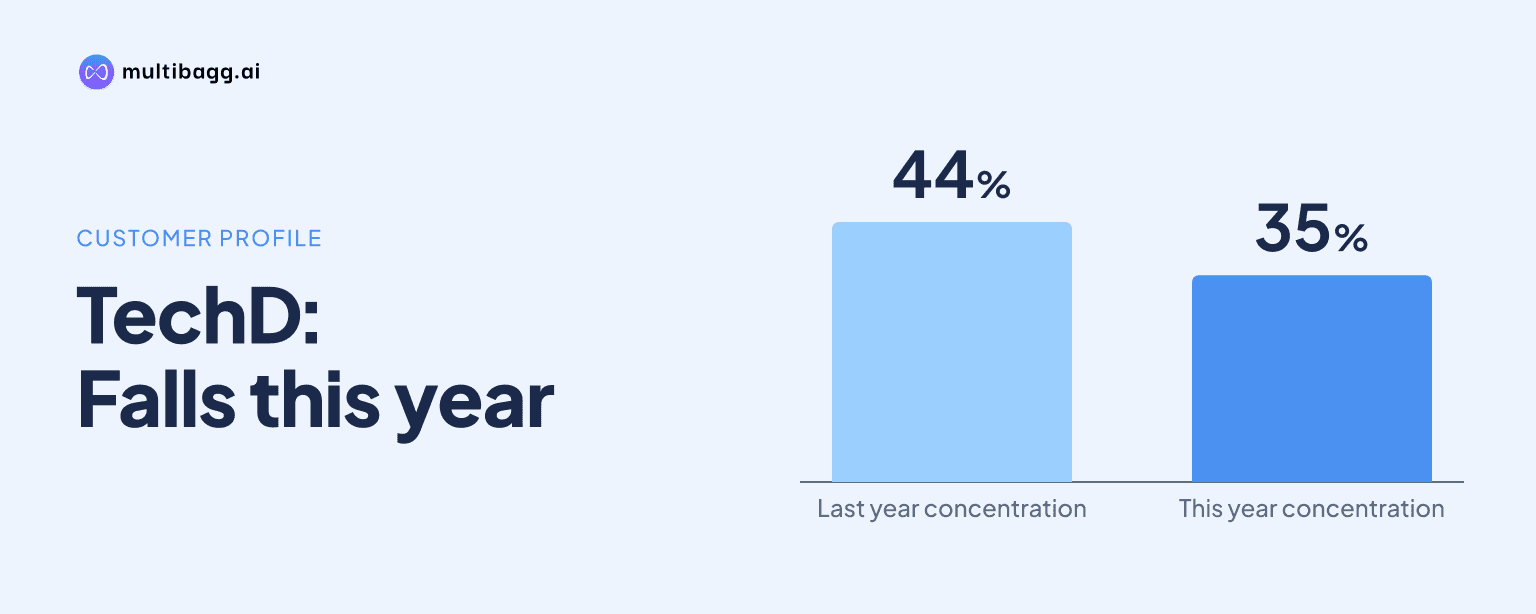
- Top-10 or top-20 customer concentration fell to around 35% this year from about 44% last year.
powered by IRIS
TechD says DPDP compliance could generate revenue from gap assessments, managed services and technology implementation, supported by 27 professionals trained in 27701 and DPDP requirements. Management said customer budget activity had begun after the DPDP website and phased structure went live, but it expects larger spending closer to the May 2027 compliance timetable.
Know TechD Cybersecurity inside out
Results, valuation, peers and who's buying, in one view.
What DPDP services does TechD expect to sell?
TechD expects DPDP revenue from one-time gap assessments, recurring managed services and technology implementation. Management said customers were asking it to begin DPDP and gap assessments, then proceed to consent-management products and technology implementations linked to DPDP security controls. This sequence could take an engagement from identifying a compliance gap to deploying tools and operating privacy-related services over time.
TechD also plans to use its own forthcoming DPDP product and exclusive original equipment manufacturer, or OEM, associations to address the technology portion of the work. Management said it was participating in DPDP tenders and requests for proposals, or RFPs, and had won some contracts, although it did not disclose values, durations or customer names. A market infrastructure institution, described as a stock exchange, had sought staff-augmentation resources for DPDP and privacy roles.
How prepared is TechD for DPDP compliance work?
TechD says its 27-person privacy team is already trained in 27701 and DPDP requirements and has begun serving some customers. Management said the team can provide virtual DPDP services if required, alongside assessments and implementation work. It is also expanding the practice through OEM relationships while developing its own DPDP product, although the call did not give a launch date or product pricing.
The company’s stated readiness is based partly on existing customer access rather than a disclosed DPDP order book. TechD reported about Rs 39 crore of H1 revenue from roughly 650 customers, with average revenue per customer of Rs 6 lakh to Rs 7 lakh, according to management. It said chief information security officers, or CISOs, and chief information officers, or CIOs, were seeking budgets for DPDP as well as data-loss-prevention, or DLP, and data-security-posture-management, or DSPM, solutions.
When does TechD expect DPDP revenue to increase?
TechD management expects DPDP activity to improve in H2 and sees March, April and May as the likely period for its largest revenue contribution. It said the DPDP website had gone live two days before the call and the phased compliance structure before May 2027 had become available only two to three days earlier. Management therefore characterised the market as being at an early quotation and budget-setting stage.
This timing outlook is management’s expectation, not financial guidance or a disclosed sales target. Management said the environment after December could be materially different as the deadline nears, particularly for companies with Rs 100 crore to Rs 500 crore of revenue that may delay compliance spending. The call did not provide a DPDP pipeline value, expected conversion rate or split between assessment, software and managed-service revenue.
Got a follow-up? Ask IRIS
How does DPDP work fit TechD’s customer strategy?
TechD sees DPDP as a potential cross-sell to increase revenue from smaller existing customers. Management said it aims to raise customer revenue from Rs 6 lakh to Rs 7 lakh towards Rs 10 lakh by converting individual cybersecurity assignments into managed services and adding products. DPDP assessments, consent-management technology and privacy services could fit that strategy where customers need to meet the new requirements.
Management gave phishing simulations as an example of its wider product-led sales approach. Clients previously paying Rs 50,000 to Rs 60,000 for simulations can receive a 15-day proof of concept and be offered a product initially priced at Rs 1.40 lakh, with negotiated sales at Rs 1 lakh to Rs 1.20 lakh. The example was not DPDP-specific, but it shows the model TechD intends to use to combine services with product sales.
TechD’s customer mix has broadened, with management saying top-10 or top-20 customer concentration fell to around 35% this year from about 44% last year. It also acknowledged that large clients usually use multiple cybersecurity vendors because maker-checker requirements can separate vulnerability assessment and penetration testing, or VAPT, from security operations centre, or SOC, work. DPDP may add addressable assignments, but the call does not establish that TechD will be an exclusive provider for major customers.
Conclusion
TechD has positioned DPDP compliance as a three-part commercial opportunity covering assessments, technology implementation and managed services. Its 27 trained professionals, existing customer enquiries, staff-augmentation work and planned product and OEM routes provide the operational basis for that approach. The opportunity also aligns with management’s aim to lift revenue per customer through cross-selling and recurring delivery.
The key issue to watch is whether early assessments and quotations turn into booked technology and managed-service revenue as the May 2027 timetable approaches. Management expects stronger activity in H2 and the largest contribution in March, April and May, particularly from smaller companies that may act late. Future disclosures on contract values, product availability and recurring revenue will determine the scale of the opportunity.