










Techknowgreen closes Rs 3 crore loan, targets near-zero long-term debt
Key highlights
- Techknowgreen said it closed a Rs 3 crore corporate loan.
- Long-term borrowings cited on the call fell to Rs 4.5 crore from Rs 5.6 crore.
- Short-term borrowings cited on the call rose to Rs 8.5 crore from Rs 3 crore, mainly through cash credit.
- Techknowgreen reported Rs 1.6 crore of EMD spending on two government tenders under scrutiny.
powered by IRIS
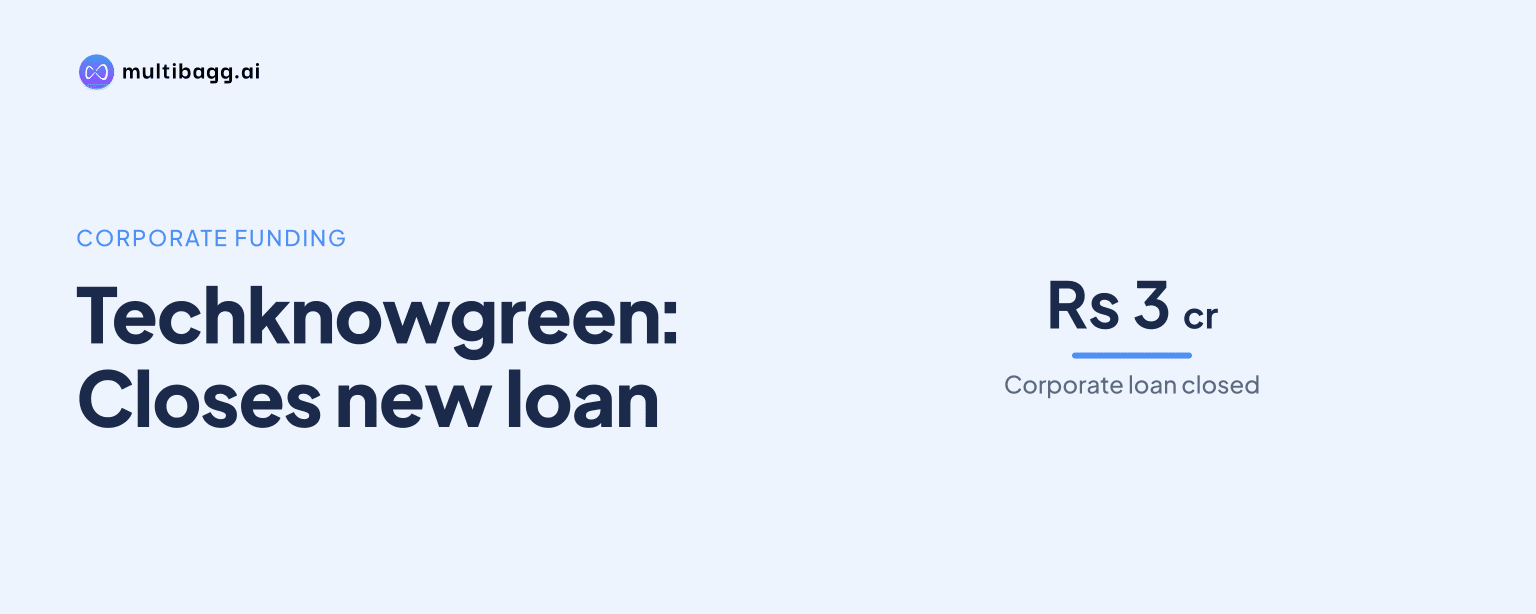
Techknowgreen Solutions Limited said on November 18, 2026, that it had closed a Rs 3 crore corporate loan and was targeting almost nil long-term borrowings by March, while retaining cash-credit capacity for guarantees, earnest-money deposits and project costs. Management said the rise in short-term borrowings reflected project funding rather than a new long-term debt plan.
Know Techknowgreen Solutions inside out
Results, valuation, peers and who's buying, in one view.
What debt reduction has Techknowgreen completed?
Techknowgreen has closed its Rs 3 crore corporate loan, according to management’s response during the November 18 call. Management said it used cash on hand to repay that facility, leaving two broad financing components: cash-credit utilisation that changes with working-capital needs, and one remaining long-term borrowing that it intends to manage before March.
The balance-sheet movement discussed on the call showed long-term borrowings declining to Rs 4.5 crore from Rs 5.6 crore, a reduction of Rs 1.1 crore. Over the same comparison, short-term borrowings rose to Rs 8.5 crore from Rs 3 crore. The figures were raised by an analyst during the discussion, and management confirmed that the short-term balance largely represented use of the cash-credit facility rather than a replacement corporate term loan.
Management’s stated objective is not to eliminate every form of borrowing. It said long-term borrowings should be almost nullified by March, while cash credit, or CC, would remain available when required for bank guarantees, earnest-money deposits and project expenditure. This distinction matters because CC utilisation can rise and fall within a month as collections and payments move through project cycles.
Why did Techknowgreen’s short-term borrowings rise?
Techknowgreen said the increase in short-term borrowing was primarily used for earnest-money deposits, or EMDs, and bank guarantees required by tenders and customers. Management said final payments can be blocked for about 1.5 years without a bank guarantee, and that guarantees can equal 10% of project value. It identified data centres as one major customer sector where a 10% guarantee is a process requirement.
The company also described the upfront funding burden of a typical six-month project. It said tender participation begins with EMDs of about 1% to 2%, depending on the contract type, and that investment can reach 30% to 33% before the first billing milestone. Management classified this amount as unbilled revenue, meaning cash is spent on work before invoices are raised or payments are received.
As of the discussion, Techknowgreen had spent Rs 1.6 crore on EMDs for two government tenders under scrutiny. Management said unsuccessful tender deposits would be returned, although the outlay can appear as an expense on the balance sheet in the meantime. That mechanism, together with guarantee requirements, explains why CC utilisation may increase even as the company repays a Rs 3 crore corporate loan.
Got a follow-up? Ask IRIS
How do project billing and collections affect Techknowgreen’s cash flow?
Techknowgreen said a profit booked in accounts and cash realised from customers do not occur at the same time. Management referred to Rs 6.3 crore of booked profit alongside negative net cash flow at September 30, saying cash was tied up in invoices awaiting collection and in work orders completed but not yet billed. It added that cash flow became positive in October.
Management attributed the timing gap partly to customer credit periods of about 60 days for multinational companies and government clients. In this model, Techknowgreen said it must fund work before collecting payment, which can create periodic cash pressure. The company described this as a recurring half-yearly pattern linked to its project cycle and use of CC limits for ongoing work.
An analyst noted that debtors at September 30 were about Rs 23 crore, roughly equal to six months of sales. Techknowgreen acknowledged the concern and said it was working to align billing, recoveries and the balance sheet more closely, including avoiding the concentration of all billing in March. Management did not provide a quantified receivables-reduction target or a date for bringing debtor balances down.
What could determine whether Techknowgreen meets its March target?
Techknowgreen’s ability to approach near-zero long-term borrowings by March depends on managing its one remaining long-term loan while collections, project milestones and tender deposits move through the cycle. Management’s plan is specifically to use CC only when necessary for guarantees, EMDs and project expenses, rather than treating it as a fixed form of long-term financing.
Receivable recovery is an important unresolved element. Management said about 30% of legacy outstanding amounts relate to National Company Law Tribunal, or NCLT, matters. It also cited an approximate Rs 3 crore payment from the Delhi government that it said is not under NCLT, but remains unpaid because funds allocated to the relevant project had been exhausted.
Management said parties involved in legacy receivables had acknowledged amounts due, while some cases were progressing through NCLT procedures and Micro, Small and Medium Enterprises, or MSME, cases. It said the Delhi government amount had been confirmed by the Prime Minister’s Office, which had assigned an officer to the matter. These statements indicate management expects collection, but the call did not disclose settlement dates, judicial outcomes or a cash-realisation schedule.
Conclusion
Techknowgreen has reduced its long-term funding exposure by closing a Rs 3 crore corporate loan, while the reported increase in short-term borrowings to Rs 8.5 crore reflects a working-capital model that requires EMDs, bank guarantees and upfront project spending. The comparison with Rs 4.5 crore of long-term borrowings, down from Rs 5.6 crore, separates revolving CC use from the company’s stated deleveraging objective.
The next point to watch is management’s March target to almost nullify the remaining long-term borrowing. Progress will depend on October’s positive cash-flow trend continuing, on recovery of September 30 debtors of about Rs 23 crore, and on the timing of tender-related EMD refunds, bank-guarantee releases and legacy collections, including the approximate Rs 3 crore Delhi government payment.