










TFS system-wide sales rise 18.8% as Q2 traffic falls 4.8%
Key highlights
- TFS system-wide sales rose 18.8% year on year to Rs 865.4 crore in Q2FY27.
- Passenger traffic at TFS-managed airports declined 4.8% year on year in Q2FY27.
- TFS reported 11.1% net contract gains and 3.5% like-for-like sales growth in Q2FY27.
- TFS consolidated PAT increased 50.5% to Rs 147.3 crore in Q2FY27.
powered by IRIS
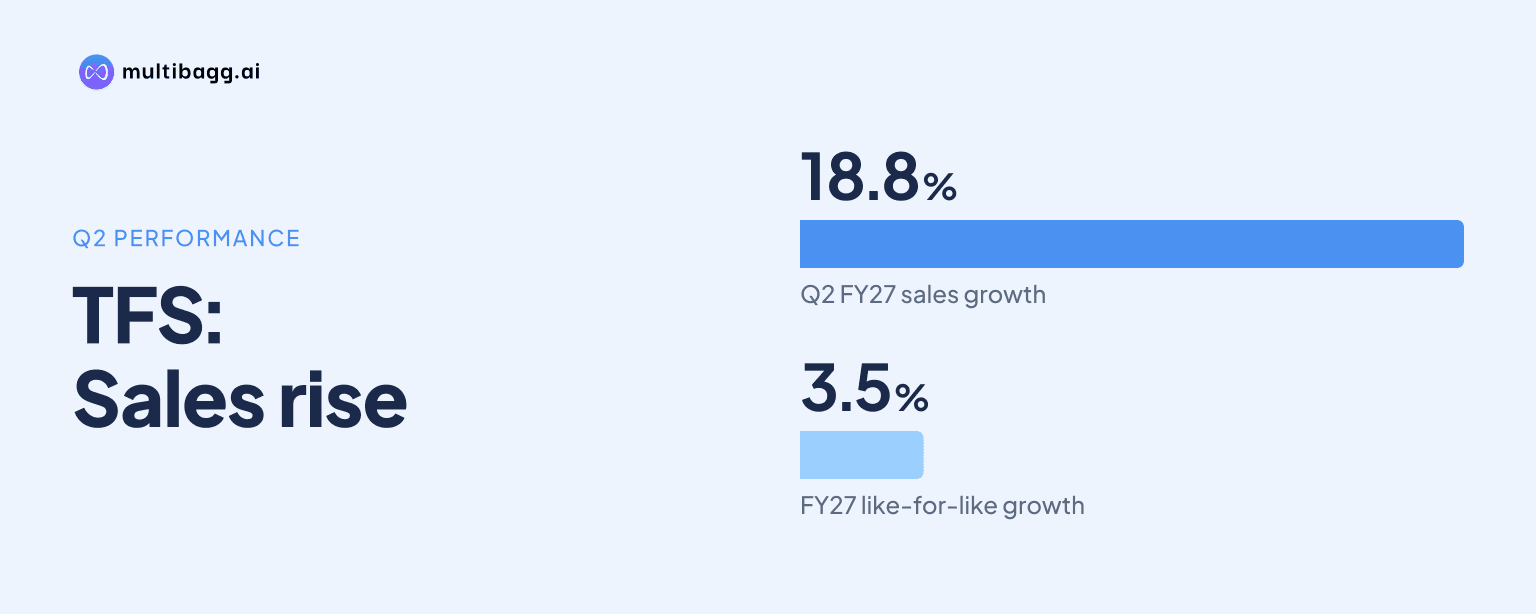
Travel Food Services Limited (TFS) grew Q2FY27 system-wide sales 18.8% year on year to Rs 865.4 crore while passenger traffic at its managed airports fell 4.8%. TFS attributed the difference to 3.5% like-for-like sales growth, 11.1% net contract gains from newly mobilised units, and revenue-optimisation initiatives that partly offset weaker passenger volumes.
Know Travel Food Services inside out
Results, valuation, peers and who's buying, in one view.
How did TFS outgrow falling airport passenger traffic?
TFS outgrew airport traffic through sales at established outlets, new contracts and revenue optimisation rather than passenger volumes alone. Passenger traffic at TFS-managed airports declined 4.8% year on year in Q2FY27 amid geopolitical uncertainties, higher airfares and airline capacity rationalisation, while system-wide sales rose to Rs 865.4 crore from Rs 728.4 crore in Q2FY26. TFS said domestic traffic was more affected, while the rate of decline in international traffic moderated from the previous quarter.
Like-for-like sales, which cover revenue from travel quick-service restaurant (QSR) outlets and lounge services open for at least 12 months, increased 3.5% year on year in Q2FY27. Net contract gains, defined as revenue from contracts open for less than 12 months less contract losses, added 11.1%. TFS said new-unit mobilisation across its managed airports and revenue optimisation supported sales despite softer traffic.
TFS defines system-wide figures as covering its operations, subsidiaries, associates and joint ventures. This measure was Rs 865.4 crore in Q2FY27, compared with consolidated sales of Rs 425.3 crore. The presentation separately reported system-wide passenger traffic, which declined 4.8% during the quarter.
What were the main sources of TFS sales growth?
TFS reported that Q2FY27 system-wide sales growth comprised 3.5% like-for-like growth and 11.1% net contract gains. During the preceding 12 months, TFS mobilised more than 70 units and expanded to 22 airports. Its network stood at 570 travel QSR outlets and lounges as of September 2026, including the start of operations at Alluri Sitarama Raju International Airport, Bhogapuram.
At the consolidated level, sales increased 19.5% to Rs 425.3 crore in Q2FY27 from Rs 355.9 crore a year earlier. Consolidated like-for-like sales growth was 6.6%, compared with the 3.5% system-wide rate, and TFS attributed the consolidated result to menu innovations and calibrated premiumisation strategies. Consolidated net contract gains were 11.0%, supported by new airport units and the lounge aggregation business.
The pattern continued in H1FY27 despite traffic pressure intensifying in the second quarter. System-wide sales rose 18.4% to Rs 1,709 crore from Rs 1,443.5 crore in H1FY26, supported by 13.5% net contract gains and 2.2% like-for-like growth. Passenger traffic fell 2.2% in H1FY27, after first-quarter traffic was in line with the prior year and Q2 traffic was affected by higher fares and route rationalisation.
Got a follow-up? Ask IRIS
How did TFS profitability change in Q2FY27?
TFS reported consolidated profit after tax (PAT) of Rs 147.3 crore in Q2FY27, up 50.5% from Rs 97.9 crore a year earlier. Consolidated sales grew 19.5% to Rs 425.3 crore, while PAT margin increased by 714 basis points, or 7.14 percentage points, to 34.6% from 27.5%. TFS said sales growth and higher other income supported the increase.
The Q2FY27 PAT included a Rs 46.8 crore provision write-back, net of tax. In H1FY27, PAT rose 43.2% to Rs 276.1 crore from Rs 192.9 crore, including about Rs 56.6 crore of net-of-tax provision write-backs. That half-year amount comprised about Rs 46.8 crore in Q2FY27 and a goods and services tax provision write-back of about Rs 9.8 crore in Q1FY27.
Earnings before interest, tax, depreciation and amortisation (EBITDA) rose 16.8% to Rs 157.9 crore in Q2FY27 from Rs 135.2 crore in Q2FY26, while EBITDA margin declined 86 basis points to 37.1%. TFS said the mobilisation and ramp-up of new operations raised employee and other operating expenses before their revenue contribution builds. Reported gross margin was 85.8%, while TFS said it was 80.7% excluding Rs 21.6 crore of lounge aggregation service costs recorded under other expenses.
What does TFS plan to scale after Q2FY27?
TFS plans to deepen its presence at existing airports, scale operations at new and greenfield airports, and selectively expand into international lounges and expressways. Management said many of the more than 70 units mobilised in the past 12 months were still ramping up, with a significant pipeline of outlets yet to be mobilised at new and existing airports. TFS is also developing passenger-service growth avenues, including EATS.
The network covered 22 airports across India, Malaysia and Hong Kong as of September 30, 2026, alongside 35 lounges and 156 in-house, international and regional brand partners. TFS cited a 30% share of the Indian airport travel QSR market and a 45% share of the Indian airport lounge market. Both market-share figures are based on FY26 revenue including associates and joint ventures and the CRISIL Report 2026.
TFS reported nil consolidated debt and a consolidated cash balance of Rs 1,030.9 crore as of September 30, 2026. The cash balance includes cash and cash equivalents, other bank balances and current investments. Management said it would maintain cost discipline and pursue growth opportunities while passenger traffic and consumption trends remain volatile amid geopolitical uncertainty, higher input costs and inflationary pressure.
Conclusion
TFS delivered 18.8% system-wide sales growth in Q2FY27 against a 4.8% decline in passenger traffic by combining 3.5% growth at comparable outlets with 11.1% net contract gains. Consolidated sales increased 19.5%, while PAT rose 50.5%; the profit comparison also reflected higher other income and a Rs 46.8 crore net-of-tax provision write-back.
The next measure to watch is the revenue build-up from the more than 70 units mobilised over the past 12 months and the undisclosed outlet pipeline at new and existing airports. Management expects easing geopolitical pressures and seasonally stronger travel demand to provide a more favourable passenger-traffic backdrop in H2FY27 as TFS expands across airports, international lounges and expressways.